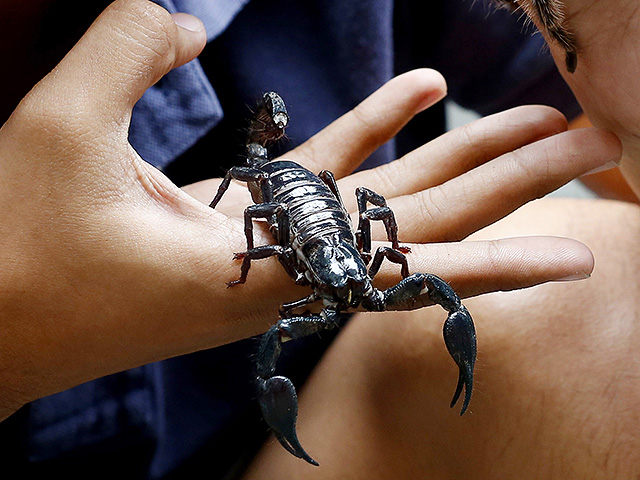
Amazon scorpion venom may contain a substance that could potentially help treat breast cancer, one of the leading causes of death among women, ScienceDaily reports. Scientists from the Ribeirão Preto School of Pharmaceutical Sciences at the University of São Paulo have discovered a molecule in a toxin from the species Brotheas amazonicus that, according to early evidence, affects breast cancer cells in the same way as commonly used chemotherapy drugs.
The team has been cloning and producing bioactive molecules for years, including proteins found in the venom of rattlesnakes and scorpions. These studies are carried out through projects supported by the University and are associated with the Center for Translational Science and Biopharmaceutical Development (CTS), which is part of the Center for the Study of Venoms and Venomous Animals (CEVAP) at the University of São Paulo (UNESP) in Botucatu. One of the notable achievements of this work was the patented fibrin sealant CEVAP, known as “bio-adhesive.” It is prepared from serine proteinases isolated from snake venom (including Bothrops neuwiedi pauloensis and Crotalus durissus terrificus), combined with cryoprecipitate enriched in buffalo, bovine or sheep fibrinogen.
When used, these substances form a fibrin matrix similar to that formed in the body during natural blood clotting and tissue regeneration. The sealant has already been studied as a treatment for restoring nerve fibers, promoting bone healing and improving mobility after spinal cord injuries. The drug is now in the third and final stage of clinical trials, which must be completed before receiving official approval for the use of a new therapy. Recently, scientists were able to clone and culture another serine protease from rattlesnake venom, choline-1. Its amino acid sequence does not match hyroxin, a toxin that is extracted directly from snake glands and used to create fibrin sealant.
Working with the same strain of yeast first isolated in France in 1950, the researchers plan to synthesize the endothelial growth factor CdtVEGF, a molecule originally found in the venom of Crotalus durissus terrificus. Using similar genetic expression techniques, the team also identified two neurotoxins from scorpion venom that have the ability to suppress the immune response. Together with colleagues from INPA and UEA, they discovered a molecule called BamazScplp1 in the Brotheas amazonicus toxin, which, according to preliminary data, may have an anticancer effect.
Experiments in the laboratory showed that the effect of this peptide on breast cancer cells is comparable to the effect of paclitaxel, one of the most common chemotherapy drugs. The main mechanism of action of the peptide is associated with necrosis, a type of cell death that was previously observed under the influence of molecules from the venom of other scorpion species.