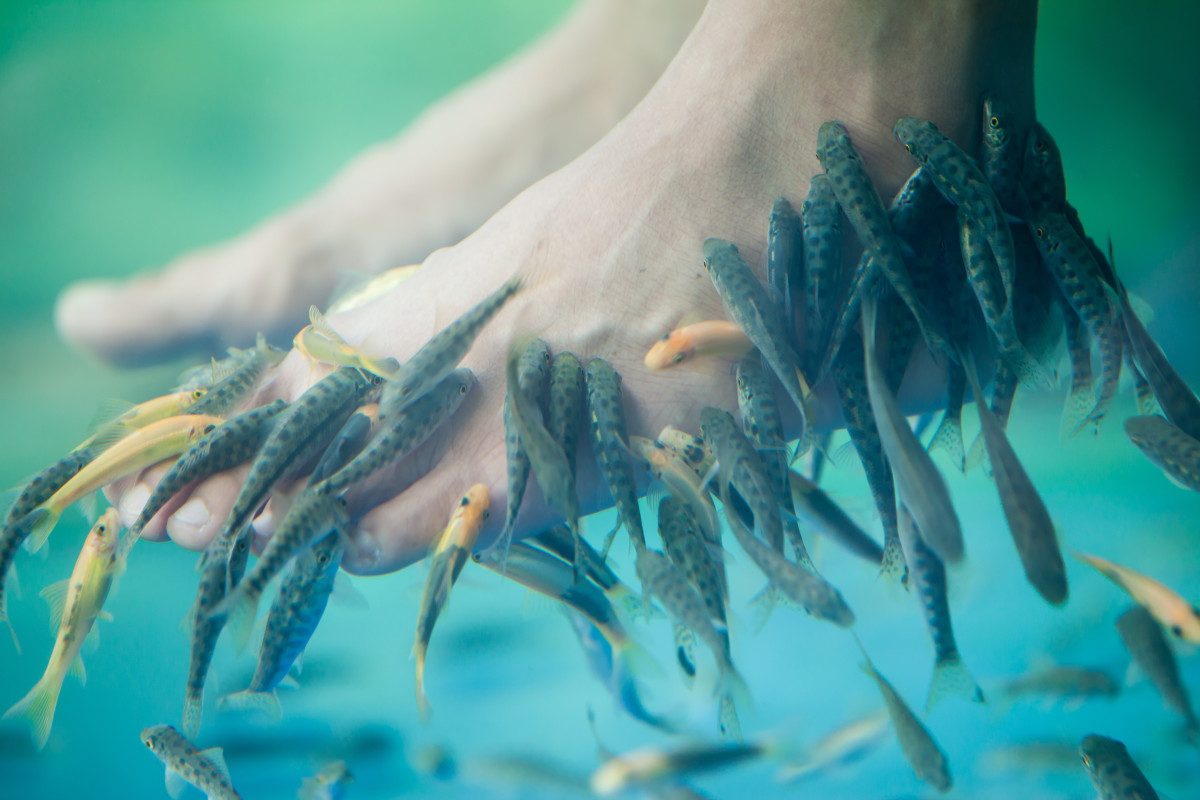
In recent years, an old tourist trend has become particularly viral on social media: “fish pedicures”. In the videos, people are seen immersing their feet in a tank full of tiny fish, which cling to the skin and eat dead skin cells in order to keep the feet smooth. The treatment, which originated in Turkey, has become a tourist attraction in various countries. However, dermatologists warn that this is a potentially dangerous practice if it is not performed under proper sanitary conditions. In the United States, the treatment has even received legal scrutiny, and is prohibited in several states, including California.
Removing dead skin cells from the feet is a beneficial action in itself, because it reveals a new, fresh layer of skin. In a fish pedicure, the fish perform an action similar to that of peeling – they feed on the dead skin cells and remove them.
The problem, the dermatologists explain, is the difficulty in making sure that the containers and water are clean. It is impossible to know which bacteria the fish carry on their bodies, and the risk increases especially if there are tiny cuts or wounds on the skin that are not visible to the eye. The water in which the fish swim may be contaminated, and is also a potential source of infections.
“You can get infected with mycobacterium – a particularly problematic infection,” says Dr. Rossi. “And there is also Vibrio, another serious infection. There have been cases where infectious outbreaks were found that were linked to fish pedicure salons.”
According to Dr. Jaffee, all the benefits attributed to a fish pedicure can be achieved through safer and simpler methods. “It is enough to use acceptable peeling acids,” she says. Physical exfoliation and consistent use of a quality moisturizer can also achieve similar results – without unnecessary risks.