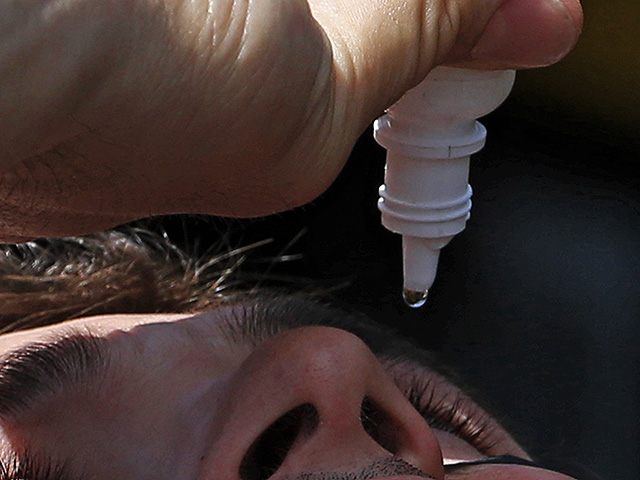
Scientists from Washington University School of Medicine in St. Louis, together with specialists from Northwestern University, have developed a non-invasive way to treat one of the most dangerous and rapidly progressing types of brain cancer. Their method is based on the use of specially designed nanostructures that allow the delivery of a potent antitumor drug directly to the brain through nasal drops. This strategy is less traumatic than other experimental methods and, as studies in mice have shown, effectively fights glioblastoma by enhancing the immune response. The work was published in the journal PNAS.
Glioblastoma is a tumor that arises from astrocytes and is the most common and extremely aggressive type of brain cancer, affecting about three in 100,000 people in the United States. The disease progresses rapidly and is almost always fatal. The main difficulty in its treatment is the inability to effectively deliver drugs to brain tissue.
Glioblastoma belongs to the so-called “cold tumors”: it practically does not provoke a natural immune response, which makes it difficult to treat with immunotherapy. To overcome this, researchers have learned to activate the STING pathway inside cells, a mechanism that turns on when foreign DNA is detected and triggers an immune response.
It has previously been shown that drugs that activate STING can “wake up” the immune system and increase its ability to destroy tumors. However, such drugs are quickly destroyed in the body and must be injected directly into the tumor tissue. Repeated administration is required for lasting effects, making the treatment highly invasive.
Nanostructures are DNA or RNA tightly packed around a nanoparticle and have proven to be highly effective drug carriers. Scientists have created a new type of such structures with a gold core and short strands of DNA that can activate the STING pathway in certain immune cells. The nasal route was chosen for their delivery.
The intranasal method has long been considered as a way to deliver drugs to the brain, but previously there were no nanomedicines capable of triggering an antitumor immune response in this way.
The researchers wanted to make sure that the drug actually reached the brain and affected exactly the right cells. To do this, they equipped the nanostructures with a label visible in near-infrared light. Experiments have shown that a drug given to mice with glioblastoma through the nose travels along a major nerve that connects the facial muscles to the brain. The immune reaction caused by the drug was concentrated in specific cells, mainly in the tumor itself, and stimulated beneficial processes in the lymph nodes. At the same time, the drug did not spread to other organs, which reduces the risk of side effects. Analysis of immune cells in and around the tumor did not confirm activation of the STING pathway and preparation of the immune system to attack the cancer.
When the new drug was combined with T-lymphocyte activating agents, it was possible to destroy the tumor after just one or two doses and create long-term immunity that prevented its re-development. As a result, the effect was significantly superior to the results of existing STING-targeted immunotherapies.