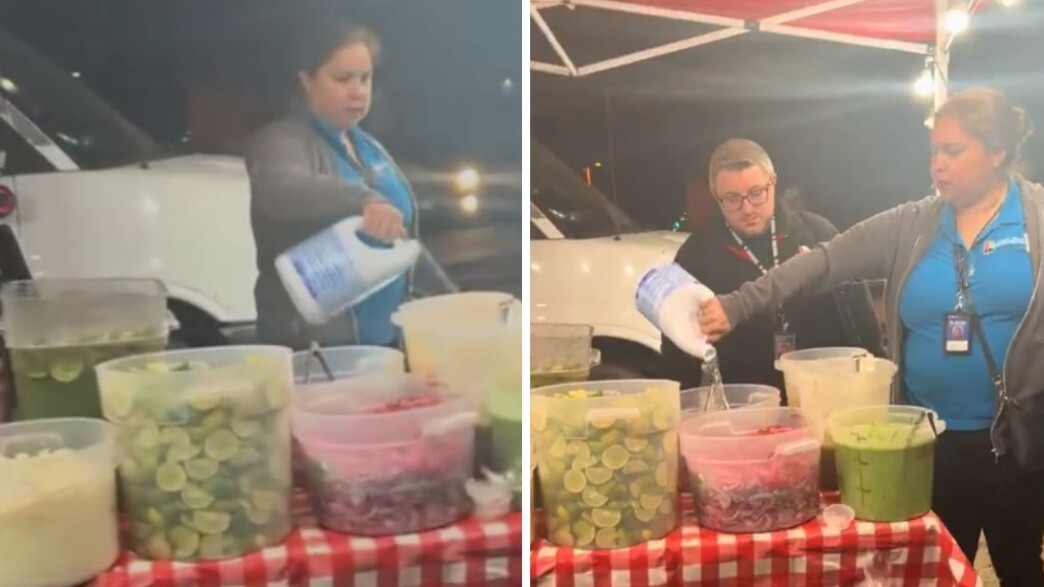
Insensitivity or necessary enforcement? A video that has gone viral in recent days shows a health inspector in Denver, Colorado, pouring a disinfectant (presumably bleach) into food containers containing vegetables and sauces. The aggressive action was documented during the inspection of a taco stand that apparently operated without a license, and it sparked an extensive discussion about the limits of enforcement and the responsibility of the health authorities in protecting the public from food that is kept in dangerous conditions.
The Denver municipality explains that this is a legal procedure designed to prevent the consumption of unsupervised food, and that in this case the stand operated for months without approval, prepared dishes at home and kept them without the required hygiene conditions.
In Denver, they emphasize that the step was taken only after repeated attempts to guide the seller, who, according to the authorities, wandered between several cities in the region to escape supervision. According to them, the stand did not meet the most basic requirements of food safety: it did not have a sink with running water, equipment was not washed and disinfected, some of the dishes were prepared in a home kitchen contrary to the law, and meat and sensitive products were kept at temperatures that could cause the development of life-threatening bacteria. According to Colorado’s health law, in such cases inspectors are obliged to destroy the food to prevent its consumption – and the substance used by the inspector, despite the criticism of “insensitivity”, is one of the approved methods of carrying out the operation.
But in the digital space the focus was less on the regulations and more on the way the enforcement was observed. The surfers claimed that the destruction of the food was done in a forceful and humiliating manner, and hurled accusations about an overly harsh attitude towards street traders compared to regulated businesses. On the other hand, others stated that the inspector acted exactly according to the procedures and that any deviation could endanger the public with food poisoning.
Within hours, the video became a focus of controversy between those who see it as an unnecessary injury to the livelihood of small businesses, and those who emphasize the responsibility of the health authorities in preventing diseases and outbreaks.