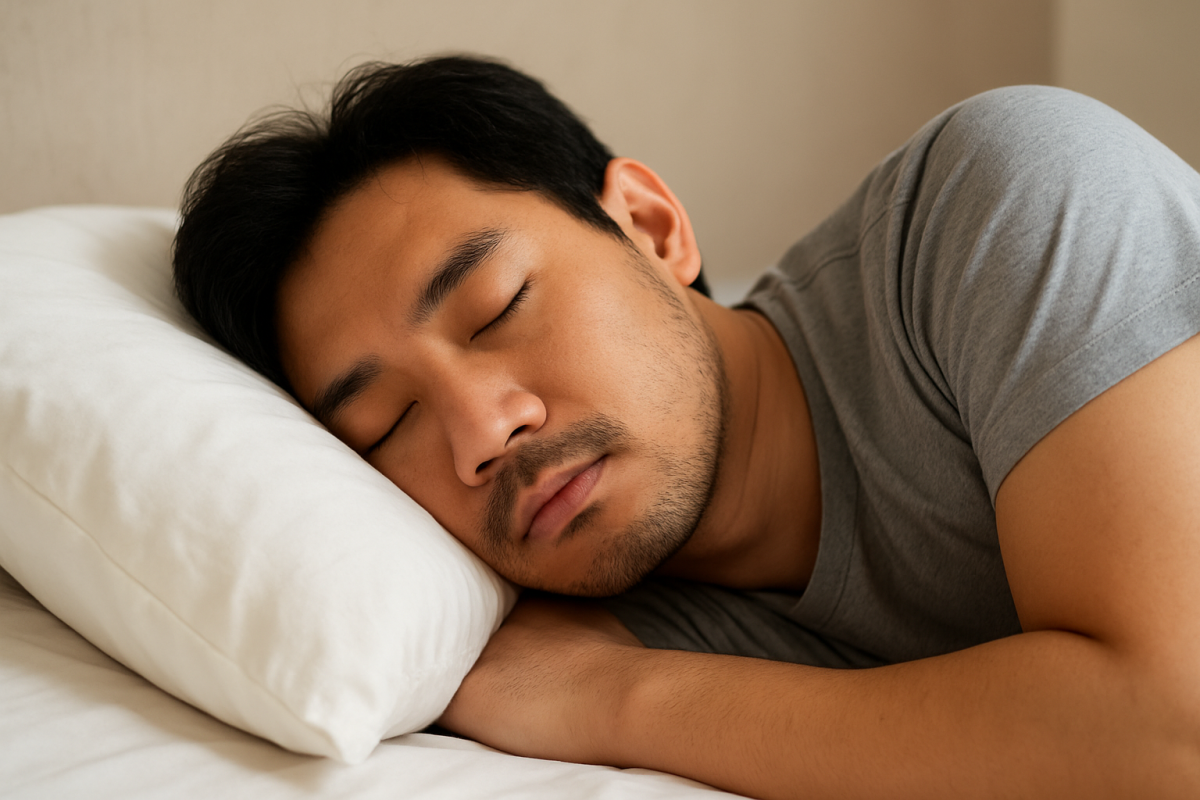
Regularly practicing pursed-lip breathing and diaphragm breathing helps clear the airways, helping people with apnea during deep sleep.
Sleep apnea is a medical condition that causes breathing disorders, affecting sleep quality, and can be treated with continuous positive airway pressure (CPAP) therapy. Some simple exercises below also help patients reduce symptoms.
Throat exercises
Mouth and throat exercises strengthen the muscles around the airway, reducing congestion during sleep. The patient tries exercises such as saying “A” continuously for 20 seconds or stretching the tongue. Do it regularly for a long time to feel positive changes in your body.
Pursed lip breathing
Pursed lip breathing exercises help control sleep apnea. To practice, inhale deeply through your nose for two counts, then exhale slowly with pursed lips (like blowing out a candle) for four counts. This simple exercise can promote airflow and increase lung capacity.
Breathe using the diaphragm
Focusing on using the diaphragm effectively also improves the quality of breathing. Place one hand on your chest, the other on your stomach. Breathe in deeply through your nose, making sure your belly expands while your chest stays still, then exhale slowly.
Patients should keep their bedrooms quiet and dark, and consider using blackout curtains, earplugs or white noise machines to sleep better. Going to bed and waking up at the same time every day also regulates the body’s biological clock. Reading or meditating helps relax before bed.
People suspected of having sleep apnea should see a doctor to review their sleeping habits and the severity of the condition. People who are overweight can lose weight, combine diet and exercise regularly to improve disease symptoms. Because being overweight contributes to airway obstruction. If the patient has adjusted their lifestyle but the disease does not improve, they should see a doctor for treatment.