Exhaust fumes from vehicles, industrial activities or fine dust from polluted air can cause irritation and weaken the natural protective layer of the eyes.
Increased air pollution leads to many health risks, including the eyes – organs that are constantly exposed to the environment. According to MSc. Le Thanh Huyen, High-Tech Eye Center, Tam Anh General Hospital, Hanoi, microscopic dust particles from traffic, construction, and industry suspended in the air easily stick to the surface of the eyeball. Pollen and mold spores are also more active in poor air quality conditions, with high humidity increasing the risk of allergic reactions. The combination of these factors causes many eye abnormalities to appear.
Eyes itchy and red
Fine dust particles and pollutants stick to the surface of the eye, triggering an inflammatory response and causing itching, burning, and redness of the eyes. Symptoms are often more obvious on days when fine dust increases or after long periods of outdoor activity.
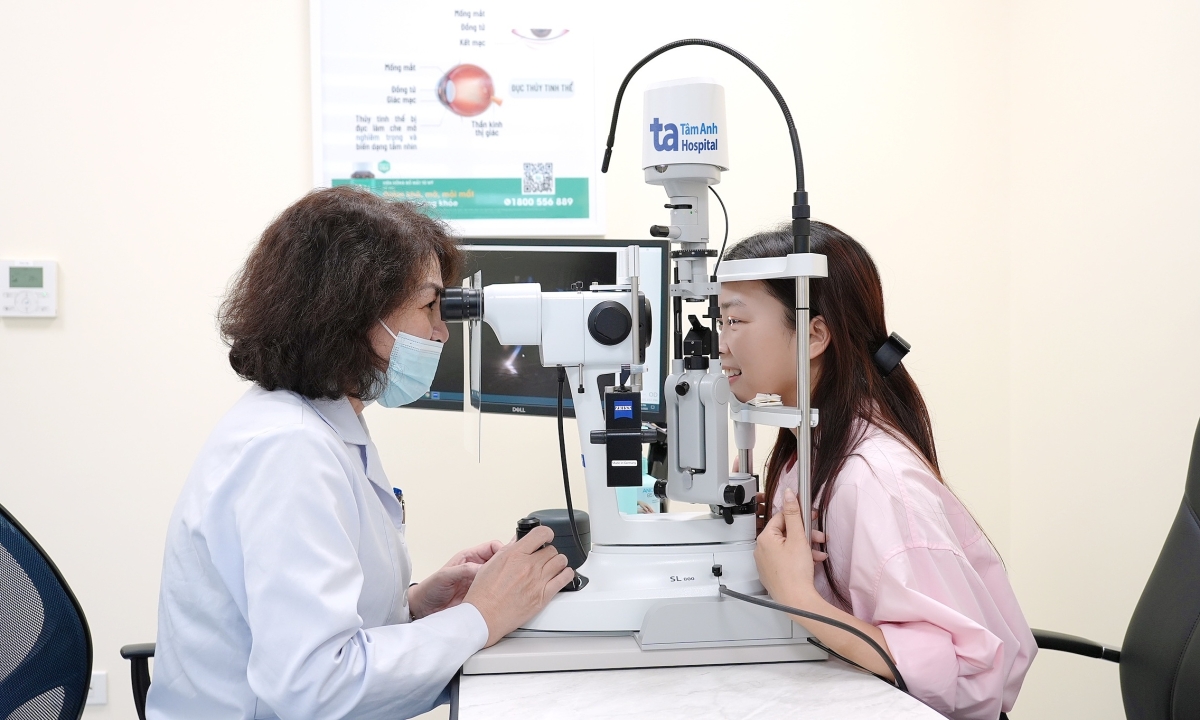
A doctor examines a woman’s eyes. Illustration photo: Tam Anh General Hospital
Tears
This is a natural reaction as the eyes try to wash away dust and irritants. Dust can cause increased tear secretion, causing a burning sensation, difficulty opening eyes or discomfort.
Dry eyes
Dr. Huyen said fine dust can directly affect the tear film, causing tears to evaporate quickly or reduce tear quality. This condition leads to a dry, itchy, burning feeling, making the eyes quickly get tired, especially in people who work outdoors.
Blurred vision
Air pollution can irritate the corneal surface, leading to transient blurred vision. You may notice difficulty focusing and less clear images, especially at the end of the day or after exposure to polluted environments.
To reduce the impact on the eyes, each person can apply simple measures such as wearing sunglasses or dust glasses when going out to limit UV rays and fine dust particles from sticking to the eye surface. On days when the pollution index increases sharply, people should limit outdoor activities and avoid traveling during rush hours. Using an air purifier in your home and changing filters regularly helps improve air quality. Maintaining a healthy lifestyle, consuming foods rich in antioxidants and avoiding smoking also contribute to eye protection.
Dr. Huyen recommends that people with symptoms of vision discomfort should have their eyes examined to rule out damage caused by dust. When your eyes are uncomfortable, you can use artificial tears or anti-allergy medication as prescribed by your doctor to soothe and wash away fine dust. Absolutely do not use medication arbitrarily.
https://packagingoftheworld.com/members/skyhills
https://vocal.media/authors/skyhillscas
https://xcp-ng.org/forum/user/skyhills
https://paizo.com/people/skyhills#newPost
https://tekkenmods.com/user/129466/crystalroll
https://www.brownbook.net/user-profile/6117047
https://paizo.com/people/crystalroll#newPost
https://www.utherverse.com/net/profile/view_profile.aspx?MemberID=105084278
https://boards.cgccomics.com/profile/168508-crystalroll/?tab=field_core_pfield_1
https://www.rctech.net/forum/members/crystalroll-520724.html
https://roomstyler.com/users/crystalroll
https://makerworld.com/uk/@crystalroll
https://www.myminifactory.com/users/crystalroll
https://www.cfd-online.com/Forums/members/crystalroll.html
https://www.wolfssl.com/forums/user7758.html
https://love2d.org/forums/memberlist.php?mode=viewprofile&u=300920
https://civitai.com/user/crystalroll
https://maxforlive.com/profile/user/crystalroll?tab=about
https://bsky.app/profile/crystalroll.bsky.social
https://devnet.kentico.com/users/550075/crystalroll-crystalroll
https://worldvectorlogo.com/es/profile/crystalroll
https://hanson.net/users/crystalroll
https://www.redlightcenter.com/net/profile/view_profile.aspx?MemberID=105084283
https://forum.prusa3d.com/forum/profile/crystalroll/
https://www.facer.io/user/FAE66TXDxN