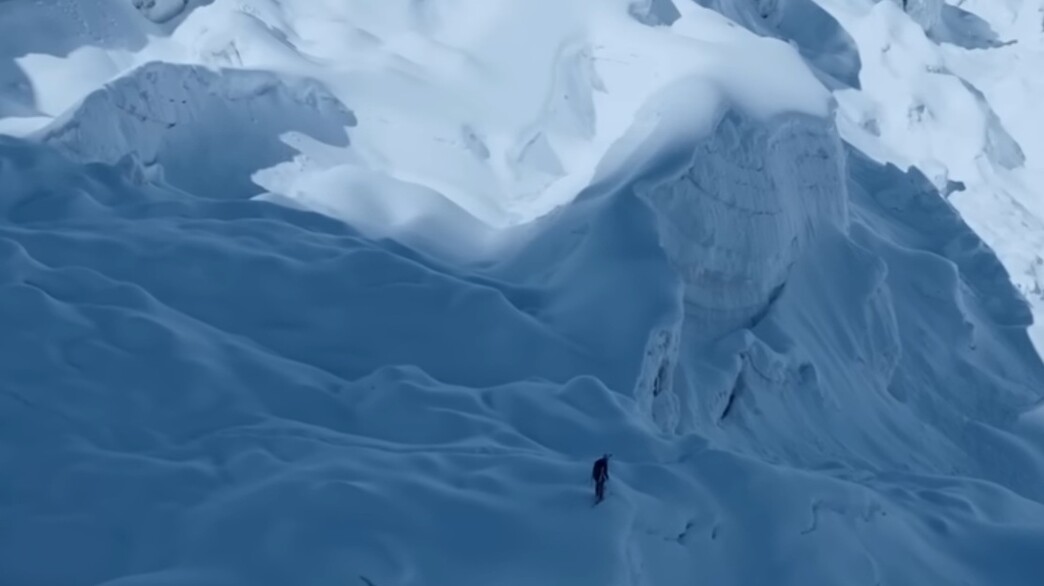
Most humans are not used to living at extreme altitudes. At an altitude of over 5,000 meters above sea level, the brain works more slowly, and the body fights for every drop of oxygen. At an altitude of over 8,000 meters above sea level, you already reach “the death zone” – a nickname for an area where the air pressure is too thin to allow normal breathing. The air is thin, oxygen levels drop to life-threatening levels, and even with the help of every possible survival mechanism, the human body is expected to last only a short time.
dictation Originally published on the Davidson Institute for Science Education website
Body adaptation and acclimatization to altitude
What determines the amount of oxygen entering the body is the atmospheric pressure. The higher you go, the lower the atmospheric pressure – in each liter of air there are fewer molecules, and therefore also fewer oxygen molecules, so that with each inhalation a smaller amount of oxygen enters the body.
During a prolonged stay at medium altitude, 5,000-3,000 meters above sea level, the body can partially adapt to the altitude. It produces more red blood cells to improve oxygen carrying capacity, increases the depth of breathing and lowers the amount of carbon dioxide in the blood to maintain balance. This process is called acclimatization to the altitude, and it happens gradually: climbers go up to the altitude, stay there for a night or two and come back down to allow the body to adapt. Only after the body has “learned” to deal with the relative lack of oxygen can one continue without danger. Successful acclimatization, which will allow a relatively safe stay at altitudes of up to 5,000 meters, may take days or even weeks.
But in the “death zone”, 8,000 meters and above sea level, there is no real adaptation anymore. The oxygen pressure is only about a third of that at sea level. The body reacts and enters a survival mode: the breathing quickens, the pulse jumps and the brain signals distress. At this height, muscle and tissue breakdown processes begin, weight loss and a sharp cognitive decline.
Low pressure and little oxygen
A decrease in oxygen pressure means that fewer oxygen molecules enter the lungs and reach the blood. The result is a sharp decrease in the oxygen concentration of the hemoglobinthe protein responsible for transporting oxygen to the cells. When the oxygen supply to the tissues decreases, the cells go into a state of anaerobic respiration – a process that produces less energy, leads to the accumulation of lactic acid, and creates a feeling of exhaustion and confusion.
The assumption is that even with the help of external oxygen tanks, one can only survive up to 16-20 hours in this area before the body starts to collapse. Without oxygen tanks, survival time is reduced to only a few hours. Most climbers trying to qualify for the summit of Everest use oxygen tanks in order to maintain oxygen levels in the blood that allow the body to function properly. The tanks are not only intended to “make breathing easier”, but to prevent the collapse of vital systems, especially the brain, which is particularly sensitive to lack of oxygen.
According to data published in recent years by the British Himalayan Association, only about three percent of the climbers who managed to reach the peaks of the Himalayas did so without oxygen, an achievement that is still considered to exceed the limits of human ability.
Liat Peli with the help of Gemini
The dangers to the body
Altitude sickness is the body’s response to a drop in oxygen levels in the blood, a condition called hypoxia. With each breath, a smaller than normal amount of oxygen enters the body, and the brain, muscles and organs begin to suffer from a deficiency. The mild form of the disease causes headaches, nausea, loss of appetite and insomnia, and it can already occur at a relatively moderate altitude of 2,500 meters above sea level.
When the oxygen levels continue to decrease, the body enters a physiological emergency: the breathing rate and heart rate increase to introduce more oxygen into the blood, but the amount of energy that the cells manage to produce is rather small. Blood vessels in the brain dilate to supply oxygen, causing intracranial pressure and headaches. Since the brain is the largest consumer of oxygen in the body, when the supply is reduced it is also the first to be damaged. A decrease in the oxygen supply causes a slowdown in the function of the nerve cells, an impairment of coordination and the ability to concentrate. On the other hand, in the blood vessels in the lungs, the opposite reaction occurs: they contract, which makes it difficult for the blood to flow and may cause high pulmonary pressure.
As you climb higher, and especially when you enter the “death zone”, cognitive function is quickly impaired. Climbers report slowness of thought, difficulty in making decisions, confusion and delay in movement reactions – a combination that can be fatal in extreme conditions. Even simple actions like tying a rope can become a complicated task.
While most humans are only able to stay at high altitude for a short period of time, populations living for generations in the Himalayas and Andes have developed
constant for lack of oxygen.
In the Tibetans, changes were found in several genes that regulate the body’s response to lack of oxygen. These changes prevent excess production of red blood cells, so that efficient blood flow and normal pressure in the heart are maintained. in certain communities were found High levels of nitrogen monoxide (NO) in the blood Compared to populations that live at sea level – a gas that expands the blood vessels and improves the supply of oxygen to the tissues.
In contrast, with the inhabitants of the Andes mountains thePhysiological adaptation different. They naturally produce more red blood cells, their hemoglobin levels are higher and their lung volume is larger than average. This combination allows them to carry more oxygen in the blood and use it more efficiently in the tissues.
The two populations living at high altitudes demonstrate two different paths paved by human evolution to solve the same problem. One is based on effective regulation of the body’s response to lack of oxygen, and the other on increasing the oxygen carrying capacity of the blood.
The limit of human ability
The human body is built to adapt to external changes such as heat, cold, exertion or lack of water, but lack of oxygen is one of the biggest threats to its existence. Even when the body activates all the survival mechanisms, there is a limit beyond which it begins to collapse.
Andrzej Bargyel, who spent over 16 hours in the “death zone”, at heights where most climbers depend on oxygen tanks to survive, demonstrated how far the limits of human physiology can be stretched. His achievement is based on extraordinary physical fitness, ability to concentrate that allowed him to ski and make critical decisions in extreme conditions, and years of training and perseverance that helped him achieve this. His extraordinary experience in dealing with the extreme conditions in the “death zone” also includes climbing to the summit and skiing from the summits of K2 and Gasherbrum II, both above 8,000 meters, without the use of external oxygen.
Still, it’s important to remember that not every climber who crosses the 8,000 meter line will come back to tell about it. Staying in such thin air is life-threatening and can cause long-term damage to the brain, lungs and heart, even among those who returned safely.
https://darasahuru.ac.tz/pages/?download-1win-aviator-app.html
https://uk.pinterest.com/predictor_aviator/
https://podverse.fm/episode/wZaL8TZXL
https://informationng.com/wp-content/pages/?aviator-predictor-premium-mod-apk.html
https://groups.google.com/g/aviator-predictor/c/CAACEBfq4jc
https://electrosonic.co.za/media/pgs/?stake-the-best-crypto-casino-to-play-aviator.html
https://cbsfm.ug/pag/download-odibet-aviator-app-withbonus.html
https://promotionaumaroc.com/wp-content/articles/?betika-aviator-registration-with-bonus.html
https://sites.google.com/view/aviator-predict/login
https://www.ananzi.co.za/ext/articls/?exclusive-bonus-for-aviator-game-at-1xbet.html
https://ma.by/docs/pages/?eroticheskiy_massazgh_ushey_i_shei_dlya_muzghchin_sekretu_chuvstvennogo_rasslableniya.html
http://bastomsk.ru/forum/pgs/polza_eroticheskogo_massazgha_21.html
http://newfiz.info/offizika/pgs/eroticheskiy_massazgh_v_omske_v_specializirovannuh_salonah.html
https://klubochek.net/igrushki_i_interyer/1592-pled-dlya-malchika-spicami.html
https://7gear.ru/tuning/frikcion.html
https://begin-journey.ru/nitochka-dnej.html
https://www.rtishevo.ru/gazeta/?s=29
https://avtoudostoverenie.ru/medkomissiya/novyj-poryadok-oformleniya-medicinskix-spravok-voditelej-s-26-marta-2016-goda.html
https://haiba-russia.ru/fancybox/pgs/?tehnika_eroticheskogo_massazgha__cheture_naibolee_effektivnuh_metoda_1.html
https://nsgp.ru/news/pgs/?kakie_buvaut_aksessuaru_dlya_eroticheskogo_massazgha_2.html
https://ecotruck.su/catalog/pgs/eroticheskiy_massazgh_v_yaponii_i_ego_osobennosti_1.html
http://global-climate-change.ru/media/pgs/poleznue_svoystva_eroticheskogo_massazgha_posle_saunu_1.html
http://www.mosoblpress.ru/41/113155/
http://www.lacrimosafan.ru/news-2006.12.04.56
http://www.pam65.ru/news.php?newsId=4670