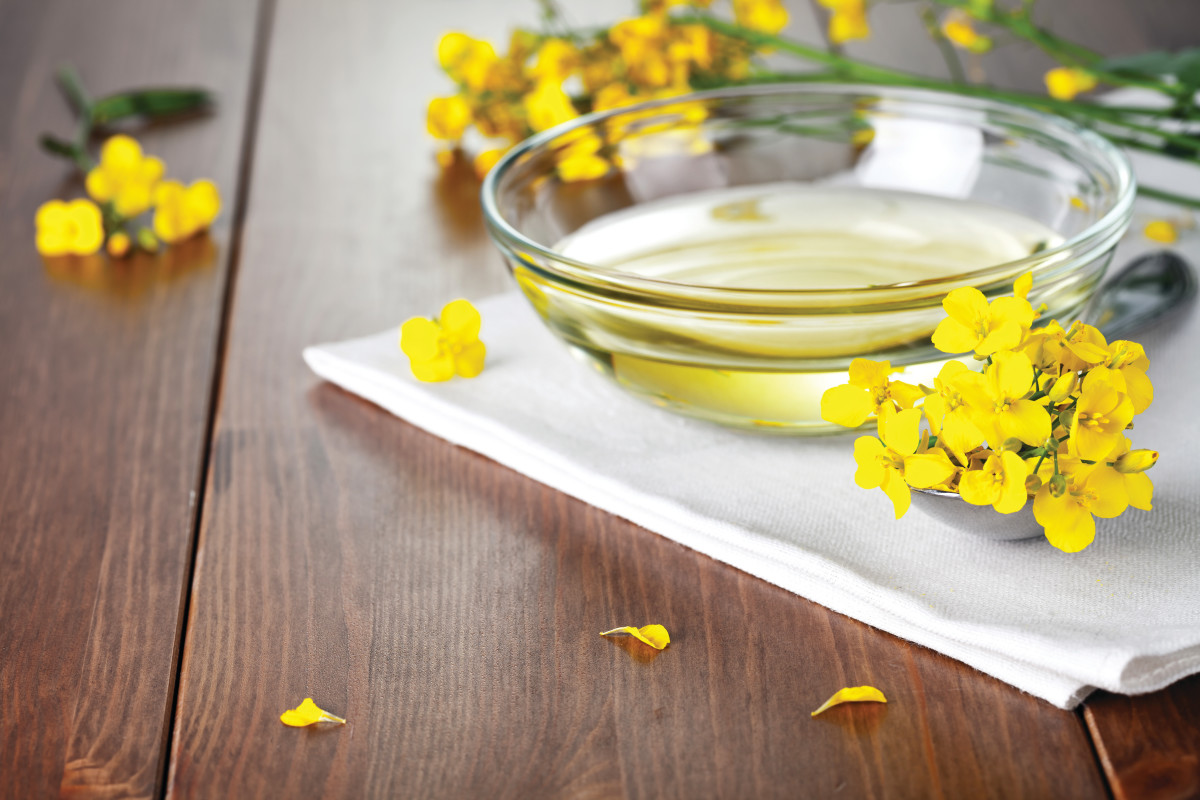
Canola oil has become the punching bag of oils in recent years. On social networks it is sometimes presented as “industrial oil” which is responsible for chronic and other diseases. A populist claim that refers to canola oil is that it is used by the automotive industry. And since that is the case, it must be an inferior oil, not to mention harmful to health.
But when you move from the feed to the scientific journals, you get a different picture. The oil that was used by the automotive industry as an engine lubricant was an oil created from different rapeseeds than those intended for edible oil, and it is called colosseum oil, which differs in its composition from canola oil. The oil produced from rapeseed for the automotive industry is rich in erucic acid, an acid that can be harmful and even toxic in high quantities.
The crops of the rapeseed plant whose seeds are intended for the production of canola oil are different and different, among other things also with a low amount of erucic acid, below 2% in the product, a level that cannot cause any harm.
What’s in the bottle, and why is it called canola?
Canola is not a “new oil” but a cultivated variety of rapeseed, a plant from the cruciferous family, with yellow flowers, from the seeds of which an oil was developed in Canada in the 1970s, so that it would contain extremely low levels of erosic acid, a long-chain fatty acid, which in the old varieties appeared in high quantities and was not suitable for large human consumption.
The name “Canola” was born as a combination of “Canada” and “ola” (oil), and some believe it is an abbreviation of “Canadian Oil, Low Acid” – a reminder that this is a Canadian oil with a low amount of erucic acid. This is an agricultural genetic improvement of a plant that has been known for decades.
The advantage of canola oil is in its fatty acid profile. Canola oil contains a high percentage of unsaturated fatty acids, which are considered to be better fatty acids for the health of the body and contribute to reducing the chance of heart disease and stroke. As a general rule, one should minimize the consumption of saturated fatty acids, which are mostly derived from animal fats, and prefer unsaturated fatty acids, which are derived from vegetable fats.
On top of that, thanks to the improvement of the seeds, canola oil is relatively rich in omega 3, an ALA type fatty acid in a higher amount than that found in olive oil. This fatty acid is essential for health, and the human body is unable to produce it on its own, so it must be supplied from external nutritional sources such as walnuts, chia seeds and ground flax seeds, along with the intelligent use of canola oil in a balanced menu.
The World Health Organization also recommends replacing a significant portion of the saturated fat in food (butter, fatty meat, coconut oil and palm oil) with vegetable oils rich in unsaturated fat, including canola oil, as part of a diet that reduces the risk of cardiovascular disease.
Canola oil vs. olive oil
And what happens when you put canola in front of the beloved Israeli olive oil? In the home kitchen, the oil that stars in the last decade is olive oil – and with olive oil it is difficult for canola oil to compete. It is true that the amount of omega-3 fatty acid is lower in olive oil, but to its credit is the fact that it has not undergone genetic engineering, it is produced by cold pressing, and in general its nutritional profile is high.
If you compare cold-pressed canola oil to olive oil – canola oil is a worthy and good competitor and can be varied for different uses in the kitchen. Olive oil is recommended for seasoning, cooking and even light frying. When deep frying, canola oil can be used. Its taste is less dominant and suitable for this type of food, and in addition the economic expenditure on the dish will be lower.
However, it is important to know that those for whom taste or economic considerations are not a problem can also use olive oil for frying (contrary to what was commonly thought in the past, that olive oil burns quickly and is therefore not suitable for frying). In fact, almost all vegetable oils can be used for home frying, if you make sure that the temperature is not too high (above 180 degrees) and that the oil is stored correctly, in a cool and dark place.
In the food industry the situation is different. Often using canola oil will replace palm oil. Palm oil, although it is of vegetable origin, is rich in saturated fatty acids known to be less recommended. In such a case it is better to use canola oil, which will provide a product with an improved nutritional profile.
For the vegetable salad, the roasted vegetables, the pesto and the homemade hummus – extra virgin olive oil, preferably Israeli, is the main star. But when making baked meatballs, a dish that requires a short fry or baking a cake, you can use high-quality canola oil – the kind whose bottle label says “canola oil” only, without other mixtures. Its taste is neutral, it is suitable for cooking and baking and does not burden the pocket.
It is important to remember two simple things. One: according to the World Health Organization, the source of most of the fat in the menu should be from unsaturated fats – such as olive oil and canola oil – instead of saturated fats such as butter, which is already a big step for heart health.
The second: there is no single food product that will determine the fate of our health. The less important question is “canola or olive?” And more “How much oil do I have on my plate, and how many vegetables, legumes, fish – and how many steps a day do I add to them?”. No online trend can win this battle.
https://reactos.org/forum/memberlist.php?mode=viewprofile&u=172608
https://startupxplore.com/en/startups/lahint-company
https://md.kif.rocks/s/KyUIw8fv0L
https://writer.c3pb.de/s/Ffsy6Id17
https://freemiumbusinessmodel.com/discount-codes-that-help-you-save-more/
https://hackmd.diverse-team.fr/s/HkKLt6dGbl
https://allmynursejobs.com/author/chairs-and-table-rentals-in-orlando/
https://pad.kanthaus.online/s/9lx_qMI7L
https://medium.com/@annawalkre/hire-male-dancers-private-party-acb42b55ecba
https://www.efunda.com/members/people/show_people.cfm?Usr=johnjordan12
https://stackshare.io/companies/traycer-ai
https://lahint-company.taplink.ws/
https://land-book.com/websites/85152-build-your-dream-sim-racing-rig-ready-set-sim
https://charleston-private-event-entertainment.pages.dev/
https://sites.google.com/view/privatepartymalestrippers/
https://participa.favb.cat/profiles/chairs_and_table_ren/groups
https://pastelink.net/eyll2669
https://malestrippersforhirebachelorettes.wordpress.com/2025/11/01/hello-world/
https://hedgedoc.rezo-rm.fr/s/ZyApBYz6G
https://md.chaospott.de/s/0APvx00tk
https://trueen.com/business/listing/nova-express/637347
https://medsatsea.com/online-shopping-deals-with-discount-codes/
https://www.intensedebate.com/people/Johnjordan12
https://app.innmind.com/viewStartup/yTtg2yvbFxf2FZJC9
https://dev.to/john_jordan_e9a86809613ad