For many months now, Hung, the sales team leader of a distribution company, has been under pressure from falling sales, staff quitting and his boss complaining.
Every morning, the 38-year-old man feels like “a machine with no battery”, and in the evening, the thing that confuses him the most is his gradually decreasing sexual desire. There were nights when his wife took the initiative to get close to him, but Hung used the excuse of being tired and turned away. He tried many times but his body did not listen.
“The feeling of shame is overwhelming but I don’t dare share it,” Hung told Dr. Hoang Quoc Lan, clinical psychologist, Phuong Dong General Hospital.
Phong, 37 years old, also experienced a similar situation. At first, work stress caused him insomnia, then constant fatigue, until he realized he no longer had the same sexual desire as before. He avoided his wife’s touches, using the excuse of being busy, but deep down he was always confused and afraid. “Physiology is a measure of a man’s bravery,” he shared.
Every time his wife asked about him, Phong felt like he was being scrutinized and judged. He began to doubt himself, worry, fear his wife would be disappointed, and the family would fall apart. Negative thoughts pile up day by day, turning into a feeling of heaviness in the chest, fast heartbeat, dizzying mind, and sweating. When he saw a psychologist, the doctor said he had signs of depression and needed treatment.
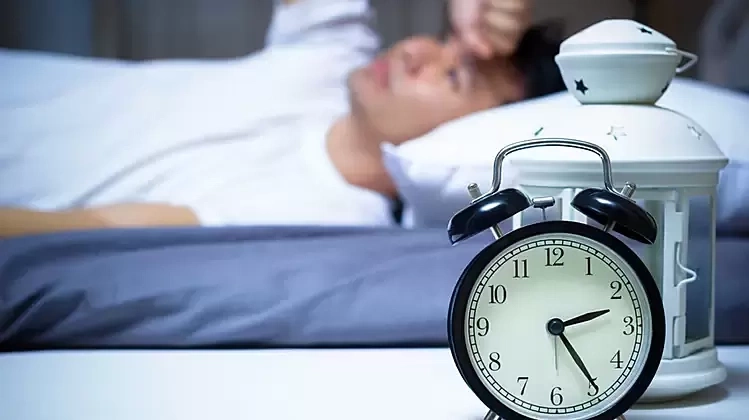
Stress causes decreased sexual desire, thereby exacerbating mental illness. Image: Shutterstock
According to Dr. Lan, both of the above patients are typical victims of a pathological spiral that is rarely recognized by men: prolonged stress eliminates sexual desire, leading to low self-esteem and eventually pushing them into depression. The biological mechanism of this phenomenon has been clearly proven by science. When the body is under pressure, the adrenal glands increase secretion of cortisol – the stress hormone. Elevated cortisol levels directly inhibit the production of testosterone, a hormone that plays a key role in maintaining libido and erections in men. This is a natural survival response of the body, not a manifestation of intrinsic weakness.
However, the biggest barrier lies not in physiology but in social psychology. Studies from the American Psychological Association (APA) show that men often associate self-worth with sexual ability. When this function declines, they tend to position themselves as failures. Instead of seeking help, they withdraw into themselves, creating an “emotional void” where anxiety has the opportunity to flare up.
Doctor Ha Ngoc Manh, Director of Viet Belgium Andrology and Infertility Hospital, further analyzed that healthy sexual activity helps release dopamine and oxytocin – neurotransmitters that bring feelings of excitement and connection, acting as a natural sedative to help reduce stress. When these hormones are deficient, men easily fall into a state of irritability, lose emotional control and weaken the immune system, setting the stage for more serious mental disorders.
The importance of sexual health for overall health has been established at a global level. At the National Scientific Conference taking place in October 2025, Associate Professor, Dr. Nguyen Quang, President of the Vietnam Sexual Medicine Association, emphasized that sexual health is an indispensable foundation for physical and mental stability, according to the definition of the World Health Organization (WHO). A study published in the medical library Verywell Mind also supports this point of view by showing that sex is an effective stress management technique thanks to its ability to lower cortisol and adrenaline levels, with effects that last into the next day.
Clinical reality shows that a lack of understanding about the relationship between stress and physiology is causing many men to miss the opportunity for early treatment. They assume that decreased libido is a “death sentence” for men’s bravery instead of seeing it as a temporary medical symptom.
Medical experts recommend that treatment begins with eliminating personal prejudices, sharing openly with your partner and seeking professional support. Lifestyle changes such as reducing alcohol, ensuring sleep and exercising regularly not only help rebalance hormones but are also the first step to breaking the vicious cycle between stress and depression, before it causes irreversible damage to mental health and family happiness.
https://tyachiv.ukraine7.com/t25927-topic#48818
https://aist.actieforum.com/t3416-topic#9218
http://www.bisound.com/forum/showthread.php?p=2952062#post2952062
https://ukrinfo.actieforum.com/t2882-topic#6236
https://kropyvnytskyi.ukraine7.com/t251-topic#485
https://ludi.actieforum.com/t1860-topic#3674
https://hozforum.actieforum.com/t4800-topic#14788
https://kava-i-slovo.forumotion.me/t325-topic#682
https://svit-besidy.forumotion.me/t335-topic#699
https://odesacity.ukraine7.com/t248-topic#581
https://zolochiv.catsboard.com/t3241-topic#12817
https://otziv.forumpolish.com/t219-topic#468
https://bittogether.com/index.php/topic,22936.0.html
https://mamuli.club/forum/topic/44317/
https://politika.forum2x2.com/t11240-topic#28950
https://uzhgorod.ukraine7.com/t305-topic#680
https://lvivforum.ukraine7.com/t227-topic#528
http://footwear.ua/forum/index.php?act=morelist&id_parent=97761&id_group=7&offset_detail=0
https://kazan.en.cx/Guestbook/Messages.aspx?page=1&fmode=gb&topic=382352&anchor#7977476
https://magistr.actieforum.com/t4247-topic#10672
https://lvivskij.forumotion.me/t684-topic#1399
https://masterovou.forumotion.com/t6033-topic#12564
https://oryhinalnist.forumotion.me/t330-topic#699
https://forum.i.ua/topic/26440
https://sfera-obsuzhdenij.forumotion.com/t2016-topic#3826