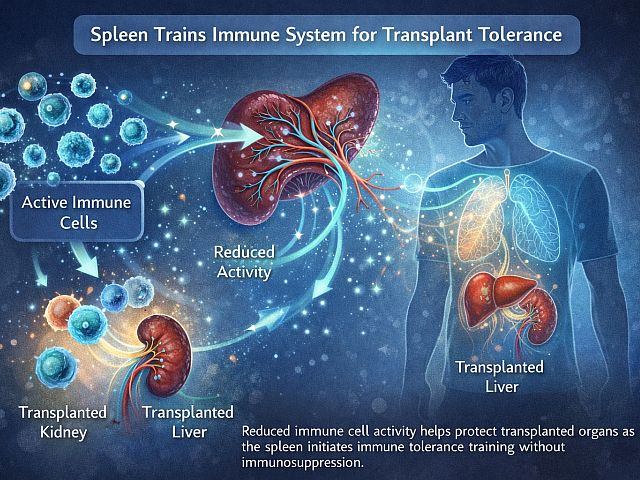
New research from the University of Minnesota Medical School provides new insight into the immune system’s response to organ transplants. As reported in the journal Science Advances, T-cell depletion, previously thought to be a sign of immune dysfunction, may serve a protective function and promote organ acceptance by the body.
Scientists have also found that the spleen plays a key role in the formation of transplant tolerance. It has been shown that administration of apoptotic donor leukocytes leads to an increase in the number of donor-specific regulatory T cells of the Tr1 type. These cells reduce the intensity of the immune response by restraining the activity of T cells that could attack the transplanted organ through the Areg-EGFR signaling pathway. This selective mechanism allows the development of immune tolerance without a general suppression of the protective functions of the immune system.
In contrast to general immune suppression, this method creates a controlled state of donor-specific regulation in the T cells most likely to cause rejection. The regulatory mechanism triggered by the spleen allows the body to maintain protection against infections and at the same time ensures long-term engraftment of the transplant.