Although AI helps diagnose faster and more accurately, Deputy Minister of Health Nguyen Tri Thuc said that this technology cannot replace the responsibility and empathy of doctors with patients.
At the conference Health in the age of AI On January 14, Deputy Minister Nguyen Tri Thuc commented that artificial intelligence (AI) is becoming an important tool in medical digital transformation, especially when Vietnam has a legal corridor, the Law on Artificial Intelligence, passed by the National Assembly in 2025. However, he emphasized that the technological boundary that cannot be overcome is “conscience and sympathy”.
According to leaders of the Ministry of Health, AI can process large data, support reading diagnostic imaging films or suggest treatment regimens, but the final decision and accountability must still belong to humans.
“The basic difference is that AI does not have a heart to understand the patient’s pain. Therefore, no matter how much technology develops, doctors still play a central role,” Mr. Thuc said.
Deputy Minister Nguyen Tri Thuc at the AI Age Health conference on January 14. Image: Nguyet Thu
The Ministry of Health is currently developing legal guidance documents to specify the application of AI, with priority given to solving ethical and humane issues. In parallel, the health industry strives to synchronize data from 26 specialized databases (cardiology, cancer, immunity…) to create a “clean data” platform for AI to operate effectively. This is considered a big challenge as the data infrastructure at many hospitals is still fragmented.
Sharing the same opinion, Mr. Nguyen Anh Tuan, CEO of Boston Global Forum, said that the most suitable model for Vietnamese healthcare today is AI playing the role of “assistant”. Technology will help reduce repetitive tasks, support doctors in early disease detection and remote prevention.
“The value of AI is not to replace doctors but to help doctors take better and safer care of patients. AI models need to be designed to serve people, instead of making people dependent,” Mr. Tuan analyzed.
In fact, in Ho Chi Minh City, AI has begun to appear in medical examination and treatment processes. Ms. Tran Thi Lam, Head of the Strategic Committee of Ho Chi Minh City High-Tech Medical Park, assessed that artificial intelligence has participated in many medical decisions. However, she noted that the biggest challenge is not just technology but ensuring AI effectively supports doctors without overwhelming the human factor.
Currently, a number of large hospitals such as Gia An 115, Cho Ray, Ho Chi Minh City University of Medicine and Pharmacy have applied AI in image diagnosis, robotic surgery and medical record management, initially recording shortened waiting times and increased diagnostic accuracy.
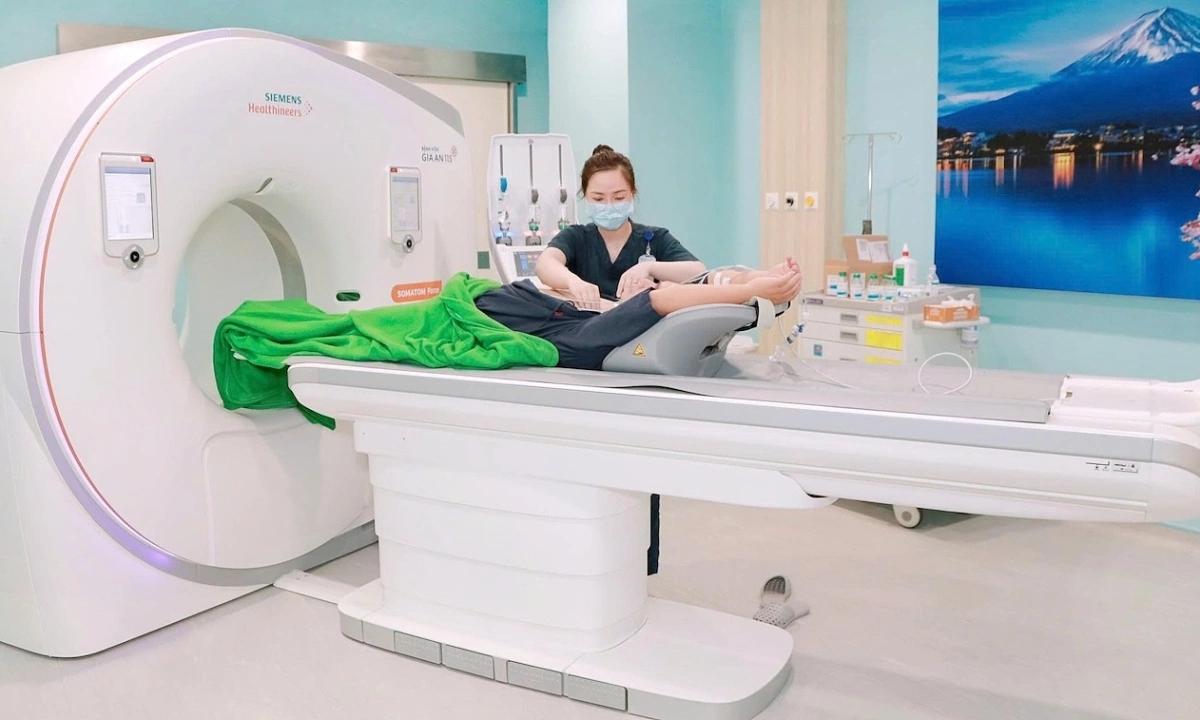
CT machine integrated with artificial intelligence at Gia An 115 Hospital. Photo: Nguyet Thu
The global medical AI market is expected to reach nearly $188 billion by 2030, according to Statesmanin the context of the World Health Organization (WHO) warning of a shortage of 10 million health workers at the same time. Faced with this pressure, the American Medical Association (AMA) and many international organizations have switched to using the term “augmented intelligence”, positioning technology as a decision support tool, not replacing the clinical role of doctors.
Legally, the European Union (EU) and the US Food and Drug Administration (FDA) both apply the “human-in-the-loop” principle. The EU’s AI Act, which comes into effect in 2024, classifies the majority of medical apps as “high risk”, requiring mandatory human oversight and transparency of input data to ensure accountability.
Despite concerns about emotional deficits, a 2023 study in the journal JAMA Internal Medicine noted that AI chatbots can provide feedback that is considered “more empathetic” than doctors in some online consultation situations. Researchers explain this not because machines have emotions, but because actual doctors are often overloaded and do not have enough time to explain thoroughly to patients. To solve this problem, AI can help free doctors from administrative tasks to focus on direct patient care