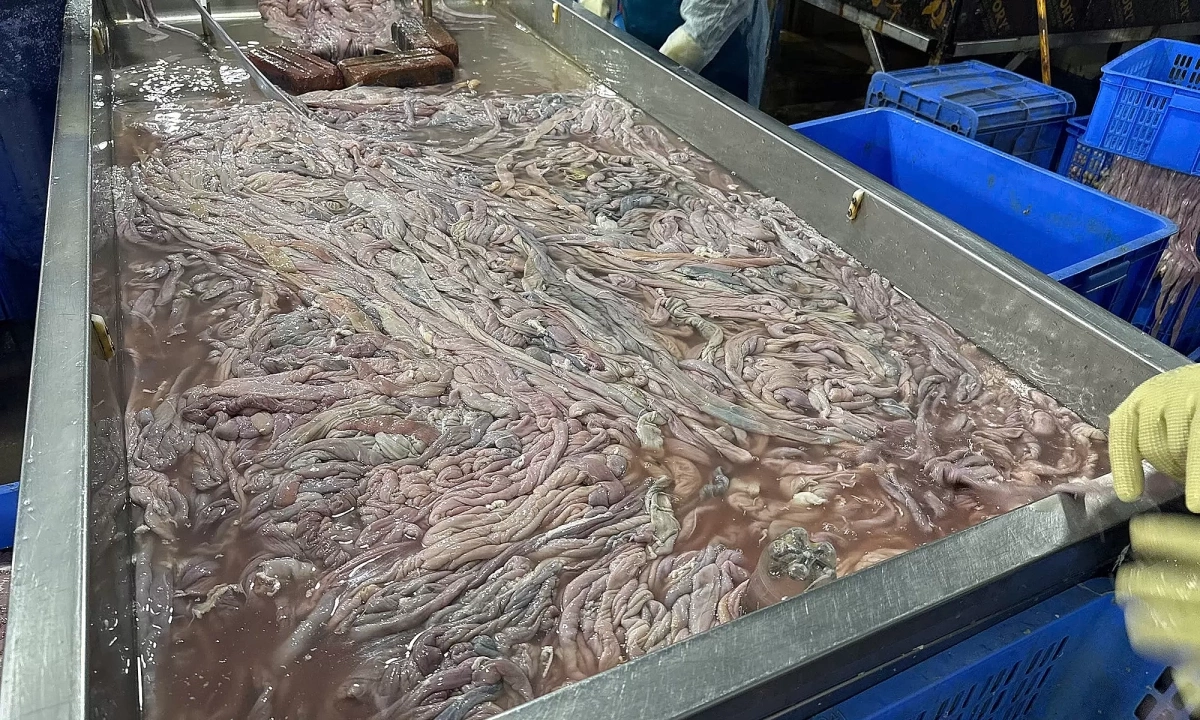
Experts warn that spoiled pig intestines are a source of dangerous bacteria, potentially causing digestive harm and even leading to death if not detected promptly.
On January 29, the authorities inspected the processing facility of Dung Phat Production and Trading Co., Ltd., Van Phuc village, Nam Phu commune, and discovered about 59 tons of raw tripe frozen for 4 to 6 months, one ton of tripe in the process of preliminary processing, and 3.6 tons of finished tripe. In the warehouse, there are also tons of finished products used to make sausage casings and sausages, which are also ready to be exported to the market.
According to Associate Professor Nguyen Duy Thinh, Institute of Biotechnology and Food (Hanoi University of Science and Technology), pig intestines or large organs contain a large amount of microorganisms. If frozen for too long, they can be damaged, not to mention the product before freezing may not be guaranteed.
When pig intestines smell and change color, they carry disease-causing bacteria such as Salmonella, E. coli, tapeworms, liver flukes… If people eat it lightly, they will have abdominal pain, diarrhea, and vomiting; Severe cases can lead to serious gastrointestinal infections. Parasites such as roundworms and pork tapeworms easily enter the human body when eating infected meat that is not thoroughly cooked.
In particular, streptococcus suis – a dangerous bacteria that can be transmitted from pigs to humans through uncooked food or through open wounds. There is no vaccine to prevent the disease. In severe cases, the disease can rapidly progress to sepsis, septic shock, vascular collapse, hypotension, severe coagulation disorders, systemic necrotizing purpura, thrombosis, multiple organ failure… coma and death.
In addition, to “enchant” rotten tripe into white, crispy tripe, establishments often use bleaching chemicals or borax. These are chronic toxins that accumulate over a long period of time, causing a burden on the liver and kidneys, causing the body to work overtime.
Many intestines have changed color, have a foul smell, and have changed color. They have been frozen for 4-6 months waiting to be released to the market. Image: Linh Dan
Doctors recommend absolutely no pork intestines or any pork products that have not been thoroughly cooked. When buying meat, you should choose products of clear origin, avoid meat with unusual colors, signs of edema or bleeding. People participating in slaughtering and processing pork need to wear gloves, masks and clean their hands after contact.
If there are open wounds on limbs, they should be covered with waterproof gauze before handling raw food. In addition, with ready-to-eat foods purchased from the store, you should blanch with boiling water or cook thoroughly before eating to ensure food safety and hygiene.