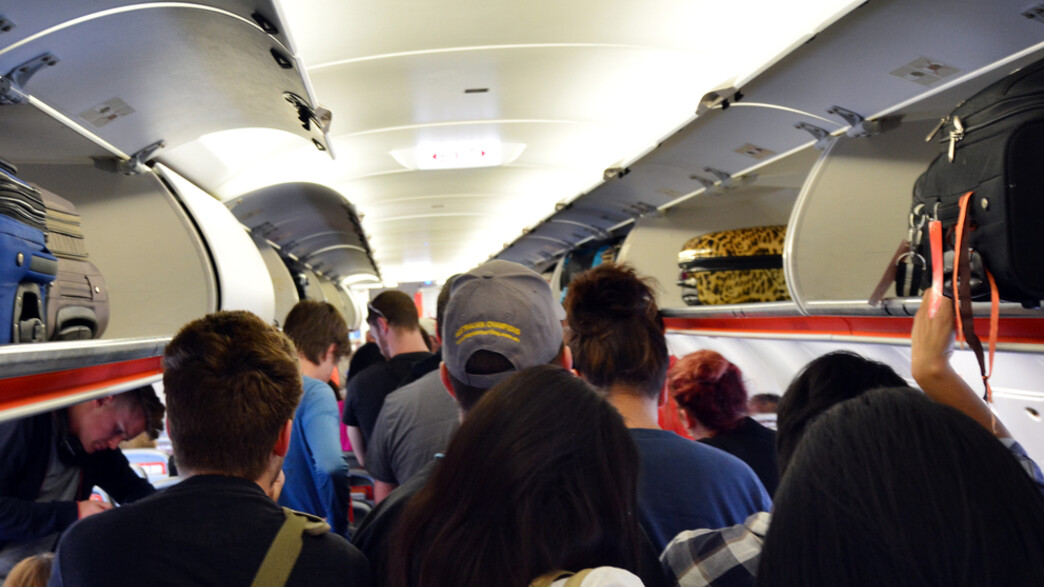
Avivit Eliyahu, a veteran nurse at Hadassah Mount Scopus, never imagined that a routine flight from Ethiopia to Israel would include such dramatic moments: Right in the middle of the flight, shortly after the food was served, one of the passengers noticed something unusual: a 75-year-old man who was sitting in a row in front of another passenger, was slumped in his seat, with his head seemingly tilted at an unnatural angle. He did not respond and strange sounds came out of his mouth. “At first he seemed stable and then he started snorting,” describes Avivit. “There were two young men sleeping next to him – they didn’t understand at all that something was wrong with him.”
In a few moments the familiar call was heard: “Is there a doctor or nurse on the plane?”. Avivit did not hesitate. “I got up immediately – it’s instinct. I’m a nurse everywhere, even when I’m on vacation.”
When she reached the passenger, the picture had already become clearer: “Since the incident happened immediately after eating, and he did not react, I understood that he probably suffered partial suffocation, that is, he choked on food that passed from the pharynx to the airways.”
She went to check the pulse and noticed that it was very weak, almost imperceptible. “I knew that every minute was critical in his situation.”
Thus, without equipment but with great experience and determination, she began to operate. “I asked the two young passengers next to him to lay him down on as hard a surface as possible. As required, I began to remove secretions from his mouth, measure his pulse, understand where we were standing. It was really a situation of field conditions.”
“For a moment there was fear that we would have to land in Saudi Arabia. These are decisions of moments“
The flight attendants crowded around her, and according to her, they were alert and stressed. “They asked if an emergency landing should be made. For a moment there was a fear that we would have to land in Saudi Arabia. These are split-second decisions, but I focused on the mission.”
Avivit says that the passenger was flying alone. “According to the people who were around him, his son put him on a flight from Israel to Ethiopia to visit relatives.”
Since he was unconscious and partial suffocation was suspected, she began chest compressions in order to release food. “At Hadassah, there is an array of CPR courses for teams that includes a refresher at each period. At a moment like this, the educational material becomes a real tool for saving lives.”
After minutes that seemed like eternity, by her definition, suddenly the passenger opened his eyes. “It was a moment of immense relief. He started to move his lips, but was still very confused. I told the people around to speak to him gently in the Amharic language, but he was disconnected, and didn’t really understand where he was.”
In the end, after informing the captain that the passenger’s condition had stabilized, it was decided to continue the flight as planned, and he remained under close supervision by the nurse until landing. Avivit says that people on the plane approached her and praised her action. “It was exciting, but also exhausting. I felt a lot of responsibility and I was alert throughout the flight. The pilot also came to me and thanked me.”
Now she sums up modestly: “I’ve been a nurse for 38 years, and I just did what was needed. There’s no doubt that it’s an amazing feeling to save a life. It’s important that everyone understands how important such courses are.”
https://hedgedoc.ceehome.net/s/7GZvjjaHgV
http://mindwellnessforum.com/user/jailgrouse03
https://docs.stephtransition.fr/s/_EvhlrwYbm
https://hedgedoc.ctf.mcgill.ca/s/8zLGQmyR-
http://lida-stan.by/user/clothbench16/
https://forum.dsapinstitute.org/forums/users/organflesh23/
http://megapari-egypt.org/cookies-policy/
https://pinco-ca.net/contacts/
https://www.pinterest.com/pin/1133992381200173464
https://paripesa-chile.com/deportes-electronicos/starcraft/
https://linktr.ee/controlplagasenmalaga
https://markdown.iv.cs.uni-bonn.de/s/d3s1MlJXt
https://www.bidbarg.com/legal/user/judgearea65
https://md.informatik.uni-ulm.de/s/d4dJVyysX
https://pinco-canada.net/hockey/
https://poiskpredkov.by/members/loanpink86/activity/576533/
http://megapari-egypt.org/megapari-mayan-tomb/
https://dok.kompot.si/s/AEewLrk3IZ
https://pinco-canada.net/fr-ca/route-du-poulet-pinco/
https://conducemejor.com/profile/enmalaga/
https://timeoftheworld.date/wiki/Fondamento_dellEuropa_Solare_Come_i_Grossisti_PV_stanno_Modellando_il_Futuro_dellEnergia
https://linktr.ee/farmaciasdeguardiaenmalaga
https://farangmart.co.th/author/flowercandle74/
https://groovestats.com/index.php?page=profile&id=194730
https://travelersqa.com/user/lacegrouse83