When thinking about ways that can help us feel happier and more optimistic, exercise, good sleep or mindfulness practices often come to mind. But the food we eat may also play a role in supporting our psychological well-being.
Psychological well-being – a combination of a sense of happiness, optimism and a sense of meaning – is not just a matter of feeling good. Studies indicate that it is also associated with better physical health and a higher quality of life. Although nutrition alone is not a magic solution for mental health, researchers are examining how certain foods, especially those rich in flavonoids – plant compounds with antioxidant and anti-inflammatory properties – may contribute to mental well-being over time.
How was the research conducted?
To examine whether flavonoid consumption is related to psychological well-being, the researchers relied on data from the large Nurses’ Health Study, which includes information on more than 120,000 nurses. This is one of the largest and most detailed studies of its kind, following for decades the health status of the participants, their lifestyle and dietary habits.
In the current analysis, the researchers focused on two groups of women. In one group, the level of happiness was measured over ten years, and in another group, the level of optimism was tested over a similar period.
The participants filled out detailed eating frequency questionnaires once every four years, which allowed the researchers to calculate the consumption of foods rich in flavonoids – including berries, citrus fruits, tea and red wine. In addition, the researchers created an index called “Flavodiet score”, which is designed to measure the variety of flavonoid sources in the diet of the participants. The index was based on seven key foods: tea, apples, oranges, grapefruit, blueberries, strawberries and red wine.
To improve the accuracy of the results, the researchers excluded from the study participants who suffered from significant chronic diseases or those for which the data were incomplete. In the end, more than 44 thousand women were included in the analysis to examine the levels of happiness and almost 37 thousand women to examine the levels of optimism. In addition, the researchers took into account other factors that may affect the results, such as age, physical activity, smoking habits and the quality of the general diet.
What did the study find?
The results of the study indicated a moderate but significant relationship between a diet rich in flavonoids and maintaining high levels of happiness and optimism over time. Women who consumed the highest amount of flavonoid-rich foods – about three servings per day on average – were 3% more likely to maintain high levels of happiness and 6% more likely to maintain levels of optimism throughout the study period, compared to women who consumed the lowest amount.
In addition, it was found that a high consumption of certain foods was linked to an even higher chance of maintaining a sense of happiness. Higher consumption of strawberries, blueberries, apples, oranges and grapefruit was associated with an 8% to 16% increase in the odds of maintaining high levels of happiness or optimism.
For example, women who ate the most strawberries were 8% more likely to report high levels of happiness, while women who consumed the most blueberries were 14% more likely to maintain a sense of optimism over time.
Interestingly, although tea and red wine are also rich in flavonoids, they did not show the same strong association found for fruit. The researchers estimate that this may be related to differences in the way the drinks are consumed or processed, or to variations in the flavonoid content depending on the preparation and storage methods.
Along with the encouraging findings, the researchers emphasized that the study also has several limitations. First, most of the participants were white, educated women, so the results may not necessarily represent more diverse populations.
In addition, the study was based on data reported by the participants themselves, which may lead to errors in the measurement of nutrition or the level of psychological well-being. For example, participants may not have accurately remembered how often they ate certain foods or how they felt over time.
Another limitation is that the study cannot prove a clear causal relationship. Although the findings indicate a link between nutrition and psychological well-being, it is possible that other factors – such as socioeconomic status or accessibility to healthy food – influenced the results. Therefore, more studies, and especially controlled clinical trials, are required to better understand the mechanisms behind this relationship.
What does it mean in everyday life?
For many people, increasing their intake of flavonoid-rich foods may be a simple way to support both physical health and mental well-being. Berries, citrus fruits and green vegetables provide a wide variety of essential nutrients, and at the same time may also be associated with a feeling of happiness and optimism over time.
However, it is important to remember that nutrition is only one part of the overall picture of psychological well-being. Even if the consumption of foods rich in flavonoids can be a useful addition to a healthy lifestyle, it is not a substitute for medical or psychological treatment when it comes to conditions such as depression or anxiety.
In addition, the researchers emphasize that the benefits of flavonoids are probably related to a varied diet and not to a single food or a specific nutritional supplement. Therefore, it is recommended to include a wide variety of fruits, vegetables and other foods rich in flavonoids in the daily menu.
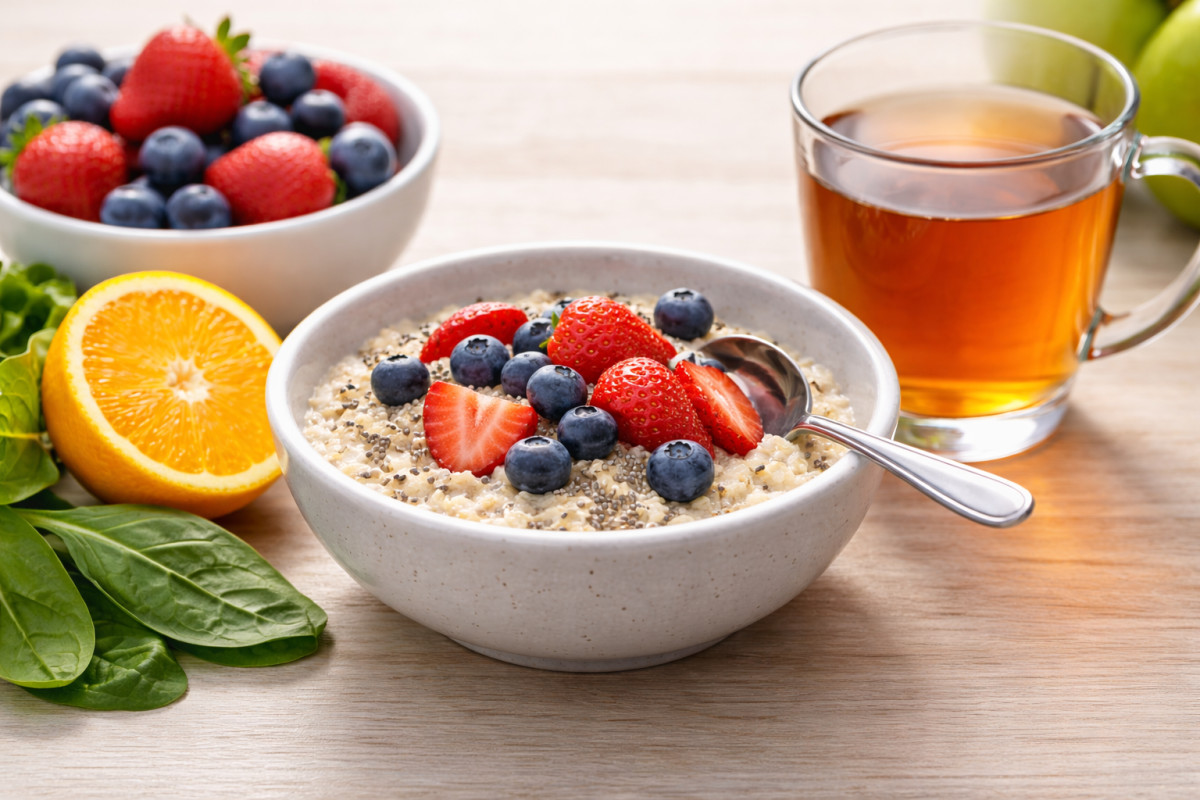
For example, you can start the day with a bowl of oatmeal with blueberries and strawberries, eat an orange as a snack during the day and add green vegetables such as kale or spinach to dinner.
In conclusion, the study found that a diet rich in foods containing flavonoids – such as berries, citrus fruits and apples – was moderately associated with maintaining a sense of happiness and optimism over time. Women who consumed about three servings a day of these foods were slightly more likely to maintain high levels of psychological well-being. However, it is important to remember that the effect found was moderate, and nutrition alone is not a treatment or solution to psychological conditions.