Comment|The old rules did not apply when the Ministry of Education and Culture awarded grants to athletes in summer sports, writes Juha Kanerva.
A series of mortar rounds Emilia Fabric looks the latest Top sports news – magazine, and the article is advertised under the title Towards the top level – important years ahead. Kangas has developed continuously in the 2020s and pushed his record to 18.42 last summer.
Kangas, originally from Nurmo, is 24 years old, so his best years are probably ahead. At the World Championships in Tokyo, Kangas failed to qualify, but two years from now, a place in the finals is realistic. The Ministry of Education and Culture, which awarded the sports grants, disagreed with Kankaa’s level of performance in the near future, as he was left without a grant.
Coach Dad Hannu Kangas did not digest the decision and published data on social media, based on which Emilia should have received a ton, i.e. a tax-free grant of 12,000 thousand euros.
“It seems that the decision-makers have the wrong idea about sports, if this development is not acceptable,” the father instructed the decision-makers.
Judoka Martti Puumalainen received the relevant 12,000 euros, but did not reach the large grant (24,000 euros). “Mara-sonni” should have placed in the top eight on the World Cup tatami, but when he finished ninth, half of the scholarship was cut off.
Half off was the word of the day when OKM announced the grants for summer sports last Friday. While 162 scholarships were awarded for 2025, 76 athletes were eligible for scholarships this year. The most dramatic drop was for track and field athletes, whose number dropped from 41 to 16, four of which are para-athletes.
The support system was therefore pushed hard. The background was Finnish elite sports’ chronic lack of medals in prestigious competitions.
Foreign experts made a critical assessment of the Finnish elite sports system already in 2022, but it wasn’t until the Paris Olympic Games in the summer of 2024 that the change process was accelerated.
In the new there are two tendencies in thinking. First of all, talent is sought from former younger athletes (14–15 years old) and, on the other hand, financial investment is allocated to “sure” successes. There are not many of the latter in this country, as evidenced by the small number of winners of the 24,000 euro lottery jackpot (26).
The criteria were also significantly tightened. OKM’s chief inspector Kari Niemi-Nikkolan according to which athletes’ performances are basically reviewed over a period of two years.
“If you have been among the top eight in the world in the most recent competition season, you will receive a large grant for two years, and if you have been there in the previous season, you will receive a large grant for one year,” explains Niemi-Nikkola.
The support system was therefore pushed hard. The background was Finnish elite sports’ chronic lack of medals in prestigious competitions.
In order to receive a small grant, you must have the prospect of rising to the top 8 in the world by 2028, i.e. by the Los Angeles Olympic Games.
Bulk the grants are distributed to Olympic sports, but other sports can also be included. The biggest of them are orienteering and bowling.
The latter became a jackpot at the World Championships at the end of the year, which was evident in the support of the bowlers. EUR 108,000 flowed out of cash flow, i.e. more than three times more than a year ago.
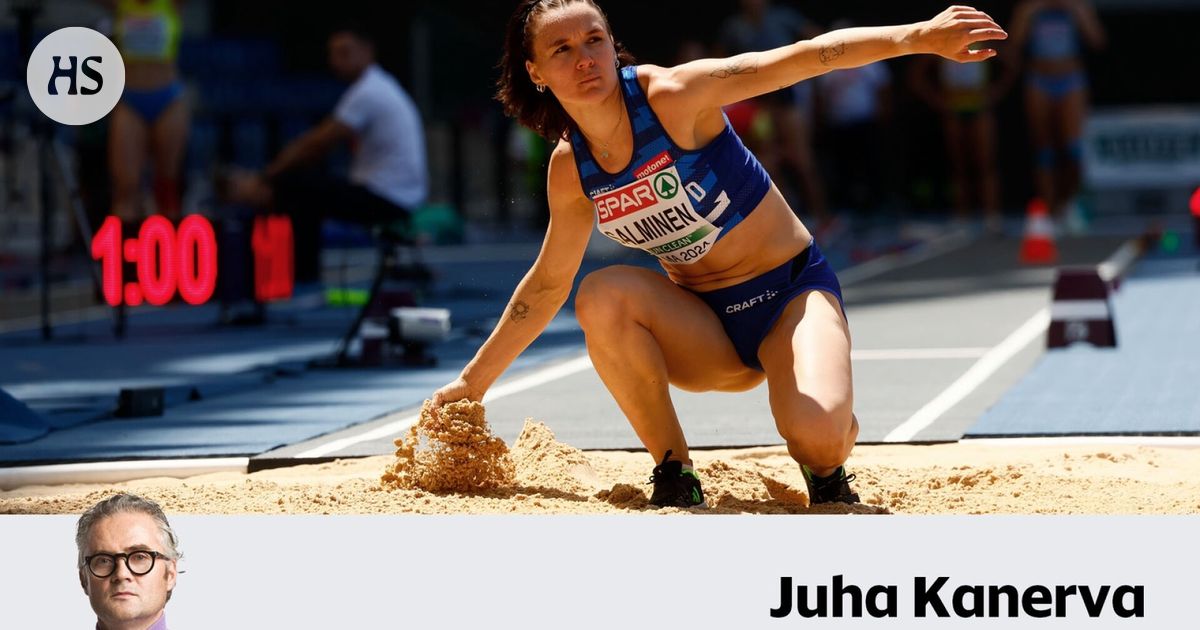
If bowling was one of the winners of the scholarship bingo, the biggest loser was athletics. For example, in the EC halls, the speed skaters who got on the medal ball Reetta Hurske (champion 2023) and triple jumper Senni Salminen (bronze 2025) were left without a government scholarship.
Track and field sports have been a favorite of Finns for over a hundred years. The year that started is also the jubilee year of the coaching support system, because in the fall of 1966 the chairman of the Finnish Sports Association Jukka Uunila promised the hurdler A group for Kuhathat this can practice in the warm conditions of the following winter for the descent of the union.
Two years later, Kuha ran the ME result on his mental journey.
O.K.M started awarding grants in 1995, and the original purpose was to provide medal candidates with financial security for professional training. 30 years later, professionalism is more visible in top blue and white sports.
For example, a pole vaulter Wilma Murto didn’t even apply for a grant. His other income is sufficient to guarantee a high-quality training routine.
According to Niemi-Nikkola, there were two athletes among the applicants who did not meet the income requirement. The grant is not awarded to athletes whose taxable income in the most recently confirmed taxation exceeds EUR 60,000 or whose financial position is otherwise sufficiently secured.
So there are very few of these high-income athletes. Even though the amateur era is over, the vast majority of Finns aiming for the top level still live from hand to mouth. For them, every ton is needed, so that they don’t have to miss a necessary massage or a visit to the physiotherapist.
Kihu researcher Jari Lämsän with in the development of the support system, it would be worthwhile for us to take a model from the Netherlands, where social security is also attached to the grant system for athletes. A viable idea.