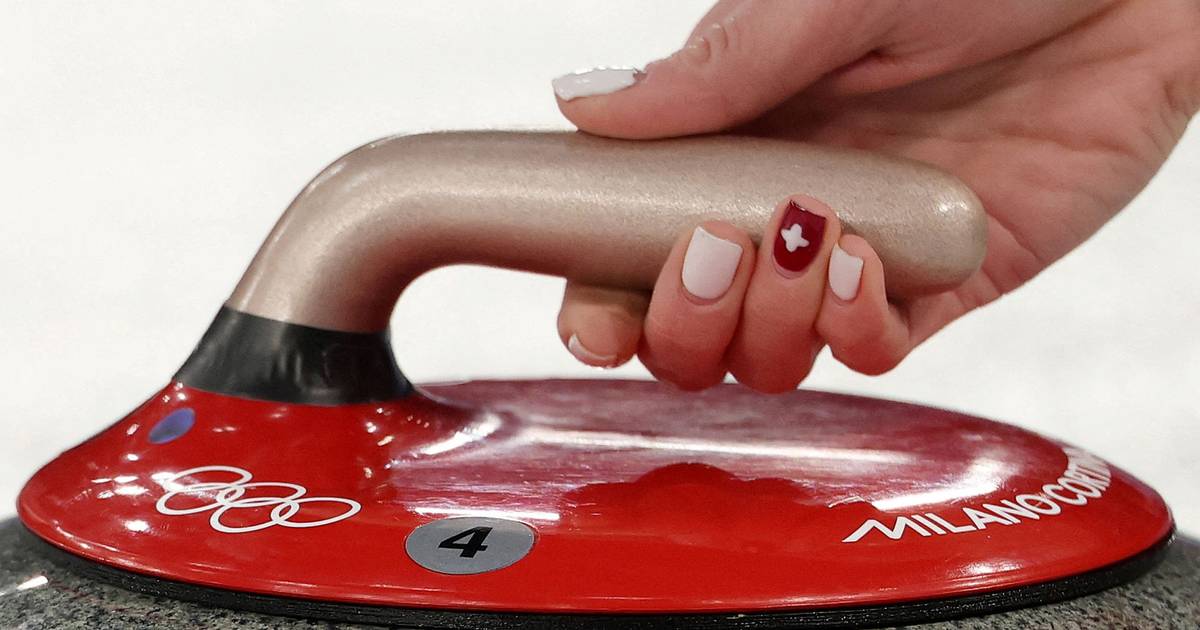
While gliding smoothly across the ice, heavy, polished curling stone became one of the most recognizable symbols of the Winter Olympics. This sport, which combines precision, strategy and teamwork, would not be possibleć without its key prop, its origins are as fascinating as the game itself. The story did not tell him about mass production, but rather; about geology, tradition and a small, uninhabited island off the coast of Scotland. All the stones used in the Olympic competitions, without exception, come from the same place: the island of Ailsa Craig, a granite rock just over three kilometers in diameter, located between Scotland and Ireland.
The island of ghosts and birds is a haven
Ailsa Craigwhose name in Scottish Gaelic means “fairy rock”, was created by volcanic activity tens of millions of years ago. The rapid cooling of the magma created a uniquely smooth and dense granite that makes it a geological phenomenon. Throughout history, this island was a fortress in the 16th century, a prison during the 18th and 19th centuries, and today it is a protected bird sanctuary, home to a huge colony of puffins, puffins and seagulls.
Due to the protection of nature, the exploitation of granite is strictly limited. It takes place approximately once every ten years, and without blasting. The workers are waiting for the boulders to naturally fall off the cliffs, and the harvest is planned exclusively between September and November so as not to disturb the nesting of the birds. Perhaps former American national team player Erika Brown described his status best.
- For us curling players, that island is a mystical place.
Geology of victory: Why this particular granite?
The secret lies in the unique molecular composition of granite from Ails Craig. Two specific species are mined on the island, which are used to make one stone, and each has a key role.
Impact resistant body
The body of the stone, i.e. its outer ring that serves to collide with other stones, is made of granite known as Common Green (ordinary green). Its structure is extremely resistant to heat transfer and condensation, but its most important property is elasticity. When colliding with another stone, this granite absorbs and releases the energy of the impact without cracking or creating splinters. Mineralogist Derek Leung of the University of Regina discovered that, although it contains quartz that is otherwise brittle, the Ails Craig granite has almost no microcracks due to its geological youth, making it incredibly durable.
Sliding surface for a perfect trajectory
For the lower part of the stone, a narrow ring that only touches the ice (so-called running band), another type of granite is used – Blue Hone (blue sandpaper). This material is considered the holy grail of curling and cannot be found anywhere else in the world. It is extremely thick and practically does not absorb water. This is crucial because ordinary stone would absorb moisture from the ice, which would then freeze, expand and cause cracking. Blue Hone it has small and uniform mineral grains, which ensures consistent and predictable sliding for decades, without wear that would affect the trajectory of the stone.
From rock to ice sheet
The Scottish company Kays Curling, which has been producing stones since 1851, has the exclusive right to extract this precious material. They have supplied stones for all Winter Olympics where curling has been an official sport, with the exception of Salt Lake City in 2002, when granite from the Welsh Trefor quarry, the only other place in the world that produces granite suitable for curling, was used.
The manufacturing process is a combination of heavy engineering and precise manual work. Huge boulders are cut into slabs, from which round “cheeses” are then cut. Body of Common Green the granite is then drilled, and a ring of Blue Hone granite, using a technique called “Ailserts” in Kays. Each stone weighs between 17.24 and 19.96 kilograms, and its lower surface is not flat, but recessed, so that contact with the ice is reduced to a minimum.
Due to the rarity of the material and the complexity of the production, the price is steep. One stone for competitions costs about 600 euros, while the price of a set of 16 stones for professional competitions, equipped with “Eye on the Hog” sensors in the handles that prevent cheating, can exceed 14,000 euros. However, considering that one set can last up to 50 years, it is an investment that guarantees that the secret fairy rocks will be passed down from generation to generation.