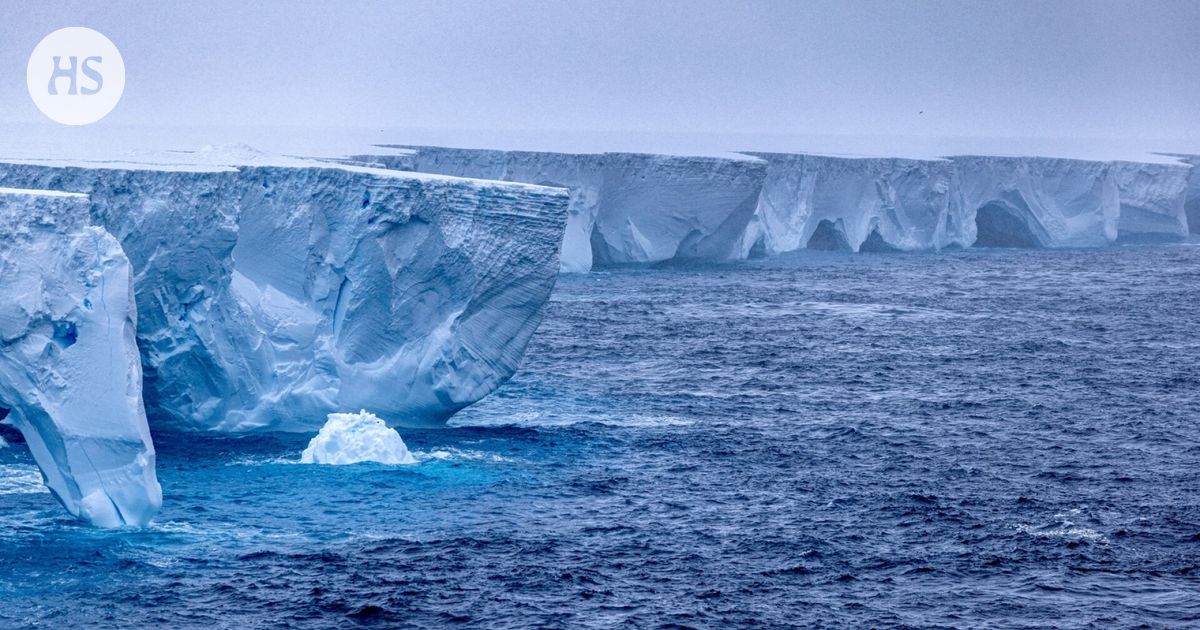
Icebergs|The A23A Iceavuori has “persevered longer and went longer than the others,” but now it is away.
World The biggest and oldest iceberg is breaking down, says Bas, a British antarctic research organization, according to AFP news agency. The A23A iceberg may disappear completely within a few weeks.
Still in the early part of the year The A23A was approximately 3,500 square kilometers and threatened life on the island of South Georgia. Now it has decreased dramatically and has an area of only about 1,700 square kilometers.
In recent weeks, the Ice Mountain has moved quickly, up to 20 kilometers a day, from Antarctic to north, or warmer waters. Huge pieces of up to 400 square kilometers have come off.
So the iceberg breaks down “quite dramatically,” described the BAS marine researcher Andrew Meijers AFP: Lle.
“I would say it is on its way. It is practically rotting from below. The water is just too warm to keep it,” Meijers estimates.
The Meijers wondered that the A23A would probably not be recognizable in a few weeks.
A23A Has held the title of the world’s largest iceberg since the 1980s. Occasionally it was passed by shorter icebergs, as in 2017 and A76 in 2021, says CNN.
The A23a came off the Antarctic Filchner -Renne ice shelf in 1986, but stuck to the bottom of the Weddellim Sea shortly after the detachment for more than 30 years.
In 2020 it finally got off. This year, the iceberg drifted close to the island of Southern Georgia in South Atlantic, where it threatened to disturb the island’s animals. In the end, the giant did not come across the island or stuck on the seabed too close to the island.
According to Meijers, the researchers have been surprised at how long the A23a has remained so huge. The A23a has “persevered longer and went longer than the others,” Meijers described.
As a result of the breakdown, the title of the world’s largest iceberg has been transferred to D15A, which has an area of approximately 3,000 square kilometers. Meijers tells CNN that D15A-Iceavuori is currently located in Antarctica near Australia Research Station.
The A23A is still, at least for a moment, the second largest iceberg in the world.