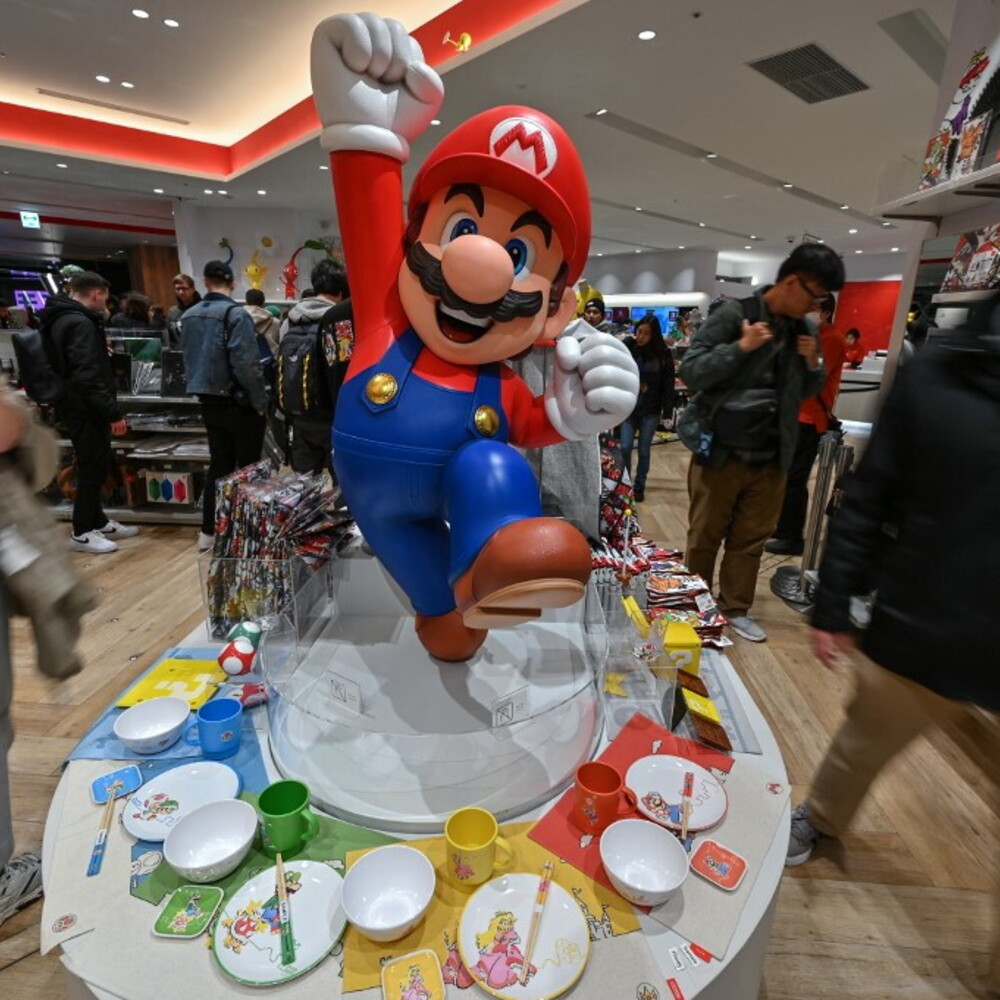
When he appeared for the first time on the screens in 1981, the mustaches Nintendo hero was not yet called Mario, but “Jumpman”. It was a carpenter with a single mission: save the girlfriend – then called Lady, then renamed Pauline – by the clutches of a rebel monkey in Donkey Kong. The game, simple and immediate, laid the foundations of a myth that no one, not even his creators, could imagine. In 1982 the character changed his name and role to Donkey Kong Junior, the only title in which he appeared as an antagonist and not as the hero they all know. The following year, in 1983, he arrived Mario Bros.set in the Fogne of New York, where Mario made a couple with his brother Luigi. Since then the two were fixed in the imagination as Italian -American plumber, Two common men struggling with extraordinary enemies.
The consecration arrived in 1985 with Super Mario Bros. For the first time the player faced a long horizontal scrolling journey through eight colorful worlds, to defeat King Koopa and free Princess Peach. It was a technical and cultural revolution: over 40 million copies sold, an absolute record for the time, and the definitive launch of Mario in the Olympus of world pop culture.
Just on their surname it was discussed for a long time. Many believed that they were called “Mario Mario” and “Luigi Mario”, A detail that has become famous with the release of the Hollywood film Super Mario Bros. from 1993. To clarify the question was Shigeru Miyamotothe legendary Japanese game designer and father of the character:
“It is an old story. In Hollywood they made a cinematic version of the Mario Bros. Many years ago. In a scene of the script a surname was needed. Someone suggested that, being the Mario Bros., they should call himself Mario. So he was born ‘Mario Mario’. When I knew it, I laughed in taste. In the end they inserted him in the film and he remained from there. Luigi is simply Luigi ”.
A timeless hero
Since then the character has never stopped. It was the face of dozens of spin-offs and parallel series: from the unbridled races of Mario map to the paper worlds of Paper Mariofrom the collective challenges of Mario Party to epic 3D adventures such as Super Mario 64 e Super Mario Odyssey. With Nintendo 64 in 1996 he embodied the historical passage of video games from two -dimensional graphics to the three -dimensional, always transforming the game experience.
Today Mario is a transgenerational icon. It is no longer just a video game character, but a universal symbol, capable of speaking both children who today hold a switch, and to adults who met him in the eighties and nineties. Collectors such as Japanese Chaoswhich holds between 20,000 and 30,000 objects dedicated to hydraulic, testify to a cult that has rated the screen. “It was my father who bought the game, and since then I have never stopped playing it,” he tells the FP from his office, where he retains his immense collection. Pupazzi, plush, rugs, here the plumber is everywhere.
But in the world, in general, it is easy to meet the figure of Mario. His image stands on LEGO sets, fashion and accessories lines, themed parks in Japan and the United States. Èpo, of course, has also returned to the cinema: Super Mario Bros. – The film (2023) It was one of the greatest successes of recent years, with over 1.3 billion dollars collected, according to Variety data, and a sequel is already announced for 2026.
Born almost by chance, the result of technical limitations and a functional design, Mario has adapted at the time, evolving together with the generations who accompanied him. It is no longer just the hero who saves the princess: today he reflects the changes of the company, next to female protagonists who guide their adventures. Yet he kept his most authentic trait intact: that of a common man, close to anyone who has at least once challenged a controller.