Nearly two-thirds of workers participating in the annual survey of auditing company EY believe that their workload in the past 12 months has increased significantly.
The Work Reimagined Survey has just been released by EY based on responses from 15,000 workers and 1,500 employers in 29 countries and territories.
According to Kim Billeter, EY’s global HR consulting leader, research does not show that AI directly increases workload. Instead, anxieties about AI in the workplace, such as fear of losing skills, lack of training, and uncertainty about the technology’s impact, put workers under pressure to perform more.
“Confusion and fear of falling behind leave many people exhausted,” Billeter explains Business Insider. Training is a notable bottleneck, she said, because employees are often expected to develop new skills while continuing to complete current tasks.
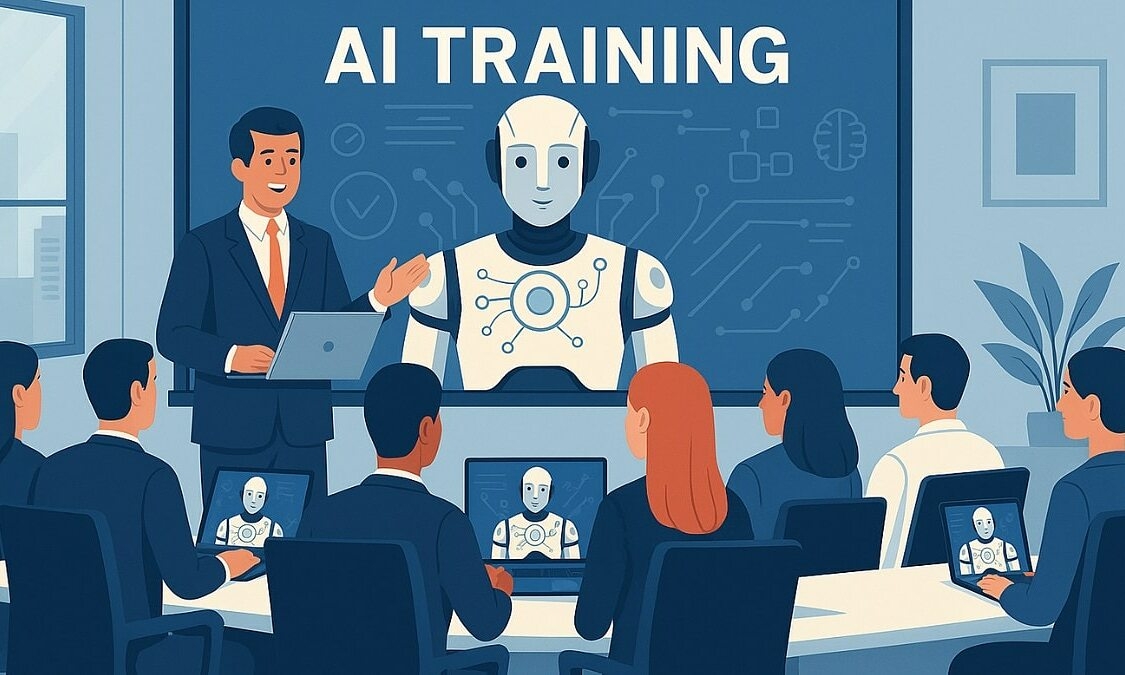
Illustration of a business bringing AI into its workflow. Image: India Today
According to Billeter, perception does not always reflect reality, but workers’ workloads may actually be increasing globally. “Economic pressures will drive the notion of doing more with fewer people,” she said.
Last year, freelancing platform Upwork surveyed 2,500 workers in the US, UK, Australia, and Canada and 77% said AI increased their workload and 47% said they did not know how to achieve expected productivity with AI.
Improper application of AI and lack of training can be responsible for temporary increases in workload. According to Business Insidermany American workers expressed frustration when faced with worklops (the term for work waste created by AI) that are increasingly widespread, making the work process messy. Workslops may look organized, informative, and professional, but lack valuable content, making them more laborious to sift through.
Many companies are experiencing a “productivity paradox”, where using AI does not make work more efficient. 88% of EY survey respondents use AI, but the majority are limited to basic features like document search and summarization. These features may save a few hours, EY says, but won’t change the way work gets done or how well the company operates.
“Investing in technology alone is not enough. The AI era requires the ability to build a strong human foundation and advanced technology in sync, thereby creating meaningful transformation for the workforce,” Billeter concluded.