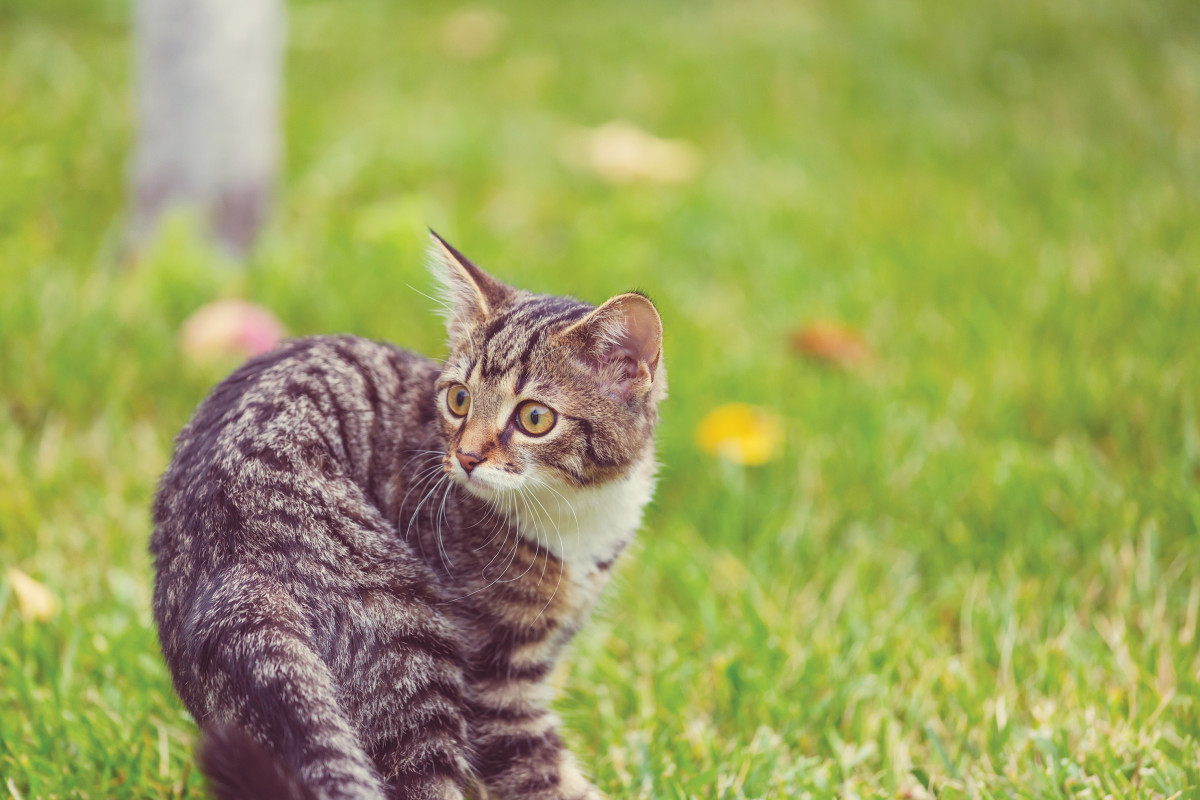
In the last year, it seems that the most advanced technology – the AI - is not fulfilling the apocalyptic science-fiction vision, but rather what the Internet has known since its beginning: cats will conquer the world. If in the past it was thought that artificial intelligence would create a world full of evil robots that would take over humanity, then in practice one of the most popular applications of generative video is countless completely ridiculous videos of cats performing human actions – from playing musical instruments in the middle of the night, to professional cooking in a luxury restaurant, to appearances as doctors and drive-thru salesmen.
These videos, which spread like a never-ending meme, have become an independent genre that often bypasses human content as well. Cats stirring risotto in front of the stove, serving overflowing plates of pasta or arguing over test results with troubled patients have become a symbol of an era. The algorithms produce smooth movements, soft lighting, shiny fur and surprising human gestures – and all this to present a creature that in reality is unable, and does not even try, to perform any of these actions. Not to mention coming when called.
Every type of video like this almost always has the same recurring comments: “The best use of AI to date”, “The technology has finally reached its destination”, and “Only aiters will say ‘it sure is AI’.” In a way, these reactions are not just a joke; They are also a popular understanding of the AI revolution. The public accepts technology when it is wrapped in humor, and prefers to digest it through a playing cat or a chef cat – rather than through a robotic doctor or a synthetic human figure.
The success of the cat videos is no accident. On TikTok and Instagram, according to public analytics data, cat-related hashtags are consistently among the most viewed categories. In Reels, animal videos – and cats in particular – are defined by the Meta as delaying scrolling for the longest periods of time. You don’t need official numbers to understand that this genre already dictates a significant part of the web’s visual language: fast movement, exaggerated colors, and facial expressions that are a combination of implicit rage and typical feline detachment.
Beyond that, the cat is a character that is very easy to teach generative models. AI models, which sometimes have difficulty with human facial features – complexity, asymmetry, nuances – actually succeed with creatures with a clear outline. The proportions of the face, the large eyes, the well-defined body and the natural symmetry allow the algorithms to produce high visual stability. A cat is almost a graphic icon: it can be recognized in a split second, and even when processed or distorted – it remains itself. Therefore it is natural that it will become the perfect raw material for generative content.
But the main reason for the phenomenon is not only technical. It is mainly cultural. The cat, more than any other animal, is a creature that embodies an inner contradiction: it is domestic but unobservable, noble but ridiculous, close but noncommittal. It is an animal that produces a constant human gaze: what does he want? where is he going Why is he ignoring? This tension between distance and closeness turns it into a literary, pictorial – and now also generative – object.
Cats have accompanied humans throughout history and sometimes also marked the transformations in culture and communication. From the Egyptian paintings, through the printed postcard, to the early Internet where cat videos were among YouTube’s most viewed. It seems that every time the cat becomes a measure that checks whether technology has been absorbed into the culture. His image survives beyond fashions, and now he becomes a figure that embodies the meeting between the human and the digital: alive, but processed; familiar, but not human; Funny, but to some extent also threatening.
The new wave of AI videos isn’t just comedic. He also shows psychologically. In an era where artificial intelligence raises concerns – loss of control, blurring between reality and image – cat videos offer an outlet. They allow the public to see technology softly: not as having a threatening power but as something playful, exaggerated and even ridiculous. A cat that plays drums at two in the morning is an excellent way to relieve anxiety – and especially to give a person a sense of control through laughter.
Historians of Internet culture call the cat “an animal that holds the contradiction between domesticity and rebellion.” A character that allows us to examine ourselves through something that is not human but is also not alien. Perhaps because of this, it is the cat – and not the reproduced human figure – that becomes the mediator between innovation and anxiety.
Will cat videos predict the future of AI? not necessarily. But they reveal the present: the way people choose to deal with formidable technology through humor, or through virtual fur. And amid the noise of the digital revolution, it is perhaps surprising how much the human eye is still drawn to that independent and stubborn creature, which refuses to play by the rules – even when they are written in code.