Children’s science questions|We also tell you where the moles come from on the skin. And why do people start wars, even though bad things follow from them?
The summary is made by artificial intelligence and checked by a human.
The appropriate temperature in space is not a clear-cut matter, says Silja Pohjolainen, associate professor of astronomy at the University of Turku.
The temperature depends on the distance to the Sun, the reflectivity of the celestial body, its rotation speed and shape.
In space, the basic temperature is about minus 270 degrees, while just outside the atmosphere the temperature rises to 120 degrees in the sunshine. On the sunless side it is minus 150 degrees.
When it’s cold in space and hot in the sun, where is the appropriate temperature in between?
Kauniainen elementary school’s 5th grade Finnish language group
In space the basic temperature is about minus 270 degrees. The sun and other stars radiate heat, but it does not raise the temperature of empty space, but only the temperature of matter in space, i.e. celestial bodies and spaceships.
On Earth, the temperature suitable for humans and other life is created largely by the influence of the atmosphere. Just outside the atmosphere, in sunlight, the meter rises to 120 degrees, and on the sunless side it drops to minus 150 degrees.
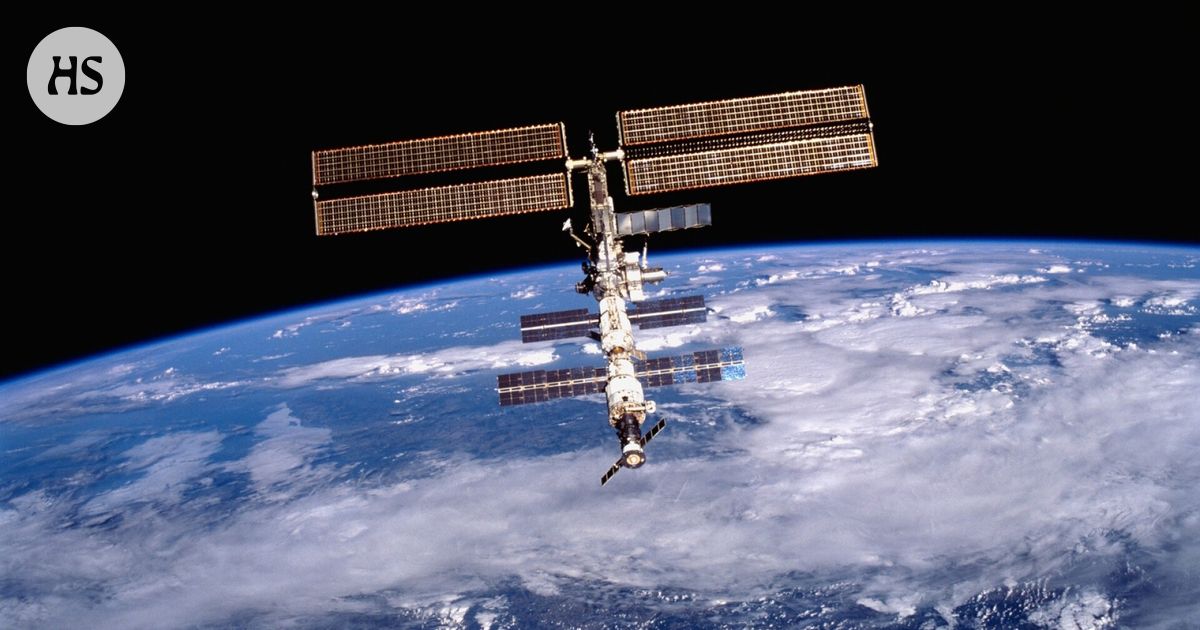
On the ISS orbiting the Earth, for example, efficient air conditioning and cooling systems have to be used in order to change the temperature inside the station to suit people.
The next planet away from the Sun is Mars, which is about 78 million kilometers away from the Sun on average. Mars has a very thin atmosphere. There, the daytime temperature can rise to 35 degrees, but the nights are freezing cold. The average temperature is only minus 63 degrees.
From this it can be concluded that a suitable surface temperature could be found halfway between the distances between Earth and Mars. At least if the celestial body were atmosphereless, non-reflective and slowly rotating. But even then, the side of the Sun would be bathed in the heat and the shadow side would be very cold.
The appropriate point between the Sun and the rest of space is therefore not a clear-cut matter, because the temperature depends not only on the distance to the Sun, but also on the celestial body’s reflectivity, rotation speed and shape.
Silja Pohjolainen
docent of astronomy and university teacher
University of Turku
Moles can be examined with a dermatoscope, which shows the pigment better thanks to the magnifying feature and the light.
Why and how do moles appear on human skin?
Eemi Lehtinen, 9
Most commonly Moles mean visible pigment moles of different sizes and shades on the skin. They are usually brown.
Pigment moles arise from melanocyte cells, which are octopus-like multi-branched cells located in the deepest parts of the skin. Those cells produce melanin dye, with which the skin tries to protect itself from the harmful effects of sunlight.
Pigment spots are formed when a melanocyte cell turns into a benign tumor cell, i.e. a nevus cell, and begins to divide more abundantly than a normal melanocyte cell and migrates closer to the surface of the skin.
The exact cause of birthmarks is not known, but light-skinned people have more of them than richly pigmented, i.e. darker, skin. Heredity and exposure to sunlight, especially in childhood, also affect the number of moles.
A small number of people already have pigmentation marks at birth, but they appear in almost everyone during childhood and adolescence. Pigmentation moles are usually most common around the age of 30, after which they gradually begin to disappear. After about 50 years of age, the appearance of new moles is rare.
Laura Huilaja
docent and specialist in dermatology and allergology
University of Oulu
Plants can store harmful substances in their leaves, which fall off.
How do plants get rid of bad waste products?
Sofia Chaban, 4
Right like the bodies of humans and other animals, plants also remove unnecessary or even harmful substances from their structures. Harmful substances can accumulate as a result of the plant’s own metabolism or they can be transported from contaminated soil.
Plants can get rid of heavy metals, i.e. harmful metals in the soil, by storing them in their leaves, which fall off when they get old. The edges of the leaves also have hydatodes, i.e. small openings, through which different water-soluble substances can be carried away in the released water droplets. In addition, the roots can pump harmful substances back into the soil.
In addition, channels and pumps specialized in the transport of various substances have been identified on the surface of plant cells, i.e. a type of building block of plants, whose operation can now be studied using microscopic techniques. Plant cells can also store toxic substances in a sac-like organelle called a vacuole.
Many substances produced by plants were originally considered unnecessary by-products of metabolism, but today it is known that many of them are beneficial to plants. Several such so-called secondary compounds are important because they protect plants against numerous pathogens and herbivores.
Saijaliisa Kangasjärvi
professor of botany
University of Helsinki
Russia’s major attack on Ukraine continues for the fourth year already. Photo of the Russian attack on the city of Kharkiv last year.
Why do people start wars, even though bad things result from them?
Jaakko Jalvanti, 11
wife can arise for many reasons. Often the background of war is a combination of several different reasons.
Wars can arise when people do not trust each other or do not know how to agree on things peacefully. It may be that people or countries use war to gain power or wealth, fear others, or believe that only war can solve problems.
The background may also be anger, long-standing disagreements, misunderstandings or past events that cannot be dealt with by talking.
So there can be political, economic, social and cultural factors behind the emergence of wars. This often makes them complicated.
Man is not only warlike or peaceful by nature. We have the ability to be cooperative and resolve disputes calmly, but also have a tendency towards aggression. Therefore, it is important to practice peaceful ways of resolving disputes through negotiation and learn to understand others, so that the suffering caused by war can be avoided.
Annukka Toivonen
global education expert
Finnish Peace League
Send the question, the questioner’s full name and age to lasten.tiedeskö[email protected]. The column is provided by Touko Kauppinen.