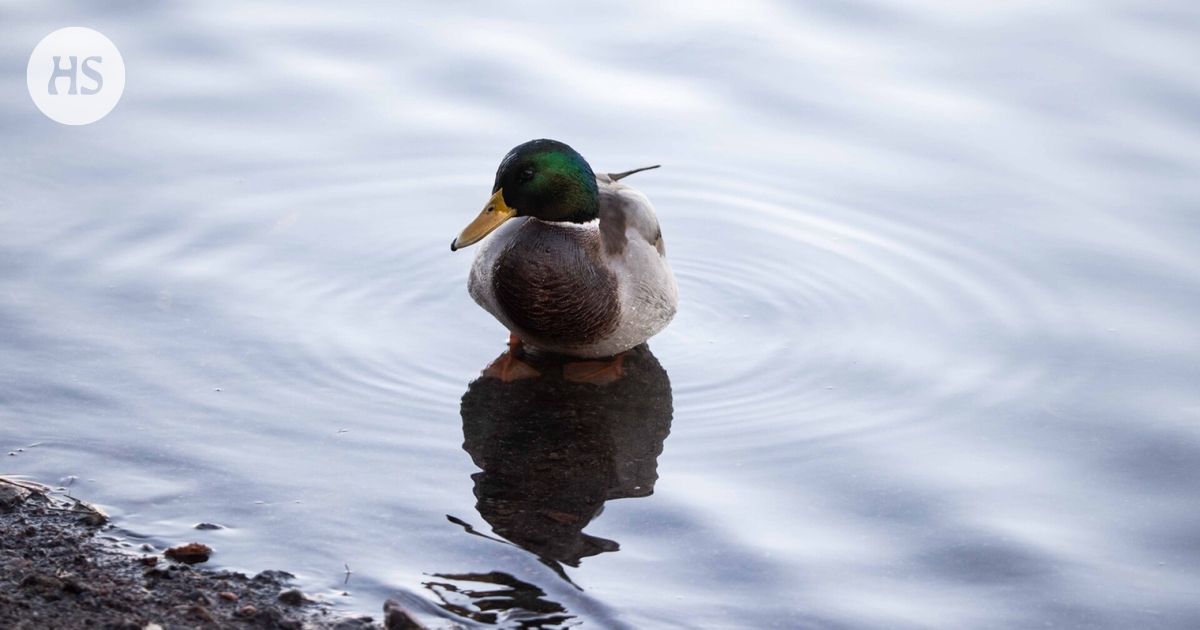
Uni|Birds often sleep with one eye open. However, lack of sleep forces the entire brain to rest at once.
The summary is made by artificial intelligence and checked by a human.
New research shows that sleep deprivation in birds leads to deeper sleep and lowers their alertness.
By measuring the brain activity of the hens, it was found that the sleepy bird has to rest both halves of the brain at the same time.
This can expose the bird to predators, as birds often sleep with one eye open for safety reasons.
A bird sleeping may be poor in the rush of the nesting season, but at some point you have to rest properly.
Winged ones pay off their sleep debt by sleeping more soundly than usual. This was discovered when Dutch, German and Swiss researchers measured the brain activity of caged heifers.
Birds often sleep with one half of their brain awake and the other half asleep – and one eye open. But if you exhaust the nags by waking them up from the beginning of the night whenever they doze off, at the end of the night the hemispheres of the brain fall into a deep sleep more often at the same time, says report in Current Biology.
Lack of sleep therefore forces the bird to rest its entire brain at once. That has its risks.
It’s easier for beasts to sneak up on you. Animals that can sleep with one eye open usually do so for safety reasons. For example, the mallard relies on it when roosting in an unprotected place at the edge of its flock, the king frigatebird when flying, and the bering seal when floating.
Published in Science in Nature 5/2025.