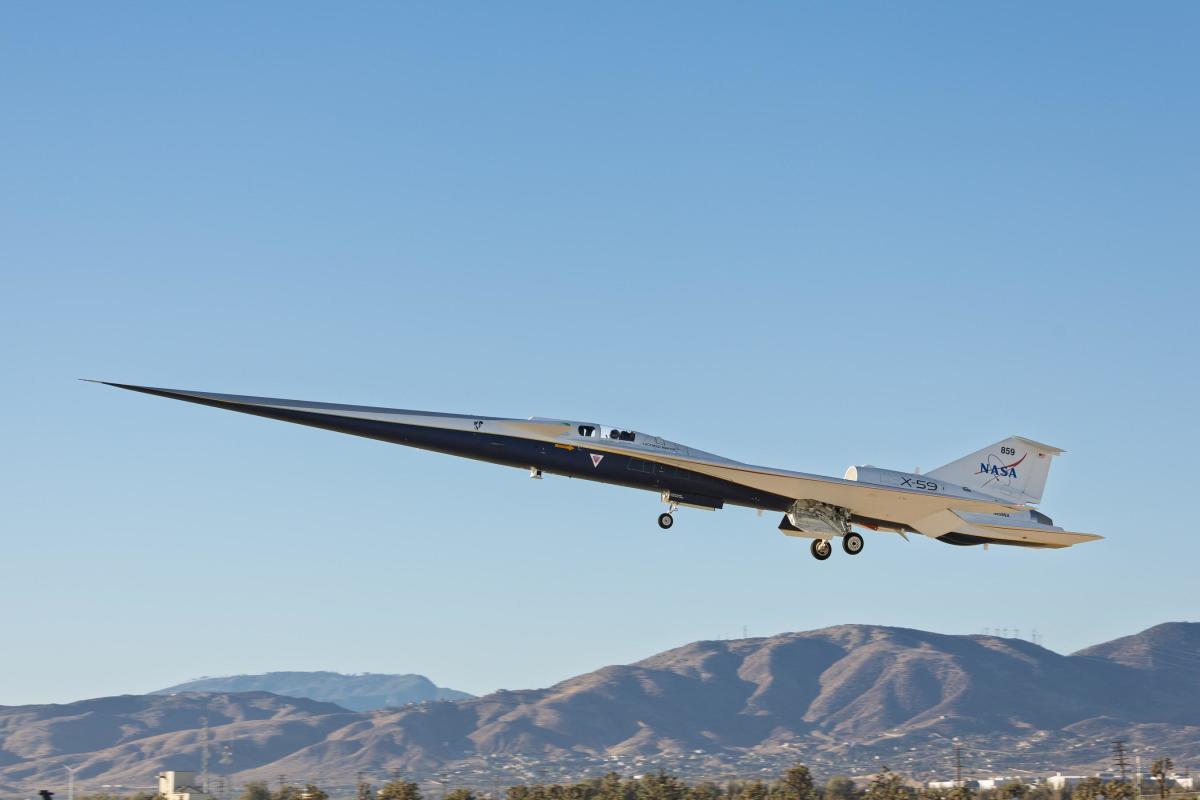
The test plane took off from the secret Skunk Works facility in Palmdale, and landed near the NASA Edwards Research Center. The first goal was modest – a subsonic flight at a speed of about 370 km/h and at an altitude of about 3.6 kilometers, but significant for testing the systems and the aerodynamic behavior of the new tool.
One of the unusual features of the X 59 is the lack of a front window. Instead, NASA developed a system called the eXternal Vision System. The system includes front cameras and high-resolution displays that allow the pilot to see forward and down, and to compensate for the extreme aerodynamic design of the plane. Its pointed shape is designed to disperse the shock waves created during supersonic flight, and to reduce the intensity of the “boom” that may be heard on the ground. The F414 engine that is installed on the back of the plane was tested for months before the flight, Among other things, to verify its compatibility with the design and the safety of the propulsion systems.
NASA began developing the X 59 almost a decade ago. The US Aviation Administration, like other authorities in the world, prohibits supersonic flights over inhabited territory due to the enormous noise they cause. The agency hopes that the design of the new aircraft will make it possible to eliminate these restrictions. In civil aviation terms, the potential meaning is a significant shortening of intercontinental flight times and opening the door to a new wave of high-speed aircraft.
There is still a long way to go, but the maiden flight marks an important milestone in the global race for new supersonic technologies. If the experiments prove that the reduced boom does meet the standards set by NASA, it seems that in the near future commercial airplanes will begin to take to the skies, cutting distances at a rate that until recently was reserved for the military world.