Anyone who looks at an airplane wing notices the upper curve and the straighter lower surface. It is this curvature that allows the wing to produce lift. As the plane moves forward, the air above the wing flows faster and therefore the air pressure there is lower. Under the wing the air flows more slowly and therefore the pressure is high. The difference between the two pressures pushes the wing up and lifts the plane into the sky. This is the basic physics that makes flight possible.
But over the years it became clear that the weak point of the wing is precisely at its ends. There the two pressure areas meet, and this meeting creates rotating air vortices. The high pressure air below the wing tries to climb up, and the low pressure air above the wing flows down. They mix, and their meeting creates a vortex that swirls behind the wing.
This vortex holds the plane back a bit, and to overcome it you need to apply more engine power. In one flight the meaning is hardly noticeable, but in an airline with hundreds of planes it is a huge difference in fuel consumption.
Already in the seventies, during the global oil crisis, NASA and the aviation industry realized that precious energy could not be wasted on unnecessary turbulence. Preliminary studies have shown that bending the tip of the wing can rearrange the airflow. Instead of the air swirling freely at the tip of the wing, the curved part acts as a barrier that reduces the unwanted encounter between the two pressure areas. Thus the turbulence is weakened, the air drag is reduced, and the plane requires less engine power to move forward.
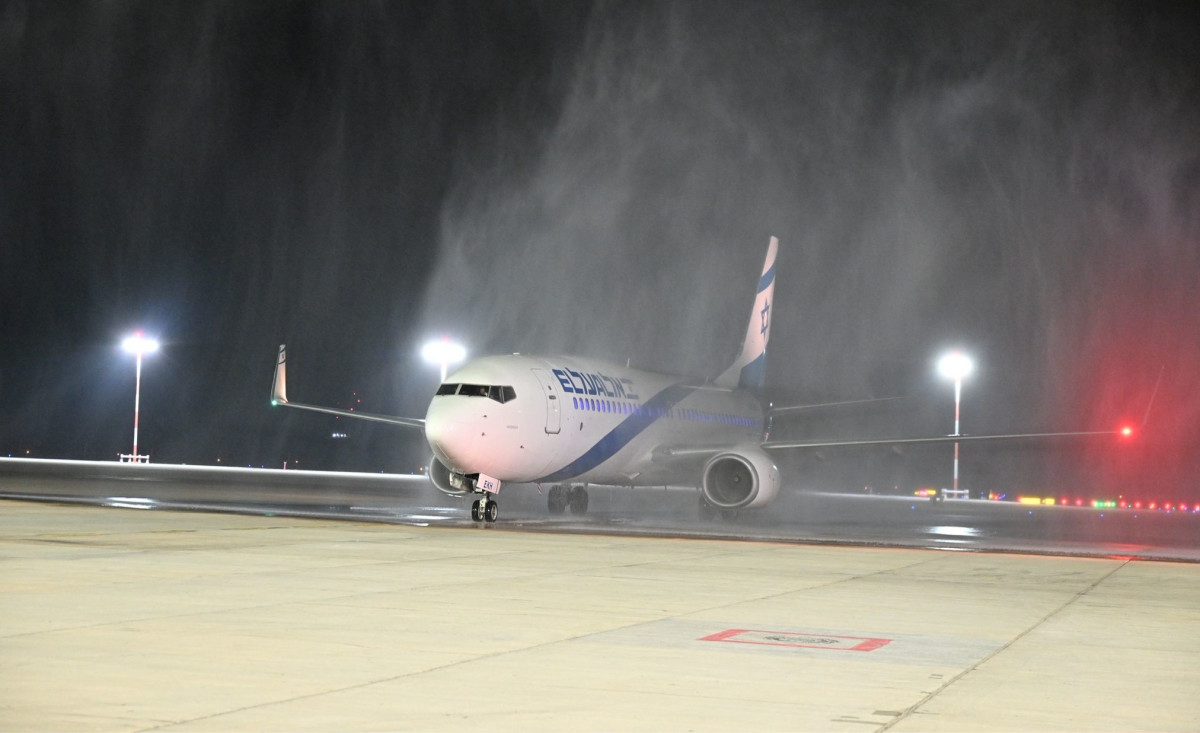
Boeing was the first to implement the idea on an industrial scale. In 1988, the 747 400 model appeared with high, sharp and clear wingtip devices. Later, more advanced, rounded and continuously curved designs appeared. Later, double devices were also developed, where the tip of the wing curves upwards and downwards at the same time. The result was a further reduction of turbulence and greater efficiency in changing flight conditions.
Airbus, for its part, chose a more cautious approach. In the early 2000s, as part of a European research program, the company tested various standards that had been tried on the A320 family. The results were mixed. On the one hand, a decrease in drag and an improvement in fuel consumption were measured. On the other hand, a significant strengthening of the wing was required, which brought with it additional weight. For Airbus it was a price that reduced the technological profit.
It wasn’t until 2011 that the company introduced its version of curved wingtips, called Sharklets. Although the decision was delayed, it turned out to be important. The installation of the shackles reduced the fuel consumption of the A320 models by approximately three to four percent. For planes that fly dozens of times a week, this is a significant improvement. A legal dispute later erupted when an American company claimed that the design was similar to its technology. Airbus lost the lawsuit and paid compensation, but continued to implement the development in the new models.
Despite the differences in appearance, most experts believe that there is no essential difference between Airbus’ Charkets and Boeing’s Winglets. Both are solutions designed to do exactly the same thing. Deciding which one is better is practically non-existent in operational reality. The differences between the companies are mainly aesthetic and conceptual.
However, not every aircraft requires such a device. Advanced wide-body models such as Boeing’s 777 and 787 use swept wingtips. These are part of the wing itself and are not an external addition. The long, flexible wings in these models produce a very efficient flow, so no additional device is needed. In the case of the 787, NASA estimated that this method reduces drag by about five percent, similar to or even more than the classic solutions.
Airbus has chosen to implement a refined version of the Sharklets also in the A350 and A330neo models where they are part of the wing and integrate into its flexible design, which allows it to curve gently during flight and improve air efficiency along an entire route.
Behind all these devices is a simple idea. To fly efficiently you need to reduce the resistance produced by the air. Air is transparent and imperceptible to passengers, but to aviation engineers it is a heavy, powerful and energetic substance. The precise arrangement of wings, wingtips and the airflow around the aircraft determines whether an aircraft will burn more or less fuel.
That’s why the curved wing tip, which seems like a small detail, is actually one of the biggest revolutions in civil aviation. Thanks to it, flights are cheaper, the plane makes less noise when landing and the engines exert less effort. In a world where every liter of fuel is important and every carbon emission is measured, these devices have become a major factor in changing the face of the industry.