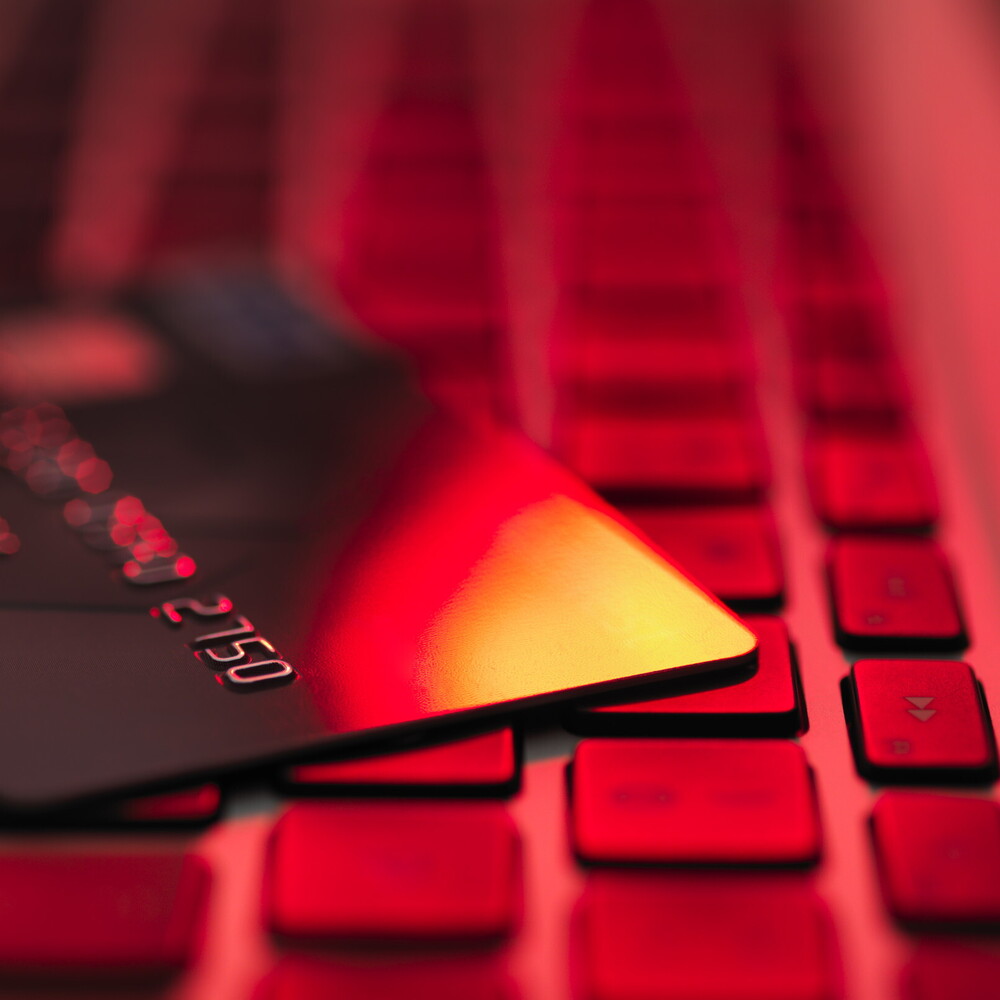
In 2024, payment fraud in Europe reached a total of almost 1.2 billion euros of which 382 million linked to manipulation. But behind the numbers lies a deeper transformation: fraud has become intelligent, adaptive and almost invisible.
This is said by Anna Ongaro, Country Manager for Italy of Sis ID, who invites banks, businesses and public authorities to “join forces” to face increasingly sophisticated threats.
From 9 October 2025, the European Union introduced new rules on instant bank transfers, making beneficiary verification (Verification of Payee, VoP) mandatory: an automatic check between name and IBAN to reduce the risk of errors or fraud. A measure which, according to Ongaro, “marks an important but not sufficient step forward”.
“Fraud evolves faster than rules,” he explains. “Today, scammers are using the same artificial intelligence that was supposed to protect us.”
AI: ally and threat
On the one hand, artificial intelligence has become a precious ally for safety– almost nine out of ten financial institutions use it to identify anomalies or suspicious behavior – on the other hand it is also the favorite tool of criminals.
Voice deepfakes, IBAN falsification, targeted phishing: Generative AI makes it possible to create fake payment orders or imitate the voice of company executives in an increasingly realistic way.
According to research by Boston Consulting Group, only one bank in four feels ready to safely integrate generative models into their protection systems. “The problem is no longer adopting AI” observes Ongaro “but knowing how to govern it, guaranteeing transparency, supervision and control”.
Federated learning: Collaborate without sharing data
One of the emerging solutions is the federated learningor federated learning, a technology that allows banks, fintechs, and enterprises to collaborate on training AI models without exchanging sensitive data.
Each actor trains their model locally and only shares updated parameters. The result is a global model, more robust and compliant with the GDPR, capable of identifying fraud schemes that no single operator would be able to see on their own.
This approach increases detection accuracy by 20% on average and paves the way for a anti-fraud cooperation of new generation.
A triangle of trust
To be effective, the fight against fraud must be based on a “triangle of trust”:
- businesses, first sentinels in the field;
- banks, custodians of financial flows;
- the public authorities, guarantors of neutrality and transparency.
Collaboration, underlines Ongaro, must be supported by a solid regulatory framework. In Europe, this triangle is already delineated by three regulatory pillars: the GDPR, the DORA regulation on digital resilience and the AI Act, which requires ethical and traceable use of artificial intelligence.
In France, the VoP system – which automatically verifies the beneficiaries of credit transfers – is a concrete example of this synergy between innovation and regulation. The goal is to arrive at a European automated reporting network, a shared platform under public supervision that connects fraud signals detected in different member countries in real time.
Towards a collective defense
“Only a collective and intelligent response will be able to preserve trust, the invisible resource on which every economy is based”, concludes Ongaro.
Artificial intelligence has changed the face of financial crime: making it a common ally, instead of a double-edged swordis the challenge that banks, businesses and institutions must face together.
https://onlinevetjobs.com/author/peacesack55/
https://www.fionapremium.com/author/felonyfan54/
https://www.gamingtribe.com/profile/gt_1133240075653292
https://www.youcamapps.com/profile/309306068611010191
https://www.verema.com/usuarios/walkerdgmcintosh
https://movieo.me/users/alexiadgwyatt-jtcndb
https://www.fanficoverflow.com/profile/view/79764
https://www.rvparking.com/user/504779
https://www.bakespace.com/members/profile/WilldgBeltran/1695316/
https://www.askmeclassifieds.com/user/profile/3287281
https://archeter.co.uk/user/profile/304786
https://schoolido.lu/user/shoeclerk31/
https://classifieds.ocala-news.com/author/deskbadger95
https://gifyu.com/NadiadgMyers
https://www.adhub.fi/user/profile/22931
https://kitchenanswershub.com/user/pigeonregret75
https://www.askocloud.com/index.php/user/georgeviolin34
https://illinoiszone.com/user/profile/39029
https://etuitionking.net/forums/users/anklegym23/
https://iskustva.net/user/foldpruner28
https://onlinevetjobs.com/author/operairan82/
https://graph.org/Exactly-How-Electric-Mobility-Solutions-Are-Changing-Modern-Transportation-12-21
https://telegra.ph/Exactly-How-Electric-Mobility-Solutions-Are-Changing-Modern-Transport-12-21
https://bumperbody42.werite.net/precisely-how-electric-mobility-solutions-are-actually-completely-transforming
https://rant.li/giantcattle31/how-electric-mobility-solutions-are-enhancing-modern-transport