China is said to have successfully built a sophisticated chip-making machine prototype in a secret project, creating an important step towards chip autonomy.
In a high-security laboratory in Shenzhen, China has done what the US has tried to prevent for years: create a prototype of an ultraviolet (EUV) lithography machine – a machine that produces advanced semiconductor chips for AI, smartphones, weapons and many other important devices.
Completed in early 2025, this prototype takes up most of a factory’s area and is being tested. According to sources of Reutersit has successfully generated ultraviolet light but has not yet produced a fully functioning chip.
ASML’s EUV photolithography machine plays a key role in the world’s most advanced chip manufacturing process. Image: ASML
The most sophisticated chip making machine that China has difficulty accessing
The photolithography machine is responsible for projecting and etching the circuit onto the wafer (thin silicon sheet used as the substrate material), which is very important for the chip’s performance. According to Nikkei Asiaphotolithography machines are so complex and expensive that only three companies in the world can produce them, including ASML (Netherlands), Canon and Nikon (Japan).
ASML is the largest chip-making equipment manufacturer globally by market capitalization, and is the only company mastering EUV technology. EUV machines cost up to 250 million USD, helping to manufacture the world’s most advanced chips designed by companies such as Nvidia and AMD and manufactured by chip makers such as TSMC, Intel, and Samsung.
ASML said the first working prototype of the EUV machine was born in 2001. The company continued to spend nearly two decades and billions of euros in research and development before producing the first commercial chips.
In 2018, the US began applying pressure to prevent ASML from selling EUV machines to China. The restrictions were expanded in 2022, as President Joe Biden’s administration sought to block China’s access to advanced semiconductor technology. According to ASML, no EUV system has ever been sold to Chinese customers.
Western controls target not only EUV but also older deep ultraviolet (DUV) lithography machines used to produce less advanced chips like Huawei’s, aiming to put China at least a generation behind in chipmaking capabilities. The US State Department said that President Donald Trump’s administration has increased enforcement of export controls on advanced chip manufacturing equipment and is coordinating with partners to “close loopholes” as the technology continues to develop.
China develops its own EUV machine with the “Manhattan Project”
Theo Reutersabout 6 years ago, China began implementing an initiative to achieve complete chip autonomy. While many semiconductor industry goals are public, the Shenzhen EUV project is secret. Ding Xuexiang, head of China’s Central Science and Technology Commission, is said to be leading the project. Technology giant Huawei plays a key role, participating in every step with the participation of thousands of engineers.
Some sources liken the EUV program to the Chinese version of the “Manhattan Project” of America’s atomic bomb development during World War II, due to its large investment, strategic importance and high secrecy.
Huawei employees on the project often sleep on site and are prohibited from going home during the work week. Groups handling sensitive tasks are even restricted from using phones. “The teams are kept separate from each other to maintain project confidentiality,” an employee told Reuters. “They don’t know what the other group is doing.”
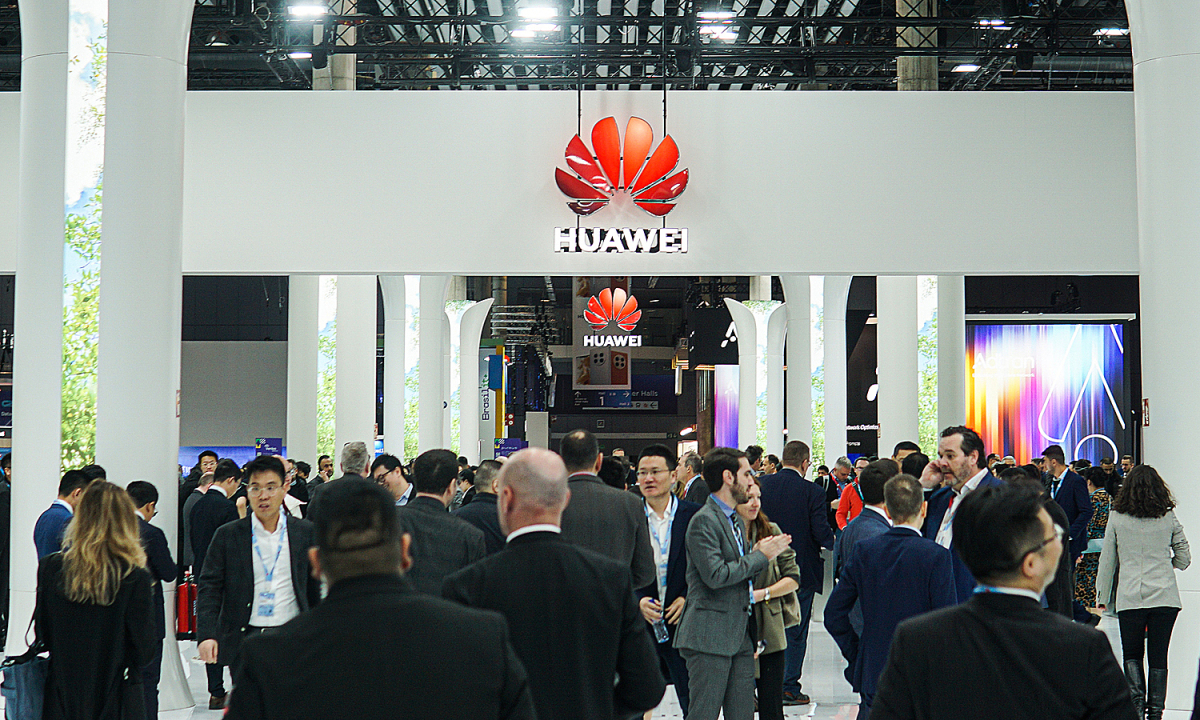
Huawei booth at MWC exhibition, February 2023. Image: Luu Quy
Chinese engineers and scientists who have recently retired from ASML are ideal candidates for the project because they possess important technical knowledge and have few career constraints. This recruitment is part of a drastic campaign that China has launched since 2019 to attract semiconductor experts working abroad, with a signing bonus of about 420,000-700,000 USD with a house purchase subsidy.
A veteran Chinese engineer from ASML recruited to the project was surprised to discover that his generous signing bonus came with an ID card with a fake name. After joining, he realized his former colleagues from ASML were also working under other names. They were required to maintain strict secrecy, no one outside was allowed to know what they were doing, or even where they were.
The EUV machine prototype exceeded Western expectations
“Sometimes Chinese companies buy foreign chip equipment not for production but to disassemble, then learn how to assemble subsystems and components. This is reverse engineering,” a technology director told Nikkei Asia.
Reuters Quoting close sources, experts who worked at ASML helped create a breakthrough in Shenzhen, helping to decode the photolithography machine. In addition, the project has about 100 graduate students specializing in reverse analysis of parts from EUV and DUV machines. Each desk is equipped with a separate camera to record the disassembly process. Employees who successfully reassemble a part will receive a bonus.
To get the necessary parts, China dismantles and utilizes components from old ASML machines, and also buys from ASML suppliers through the second-hand market. Networks of intermediaries are sometimes used to hide the final buyer. A source said that China’s EUV prototype is using restricted export components from Nikon and Canon.
ASML’s most advanced EUV machines are as large as a school bus and weigh 180 tons. After many failed attempts, the EUV prototype in the Shenzhen laboratory was made many times larger to improve its power. The Changchun Institute of Optics, Precision Mechanics and Physics (CIOMP) of the Chinese Academy of Sciences (CAS) has achieved a breakthrough in integrating ultraviolet light into the prototype’s optical system, allowing the machine to become operational as early as 2025, although the optical system still needs significant refinement.
The new prototype lags behind ASML mainly because engineers have difficulty manufacturing optical systems like that of Carl Zeiss AG (Germany), one of ASML’s key suppliers. According to information on the Carl Zeiss AG website, their optical system includes many curved mirrors with extremely high precision. If you enlarge such a mirror to the size of Germany, the largest bump is only 0.1 mm high.
Jeff Koch, an analyst at research firm SemiAnalysis and a former ASML engineer, said that China will make significant progress if the light source is strong enough, reliable and does not create too much pollution. “This is certainly technically feasible, it’s just a matter of time. China has the advantage that commercial EUV technology is already available so it doesn’t have to start from scratch,” he said.
In April, Christophe Fouquet, CEO of ASML, commented that China would need “many, many years” to develop EUV technology. However, the appearance of the new prototype shows that the country may be moving faster towards chip autonomy.
Two sources shared with ReutersChina aims to produce working chips using EUV prototypes by 2028, although some people familiar with the project believe that 2030 is a more realistic timeline. However, this milestone is still much earlier than the time when analysts once believed that China would catch up with the West in chip technology.
https://casinocanary.com
https://casinocoordinator.com
https://casinocollage.com
https://casinoclassis.com
https://casinoblabonus.com
https://casinoapeplayersclub.com
https://casinobackpacker.com
https://casinoastar.com
https://casinoaresbet.com
https://calibrecasino.com
https://casinoandcrypto.com
https://cardiffcasinocompany.com
https://buskcasino.com
https://bortcasino.com
https://blueinternetcasino.com
https://bluepearlcasino.com
https://boorcasino.com
https://bilkcasino.com
https://bombayclubcasino.com
https://bongoscasino.com
https://bevycasino.com
https://bettabetcasino.com
https://turbovex.pl/rekuperatory-podsufitowe/
https://audiomack.com/the-last-wish-recordings/song/the-last-wish-recordings-for-the-pineal-gland-by-danny-kelly-review
https://cdn.heyzine.com/files/uploaded/v3/7d43ae16befec202a7e03e7194c811d6e9338db3.pdf