Global aviation has not only recovered. She accelerates. Against the background of the manpower crisis, fuel costs and the ongoing shortage of new planes, many airports in the world are forced to squeeze the existing systems. The construction of a new track became a multi-year project that was sometimes stopped due to environmental constraints, politics and struggles of local authorities. What remains is to look for the solution in advanced management technologies. In a world where the physical space is not increased, the digital capacity is increased.
At the heart of the local and global system stands the control tower, which has been undergoing a transformation in recent years. One of the fundamental problems in aviation is “wing tip turbulence”. A large plane leaves behind a dangerous air trail, which requires a constant distance between planes. For decades it was a necessary bottleneck. The new system, Time Based Separation, does not measure distance – but time.
When there is wind that quickly disperses the vortex, landing times can be shortened. This is how large fields like Heathrow in London manage to add landings per hour without changing the routes themselves. The system relies on advanced sensors, including low-altitude radars, which produce an accurate wind image.
And in the process, control towers that are not built of concrete but of screens are erected: virtual control towers that are already operating in the UK, Germany and Scandinavia place dozens of 4K quality cameras around the runways, giving the inspectors a 360-degree view with digital markings, alerts on unusual movements and automatic tracking of the planes. Instead of relying on human vision, the system produces computer “eyes”. This is a concept that will probably reach small airports in Israel in the future, as operational branches for load management.
The pilots receive an immediate and clear instruction and act accordingly. Even on the ground there are systems that prevent mistakes. In the USA, for example, red lights are installed on runways that are automatically activated when a landing is approaching or when the runway is not available. This is reminiscent of traffic lights that alert drivers, and prevents one of the most serious dangers in the world of aviation, in which a plane may enter the runway while another plane is taking off or landing.
One of the most important systems in modern airports is called A-CDM. Its purpose is to coordinate between all the parties that work around the plane, such as the airline, the ground crews and the control tower. When everything works together, the field can save a lot of waiting time and delays.
For example, if the plane doesn’t have a free takeoff time in twenty minutes, the system prevents it from starting to move too early, so it doesn’t spin around on the ground in vain with the engines running. The same principle holds true in heaven as well. The plane can be instructed to slow down, so that it reaches the runway at exactly the right moment, without queuing. The system schedules all these actions so that the field works smoothly and accurately.
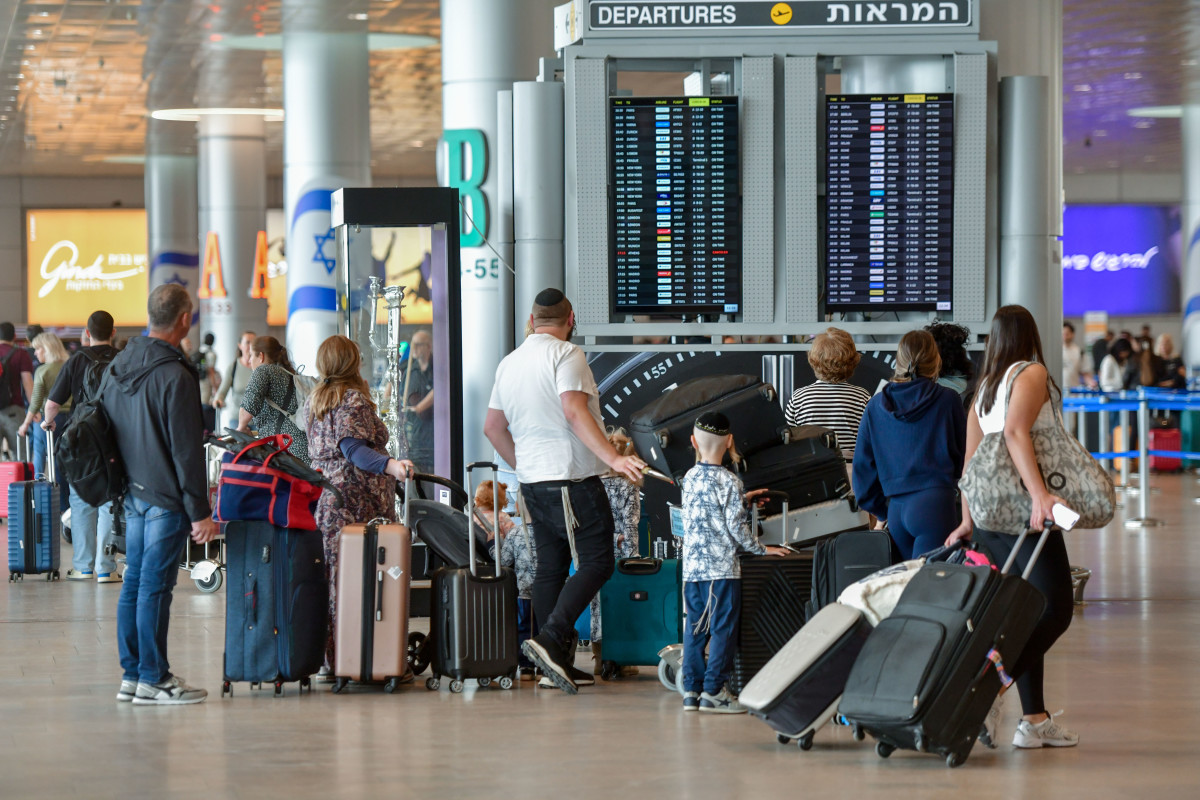
The congestion is also felt inside the terminal, so more and more airports are switching to operational methods that rely on smart identification. In Europe, for example, passengers can pass between the field stations using facial recognition, without presenting a passport or ticket at each crossing point. The goal is to speed up the process and avoid long queues. Alongside this, advanced CT scanners have come into use that eliminate the need to take computers and liquids out of the bag.
The scanner produces a detailed image of the contents, which allows you to check the bag more quickly. According to international estimates, the method saves tens of percent of the inspection time and eases the overall load at the airport. Some airports also implement load prediction systems based on artificial intelligence, which analyze traffic in real time and direct passengers to active positions. The result is a significant shortening of security lines.
Behind the scenes, more and more components of aviation management are moving to artificial intelligence. Systems learn to predict the flow of flights, prevent collisions in air routes, plan schedules and adjust the speed of the plane during the flight phase. Some of the innovations are already active. Some are in advanced trials. Some of them will become the standard within a few years.
Israel, despite the airspace ceiling and security constraints, is expected to join the global challenge. The return to 25 million passengers per year, the dense morning traffic of low-cost flights, and the possible opening of an active Wizz Air base will require the Israeli aviation system to implement advanced technologies to deal with overcrowding. Smart test infrastructures.