Timekeeping|Clocks on the Moon also run at a different pace than on Earth. It can be calculated using Einstein’s general theory of relativity.
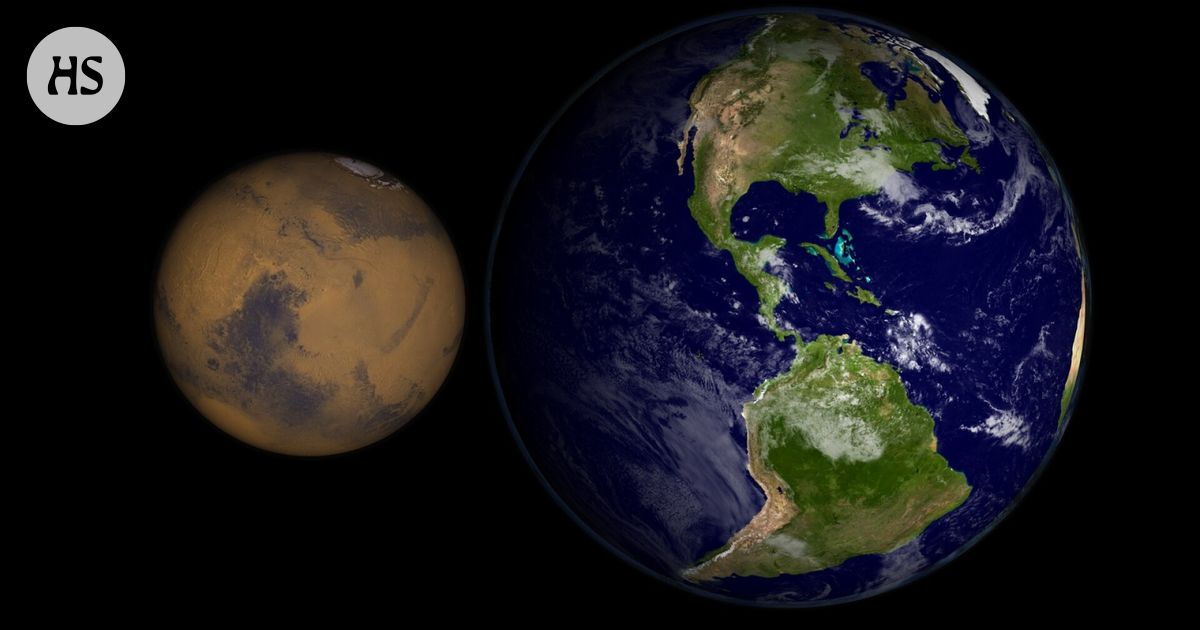
On the surface of the planet Mars, time passes about 477 microseconds faster than on Earth during one Earth day.
Clocks on the moon also run at a different pace than on Earth. Nasa and the European Space Agency Esa are already developing a time standard for the Moon, like its own time zone.
Different sky chapels and different places all have their own times. The reasons for the differences are explained by physicist Albert Einstein’s general theory of relativity.
Accurate information about time differences would facilitate communication on space flights when and if they head far away.
Clock the planet ticks faster on the surface of Mars than on Earth.
The difference is about 477 microseconds, or millionths of a second, during one Earth day.
The difference between the times of Mars and the Earth is greater than the measured differences between the times of the Moon and the Earth.
Such differences can sometimes pose problems for spaceflight. As time differences become more and more known, the information can help to synchronize time throughout the solar system.
Jo the other year two physicists calculated that The clock runs on the moon an average of 56 microseconds, or one millionth faster than on Earth.
The investigation was done by physicists Neil Ashby and Bijunath Patlawho work at the US Center for Metrology (NIST).
Since then, they have calculated how much Mars time differs from Earth time. Calculations presented by science magazine The Astronomical Journal.
Physicists first chose a level on Mars whose time is comparable to Earth’s sea level.
In their calculations, the researchers took into account the gravity of Mars, the shape of its orbit, the gravity of the Sun, and the effects of the gravity of the Earth and the Moon on Mars. They all affect time as well.
Mars’ orbit around the Sun is more egg-shaped than Earth’s because the gravitational forces of the Earth and the Moon have distorted the orbit.
Of ages differences in different places were first explained by a physicist Albert Einstein.
He showed in his general theory of relativity in 1916 that clocks run slower in strong gravity than in weak gravity.
That’s why people who live in the mountains age fractions of a second faster than those who live at sea level. Time passes faster at high altitudes because the Earth’s gravity is lower there.
In addition, the time of orbiters, like the Earth and the Moon, depends on the rotation speed. The faster the rotational speed, the slower time passes on the celestial body.
Fluctuations in gravity and rotational speeds together cause time to tick at different rates for different bodies in the solar system.
For pacing in the solar system has long been important. The human presence and also the number of devices in different corners of our solar system are increasing.
Accurate clocks would help astronauts’ movements and communication with Earth, tells website Live Science.
The US space agency NASA’s lunar program Artemis, for example, is moving forward. Starting in the 2030s, ten flights have been entered into the program.
The program SLS rocket the first flight to the moon, that is Artemis II can be realized as early as February 2026.
Astronauts must be able to coordinate video calls, information sharing and navigation with their colleagues and Earth on the Moon.
“This isn’t just about telling the time – it’s about navigation, communication and safety,” says the University of Missouri astronomer Sergei Kopeikin Live Sciencessa.
Before long, humans may visit other parts of the solar system.
Solar system Chinese researchers came to the aid of the chronology software, reports Live Science. It takes into account the effect of relativity on the Moon’s own time.
Nasa is also developing its own a way to measure time on the Moon. The goal is to link this Coordinated Lunar Time (LTC) to Coordinated Universal Time (UTC) as early as the end of 2026.
The European Space Agency Esa is also tuning in own time of the month. Moon time must eventually be synchronized between countries.
“If we fail, we risk a ‘time zone war’ in space,” Kopeikin says in Live Science.