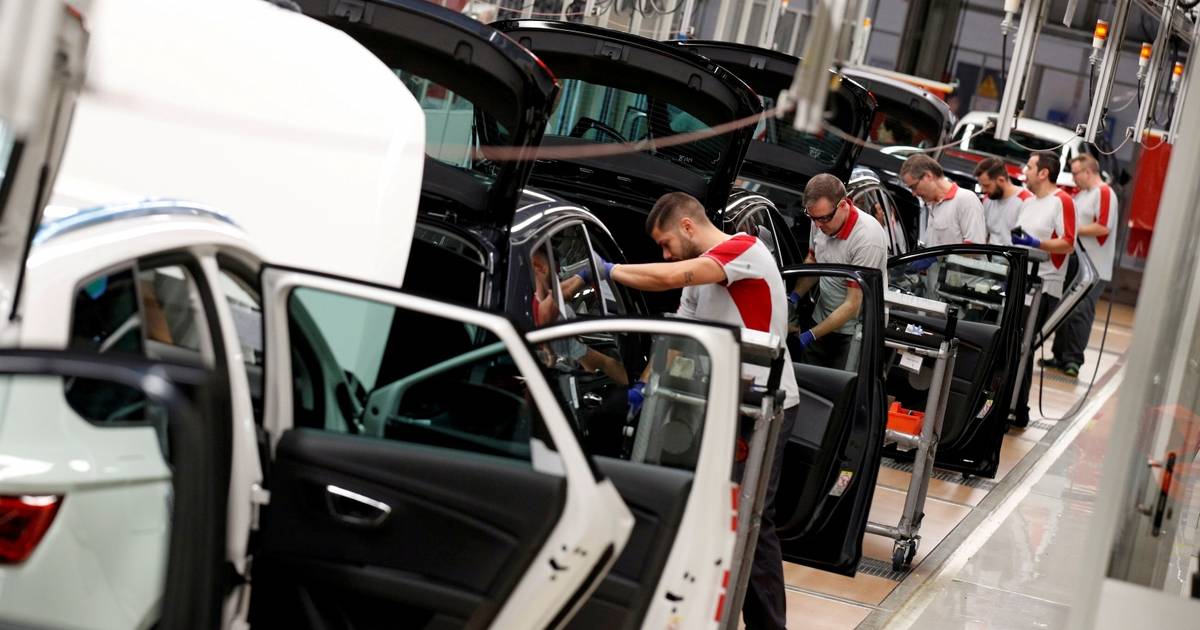
The European Commission is considering adding state incentives for the purchase of new electric vehicles, as well as incentives related to leasing or public procurement, to the ‘Europe first’ rules. In practice, this would mean that the vehicle would have to be assembled in the European Union in order to be able to participate in incentive programs at all, at least according to the plans circulating in Brussels.
Along with drafting in the EU, the idea of a minimum share of European components also appears in the documents. The figure of 70 percent of parts produced in Europe, measured by value, is most often mentioned, with the note that the battery would be exempt from that calculation. But at the same time, an additional rule is mentioned that certain key battery components would have to come from the EU, which is a particularly sensitive area due to its dependence on imports and global supply chains.
An important detail is that part of those figures in the draft are still “open”, that is, in the discussion phase, so the threshold may change before the official announcement. The Commission should incorporate this package into the broader industrial law that is being prepared, and it covers not only cars but also other sectors, from energy technologies to heavy industries. The EU wants the money from public grants and programs not only to stimulate demand, but also to stimulate production in Europe. It is also a political response to the pressure of cheaper competition, especially from China, and an attempt to “return” part of the production and supply chains closer to the market.
In practice, such rules would most quickly hit brands that sell cars in Europe, but assemble them outside the EU, as well as those that rely on large shares of imported components. On the other hand, part of the European manufacturers would probably welcome the direction because it could strengthen their supply to the EU, but in the short term it could also bring them more expensive components and more complicated logistics.
For customers, the biggest difference would be in which models are included in the incentives and under what conditions, if the proposal is adopted by the state and the state in their programs. In Croatia, this may be important at the moment when the rules for national incentives are changed, because the criteria could be harmonized with the European direction, but it depends on how the law will be written in the end and how the states will implement it.
For now, this is still a proposal in the making, and the key parts are the thresholds and the definition of what exactly counts as the ‘European’ component. This is where the most tension will be, because in the automotive industry, the value of parts and their origin often overlap across several countries and suppliers.
http://imageevent.com/bentiecehowarth/diversinseguraconestilomoderno
https://etextpad.com/uvchjqhp4r
http://writeablog.net/1k7qj24iny
https://portfolium.com/ritthybaker48259
http://linktr.ee/chhabralwalak.na.n.d.avl
https://vocal.media/authors/chhabralwalaknandavl
http://pubhtml5.com/homepage/iqjqr/
https://nohat.cc/u/chhabralwalaknandavl
https://devfolio.co/@chhabralwalakna/readme-md
https://500px.com/p/chhabralwalaknandavl?view=photos
https://robertsspaceindustries.com/en/citizens/katrinachavez
https://pastelink.net/ay3xid42
https://www.uscgq.com/forum/posts.php?forum=general&id=639406&page=1
https://paizo.com/people/katrinachavez
http://gitea.com/katrinachavez/-/projects/9414
https://hashnode.com/@katrinachavez
https://pbase.com/baumgaerthompson/image/176071821
https://app3.mockplus.com/app/share-20e274fb9b6a7f5c0db32ec5b39a32a0share-GKcd_l0PT/prd/b0SCr_ubG
https://muckrack.com/roredbutcher-utcher/bio
http://www.fanart-central.net/user/roredbutcher/profile
https://imageevent.com/bentiecehowarth/diversinmodernacontotalcomodidad
http://etextpad.com/eiokmlmzk0
https://writeablog.net/ld3e9y5uj6
https://portfolium.com/roredbutcher3242
https://linktr.ee/bakshi.fh.ramdx