According to the company’s announcement, the model is based on the Gemini Flash infrastructure and enables the creation and editing of images at high speed, while maintaining high visual fidelity. Google claims that the new version narrows the gap that existed until now between processing speed and final quality, a gap that sometimes made it difficult for professional creators to work in real time with complex products.
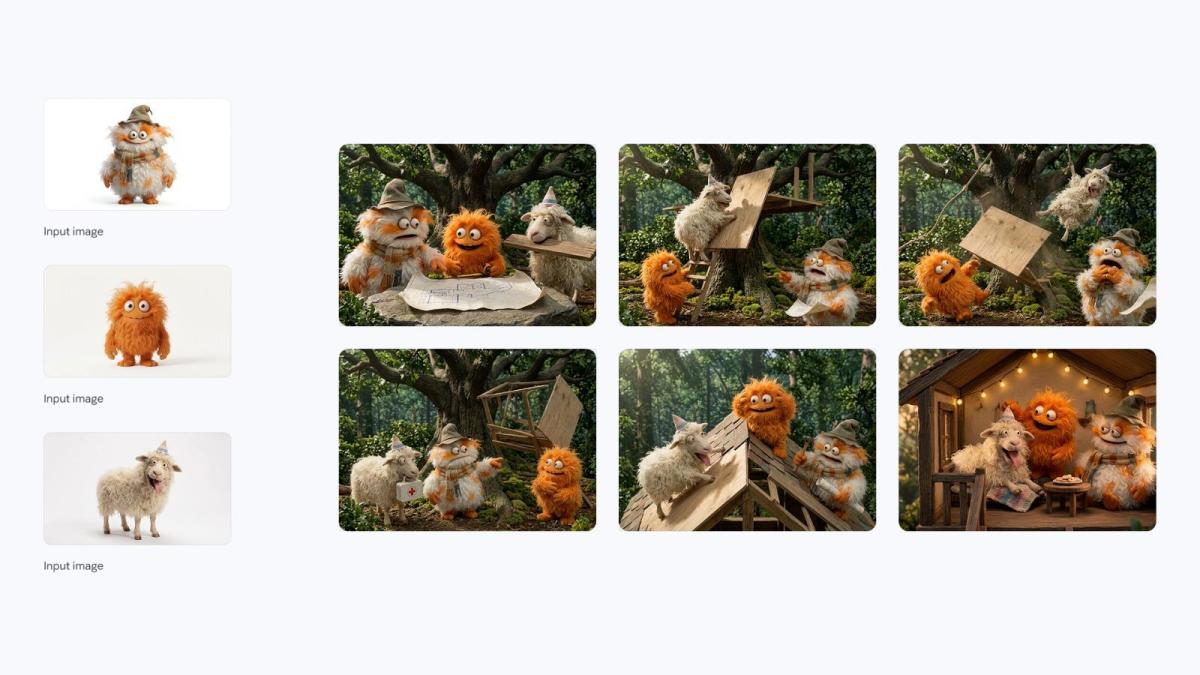
One of the key upgrades is thematic consistency. Nano Banana 2 is able to maintain an exact likeness of up to five different characters and up to 14 objects within the same work process. This means that you can build a storyboard or a continuous visual narrative without the characters changing their appearance from image to image, a known problem in previous models on the market.
Another improvement concerns the ability to follow complex instructions. Google states that the model captures more precise nuances in the user’s requests, from certain lighting to graphic style or complex composition. This ability is mainly intended for designers, content creators and advertising agencies, but also for private users who want greater control over the final result.
In terms of knowledge and factual accuracy, Nano Banana 2 relies on Gemini’s knowledge bases and real-time information and images from Google search. The company emphasizes that this combination allows for a more accurate rendering of specific topics, as well as the creation of infographics, diagrams and data visualizations. This is a distinct attempt to expand the use of tools beyond the creation of artistic illustrations, also for professional applications in the fields of education, marketing and advocacy.
The new model enables the creation of accurate and legible text within images, including translation and localization of texts into different languages. This capability is specifically designed for creating marketing materials, ads and greeting cards, an area where previous models tended to produce misspellings or illegible texts.
In the technical aspect, Nano Banana 2 supports full control of aspect ratio and resolutions from 512 pixels to 4K. Google states that the products are ready for production, meaning they are suitable for direct use in digital or print campaigns, without the need for further processing. Improvement is also reported in the area of visual fidelity, with richer lighting, detailed textures and high definition.
The launch is carried out simultaneously in several of the company’s products. In the Gemini app, the new model will replace the Pro version in the fast models, with Google AI Pro and Ultra subscribers retaining access to the Nano Banana Pro for tasks that require maximum precision. In Google Search, the model is launched in AI Mode and Lens, both in the app and in browsers.
In the cloud, Nano Banana 2 is available in preview through the Gemini API on Vertex AI within Google Cloud, allowing companies to integrate the new capabilities into their own apps and services. Google’s advertising system also now supports the new model, including suggestions for creating visual campaigns.
The move comes against the background of fierce competition in the image creation model market, where many technology companies operate with their own solutions. Google is trying to position Nano Banana 2 as a model that offers a balance between speed, quality and establishing information, and not just visual creativity.
The main question now is to what extent the new tool will change the way designers and content creators work, and whether the ability to produce production-ready products at the click of a button will further reduce the need for traditional editing tools. Google is confident that the combination of Flash speed and Pro capabilities will make Nano Banana 2 one of the central tools in the toolbox of next generation creators.