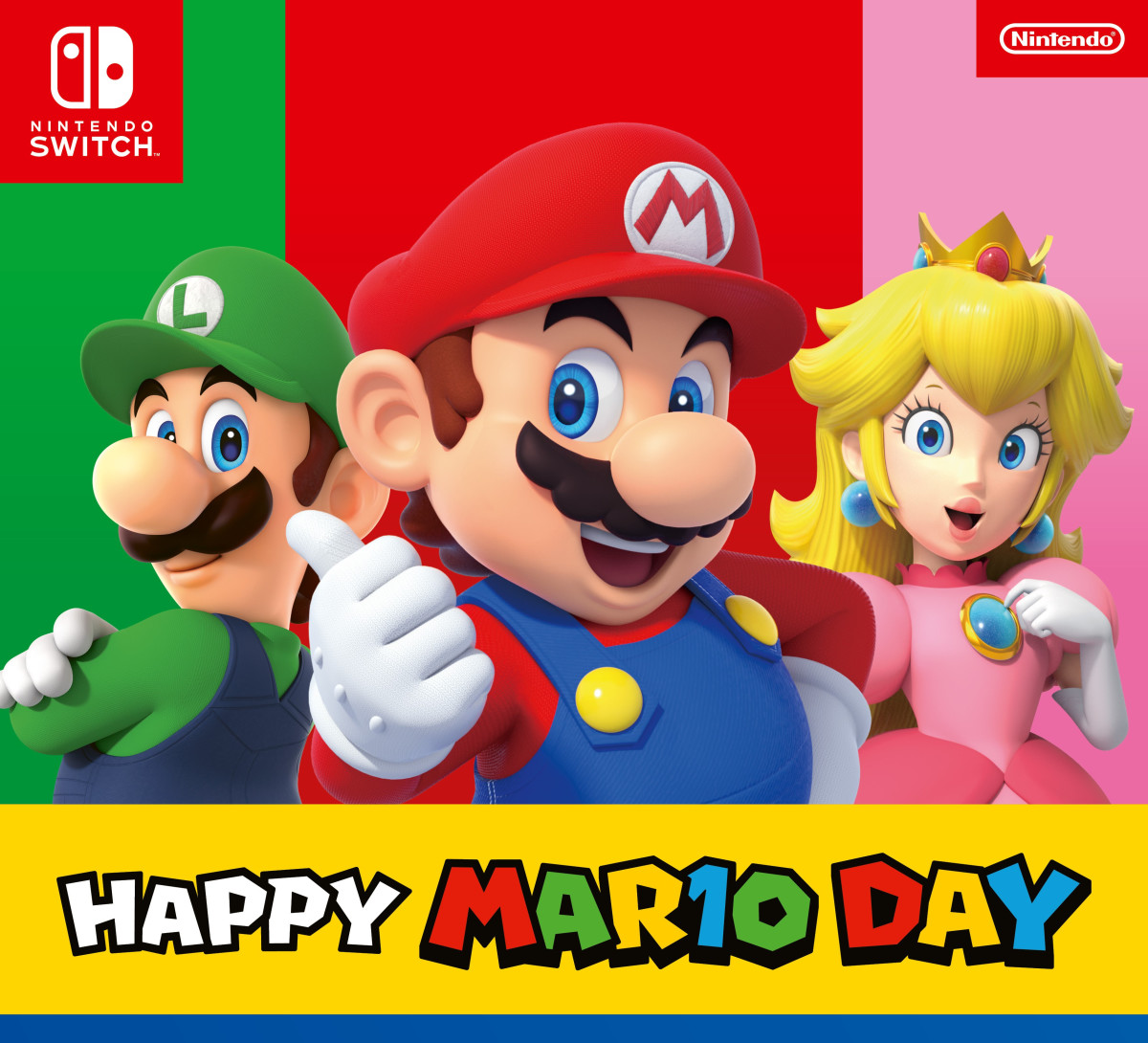
Every year, players around the world celebrate MAR10 Day, a date obtained by writing MAR10 in English, which mentions Mario’s name. Over the years, this day has become a global celebration of gaming culture. But beyond the nostalgia and the familiar music, games like Super Mario also serve as an interesting test case for understanding the way technology, culture and leisure combine and influence human behavior.
When Nintendo launched Super Mario Bros. In the 1980s, it not only created a commercial success but also a new model for platform games. The game is built from short stages, small challenges and immediate reward for success. The player collects coins, gets special powers and progresses step by step. Over the years this structure has become a basic template upon which many other games have been built.
But the gaming experience doesn’t just happen in front of the personal screen. Many players compare their performance to friends, game viewers, or online communities. According to Gazit, this mechanism is similar to the social comparison mechanisms known from social networks. When people see others succeeding in the game or achieving better results, a feeling of missing out, FOMO, is sometimes created, which increases the desire to come back and play.
Over the years, wide digital communities have formed around games like Mario. Players share videos, guides and strategies. Some participate in speedrunning communities, whose goal is to finish the game in the shortest time possible. These communities generate shared knowledge and an internal language, turning the game into a social space and not just an entertainment product.
One of the main explanations for the attraction to games is related to the reward mechanism of the brain. Games like Mario are built around small, quick boosts. Each coin collected, each stage unlocked and each enemy defeated provides a brief sense of achievement that spurs the player on.
The big numbers
In another study conducted in 2023 among more than a thousand teenagers, it was found that approximately 2% already meet clinical criteria for addiction to online games. Among young people between the ages of 19 and 27, it was found that 23% play regularly and about 10% meet a clinical index for addiction.
Efrati explains that the main question in the field is no longer how much time people spend in front of the screen, but what is the purpose for which they enter the virtual world. In his research, he describes a continuum between using games as a compensation to deal with stress and a state of disconnection from reality. At one end is a game that helps to relax and return to reality with renewed strength. At the other end, the game becomes a refuge that disconnects the person from the real world.
The reward system
According to her, when a person plays a computer game and receives a reward, dopamine is released in the brain. It is a neurotransmitter that produces a feeling of satisfaction and encourages to repeat the same action again. In many cases, dopamine is secreted even before receiving the reward itself, as soon as the brain expects success, for example when the familiar sound of the game is heard or an alert appears.
The effect is particularly significant in children and teenagers. The human brain completes its development only in the mid-twenties, and the prefrontal area responsible for regulating impulses is not yet fully mature in adolescence. Therefore the reward system can be stronger than the ability to stop it.
Not just for kids – a digital pain reliever
But games are not just a hobby for young people. Many adults also continue to play, sometimes out of nostalgia and sometimes as a way to deal with everyday stress. For some the games are an opportunity to return to childhood experiences, and for others it is a tool for a short break from reality.
Among young people, they sometimes talk about FOMO, fear of missing out. Some adults develop another feeling, which is fear of non-existence, Fear of Not Existing. For people who feel their social circles have shrunk, the screen provides a sense that they are still part of the world.
The reality of recent years, which includes security tensions and wars, has deepened the phenomenon. For some people, the screen has become a kind of digital pain reliever, a way to deal with a feeling of lack of control in a complex reality. But in some cases this use may turn into a dependent cycle where the need to be updated or connected all the time actually increases the feeling of anxiety.
More than forty years after his first appearance, Mario continues to jump between generations of players. For some people it is a symbol of nostalgia and childhood, for others an example of the power of psychological and technological mechanisms. MAR10 may seem like a light celebration of gaming culture, but for researchers it is also an opportunity to better understand the complex relationship between man, technology and the digital world in which we spend an increasingly large part of our lives.