During the recent confrontations with Iran, the Israeli public learned about the routine of ballistic missiles, a routine that begins with the initial detection of a launch from a distance of hundreds of kilometers and ends with interception or fall. In most cases, the sophisticated technological systems manage to provide a warning time of about eight minutes, a time that is considered long and allows relatively calm organization and an orderly entry into the protected spaces. However, there are cases where the alarm sounds a very short time before the arrival of the threat, sometimes only a minute and a half, a situation that raises many doubts among the public about the effectiveness of the system.
To understand this gap, one must dive into the heart of the Air Force’s Interception Management Center, where skilled officers sit who make fateful decisions in a fraction of a second. The computerized system is based on algorithms that analyze the radar data at enormous speed, and it is designed to offer an estimated flight path and expected impact point. The problem begins when it becomes clear that the reality in the sky is more complex than the dry calculation.
The radar’s computerized system may in some cases indicate a specific impact area, while the control officers who look at the raw data recognize that there is an error in the calculation of the route. In these situations, the Air Force officers are required to make a decision contrary to the computer’s recommendation. Although the computer requires an alarm to be activated in a certain area, the officers understand that the missile is moving on a completely different path and that if they activate the alarm according to the computer’s instructions, they will lead millions of people to shelters unnecessarily real
The decision to wait and perform a repeat check is a decision that requires tremendous professional courage, because every second of delay shortens the time to alert the public if the new forecast turns out to be correct. In the meantime, the cases where human precision prevailed over mental error have already directly saved lives, when they prevented a situation where people were left exposed in areas where harm was certain, while the computer thought otherwise.
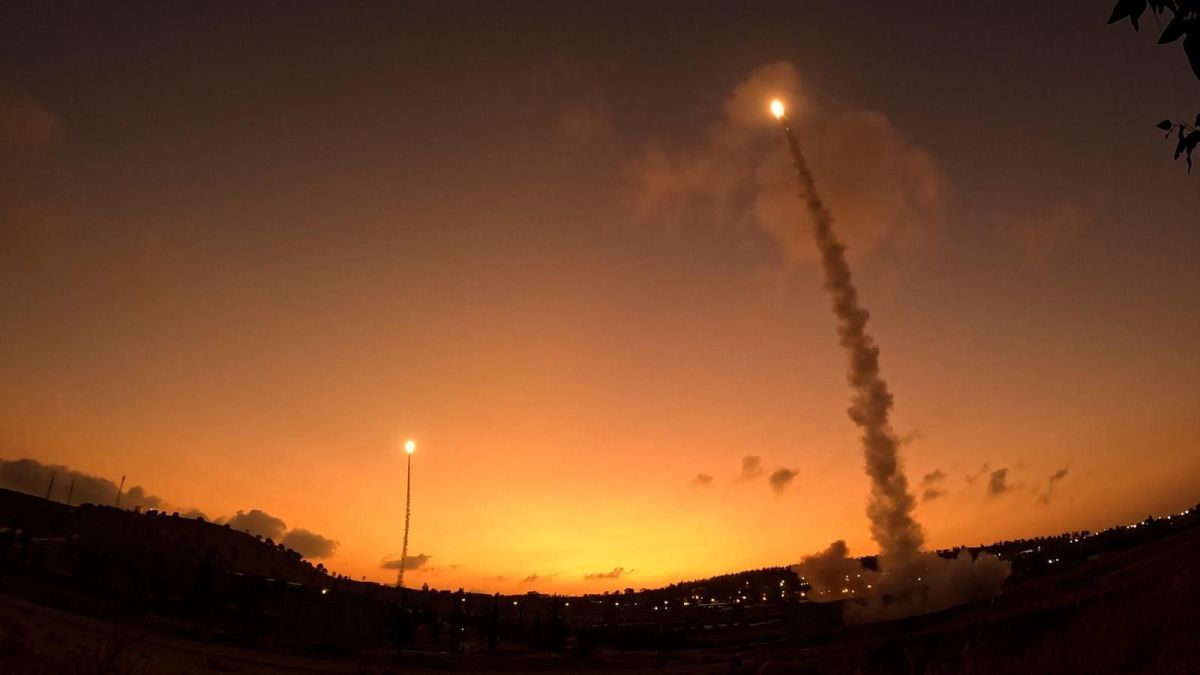
Interceptions in the skies following firing from Lebanon | Photo: use according to section 27a
It is important to understand that the technology of the Iron Dome, David’s sling and arrow system is one of the most advanced in the world, but it is still a tool in the hands of man. The computer cannot understand the broad context or the meaning of putting an entire block of Dan into the shelters in the middle of a work day if there is no 100% sure need for it. The high accuracy of the computerized system is impressive, but in the end the final authorization for alerting and interception is given by humans. When an Air Force officer sees that the missile’s trajectory changes as a result of atmospheric effects or technical faults in the missile itself, he must react quickly. Sometimes this response includes updating the warning areas in real time, which means that residents in a certain area will receive the alarm only when it becomes clear that they are really in danger.
The decision of the officers to act against the recommendations of the computerized system is not a trivial matter. It is a constant learning process where lessons are learned from each launch. Although the computer provides a quick solution, the human mind provides a smart solution. In the current war, we saw how proper management of the warning system prevented mass panic in cases where missiles were on their way to Israel but did not pose a threat to residential areas. On the other hand, the price of this accuracy is sometimes a shorter warning time. The public is required to understand that the fact that the alarm was activated relatively late does not indicate a failure in the system, but rather a strict filtering process designed to ensure that the alarm is sounded only when it is truly necessary.
Beyond the aspect of saving lives, there is also the issue of national resources. Unnecessary interception is not only a waste of a lot of money, but also a reduction in the stock of interceptors available to the state in the event of a wider attack. Air Force officers consider all these considerations every time they see a red dot on the radar. In the meantime, the computerized system continues to improve and learn from human decisions, with the goal of reaching a situation where the gap between the computer’s recommendation and the officer’s decision will be narrowed. Until that happens, the heavy responsibility will continue to rest on the shoulders of the fighters in the control units, who are required to stay alert for long hours in front of the screens.
The combination of advanced technology and human judgment is the secret of the success of the Israeli air defense. Despite the criticism that is sometimes heard about short warning times, the data show that the percentages of accuracy and success of interceptions are among the highest in the history of air warfare. The ability of a young officer in the control room to identify an error in the algorithm and change the alert command is what differentiates a technical system from a living and breathing defense system.
At the end of the day, the goal is one: to ensure that every citizen receives the most accurate warning in the fastest possible time, while maintaining the delicate balance between security and routine in a country that is under constant threat. The public, for its part, must continue to obey the directives of the Home Front Command in every case of an alarm, whether it came eight minutes in advance or only a minute and a half, because the final responsibility for life is also in the hands of each of us within the protected space.