The Law amends and supplements a number of articles of the Law on Technology Transfer, effective from April 1, adding preferential provisions to encourage foreign individuals to transfer technology to Vietnam.
The amended law was passed by the National Assembly in December 2025 and takes effect today, adding many new mechanisms to promote innovation and technology control, while abolishing regulations that are no longer appropriate. This is a major amendment and supplement to the Law on Technology Transfer issued in 2017.
One of the notable additions is the State’s policy on technology transfer activities, which adds provisions on transfer activities between individuals and organizations.
“Encourage foreign organizations and individuals to carry out technology transfer activities to Vietnamese organizations and individuals to improve the capacity to absorb, master and innovate domestic technology”, Clause 5a, added to Article 3 of the Law, reads.
This is also a new point compared to the previous Clause 5, which generally mentioned foreign technology transfer into Vietnam. In addition, this clause also emphasizes the priority of applying preferential policies on investment, tax, land, credit and other incentive measures “for foreign investment projects with the content of technology transfer, human resource training, capacity development in research, design, manufacturing or technology application in Vietnam”.
Another change is the expansion of commercialization of research results. Organizations and individuals that own technology can use that technology to contribute capital to businesses or investment projects. The State also supports the valuation and establishment of ownership rights for technologies formed from domestic research, facilitating the transfer of “endogenous” technology between domestic units, instead of focusing only on technology from abroad.
The next addition is to strengthen the role of the State in technology transfer activities. Accordingly, the law adds provisions for the State to purchase and disseminate technology to serve national defense and security, education, healthcare, environmental protection, and prevention of natural disasters and epidemics.
These technologies are then disseminated to businesses in many forms such as free, incentives or conditional use rights; promote cooperation and technology development to improve the capacity of Vietnamese organizations and businesses.
The new law marks a notable adjustment in technology policy, introducing the concept of “green technology” into the legal system for the first time. Accordingly, the transfer of clean technology, green technology and strategic technology is given priority, both in import and domestic development.
In the opposite direction, the law also tightens control over inappropriate technology. Projects that have a risk of negative impacts on the environment or use technology that is restricted from transfer must be evaluated right from the investment policy approval stage.
According to the drafting agency, these amendments and supplements are intended to continue perfecting the legal framework to promote technology transfer activities effectively and synchronously, in accordance with practical requirements and socio-economic development policies, while keeping up with world trends.
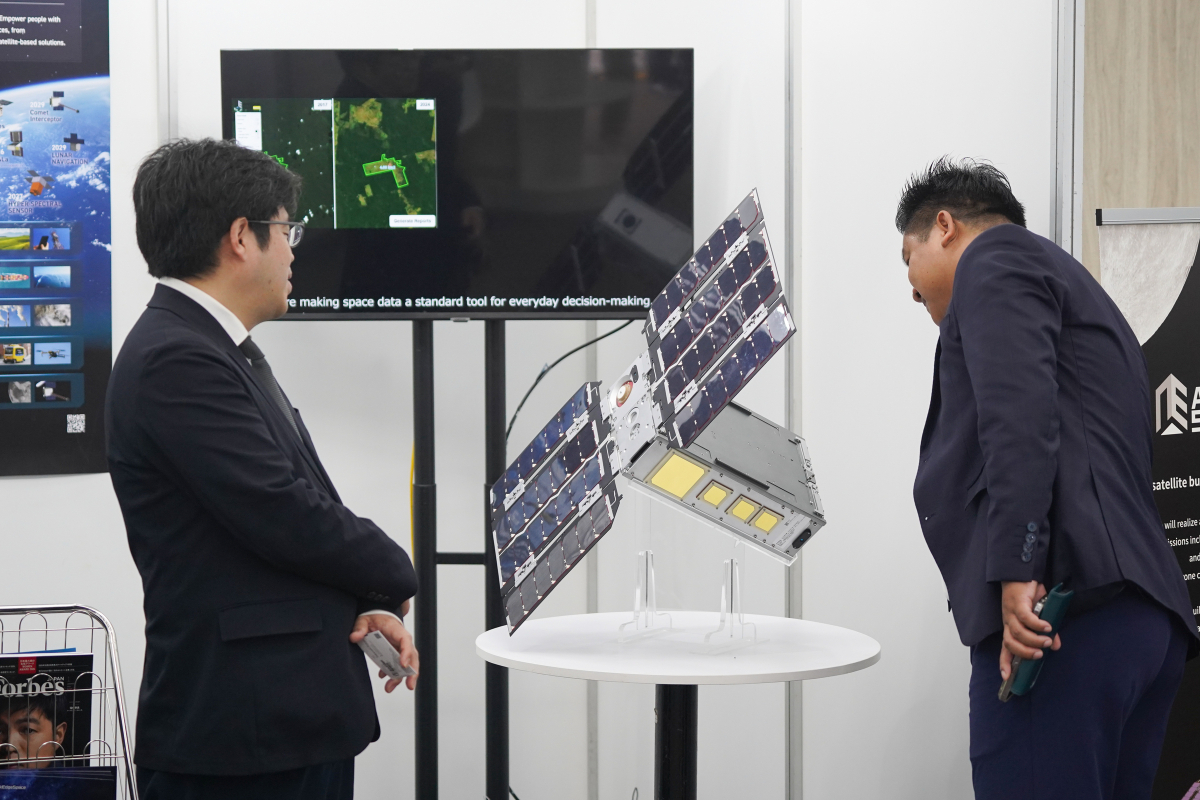
A satellite of a Japanese company is displayed at a space exhibition in Vietnam, March 2026. Image: Luu Quy
In addition, the law also aims to promote innovation and endogenous technology transfer, easing the flow of technology between domestic businesses, organizations and individuals and between higher education institutions, research facilities and businesses, organizations and individuals.
Together with the Law on Science, Technology and Innovation 2025, these changes are expected to help develop a science and technology market that operates effectively, transparently and professionally, creating a favorable environment for technology and intellectual property transactions, contributing to improving productivity, quality and competitiveness of the economy.
Transfer agreements signed before April 1 continue to be implemented according to the signed contracts; In case of amendment, supplement or extension after the above time, the new regulations must be complied with. In January, the Ministry of Science and Technology also sought comments on the Draft Decree detailing a number of articles and guiding implementation measures based on the amendments and supplements to the Law on Technology Transfer 2025.
https://newmexicosolar.org/solarbasics/
https://newyorksolar.org/community/
https://newyorksolar.org/cost/
https://newyorksolar.org/financing/
https://northcarolinastatesolar.org/community/
https://northcarolinastatesolar.org/cost/
https://northcarolinastatesolar.org/installation/
https://northcarolinastatesolar.org/residential/
https://northcarolinastatesolar.org/solarbasics/
https://oklahomastatesolar.org/cost/
https://oklahomastatesolar.org/financing/
https://oklahomastatesolar.org/installation/
https://oklahomastatesolar.org/laws/
https://oklahomastatesolar.org/residential/
https://oklahomastatesolar.org/solarbasics/
https://oregonstatesolar.org/community/
https://oregonstatesolar.org/cost/
https://oregonstatesolar.org/financing/
https://oregonstatesolar.org/installation/
https://oregonstatesolar.org/laws/
https://oregonstatesolar.org/residential/
https://oregonstatesolar.org/solarbasics/
https://pennsylvaniastatesolar.org/community/
https://pennsylvaniastatesolar.org/cost/
https://pennsylvaniastatesolar.org/financing/