In the last month, Germany, one of Israel’s most important and influential allies, lifted the arms embargo, eased the travel warning and announced that Chancellor Mertz would visit Israel • Foreign Minister Saar’s close relationship with his German counterpart and vigorous efforts by the Ministry of Foreign Affairs to influence public opinion in Germany contributed to these steps • Also: the survey that indicated the success of the campaign
For two years, Israel’s position in Europe dropped sharply, but the recent period may mark the beginning of a new direction. In the last month, Germany, one of Jerusalem’s most important allies and one of the most influential countries in the world, made a series of encouraging political steps towards Israel. These steps did not come in a vacuum – and behind the scenes the Ministry of Foreign Affairs carried out several successful actions that contributed to the renewed warming of relations.
Last week we announced that German Chancellor Friedrich March will visit Israel in about a week, which will be the first official visit of a European prime minister to Israel in recent months. Alongside this, the German government announced the cancellation of the partial arms embargo on Israel about two weeks ago, and about a month ago German Foreign Minister Johann Wadpole announced his intention to soften the travel warning to Israel. These three steps, beyond their practical effect, are an encouraging political message to Israel and the world – a counter movement to the growing political isolation Israel faced during the war.
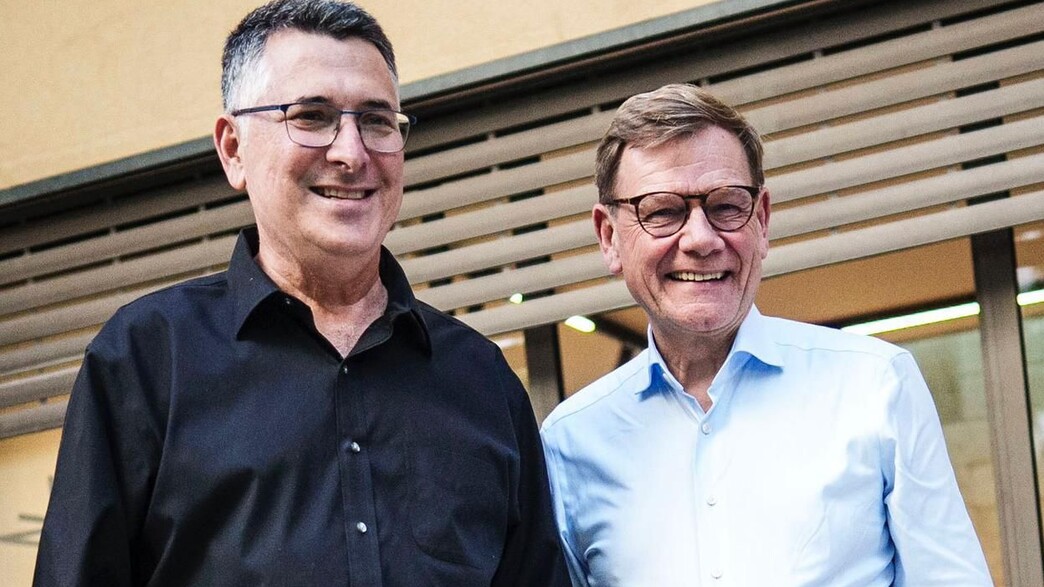
Behind these steps was strenuous political work, and a strategic decision by the Ministry of Foreign Affairs to focus on Germany in view of its great influence in Europe and its natural pro-Israel tendency. Foreign Minister Gideon Sa’ar’s close relationship with his German counterpart Wadpole, which sources in Israel and Germany told N12, helped in the effort. Sa’ar hosted Wadpole at his personal home twice in the last two months, and some of the German steps came at his request.
As part of the effort to prepare the ground and enable the political steps, the Foreign Ministry worked to improve Israel’s position in German public opinion. This is within the framework of a new concept in the office, which prioritizes working with the public in the target country, with the aim of allowing the leaders a public space of action to make positive decisions in favor of the State of Israel. In the meantime, the office worked intensively with the local media, and promoted many articles that presented pro-Israeli messages.
In parallel with the media work, as part of the #RememberTogether campaign launched by the ministry, a series of public measures were promoted in Germany designed to arouse identification and support, such as the opening of the Nova Festival exhibition in Berlin, the lighting of the Brandenburg Gate with the Israeli flag and the call for the release of the abductees, and a central memorial ceremony for October 7. A large delegation of 160 young German leaders also arrived in Israel, with the aim of improving their perception and the public’s perception of Israel. According to the data of the Ministry of Foreign Affairs, the total results of the campaign reached more than 13 million people in Germany.
An internal survey by the Ministry of Foreign Affairs indicates that the campaign achieved its goal, and helped move public opinion in a way that would make it easier for the German leaders to decide in favor of Israel. According to the survey that examined the data of the German discourse on Israel, in September the positive sentiment of all the discourse in the country stood at only 39%, while in October, after the campaign, it stood at 71% – a significant improvement in the attitude of Israel on social networks and in the German media.
It should be noted that Germany is an important but “relatively easy” country, because in advance it is more in favor of Israel than almost any other European country. The Ministry of Foreign Affairs tries to focus on countries that are easier to convince and where it pays to invest resources, such as Germany and Italy, where there is a right-wing government that tends to support Israel relatively, at the expense of countries that are considered “lost”, such as Ireland. It remains to be seen whether other countries will join Germany in taking pro-Israeli measures after the end of the war, but the Foreign Ministry sees the strengthening of relations with Berlin as a decidedly encouraging sign regarding Israel’s political direction.