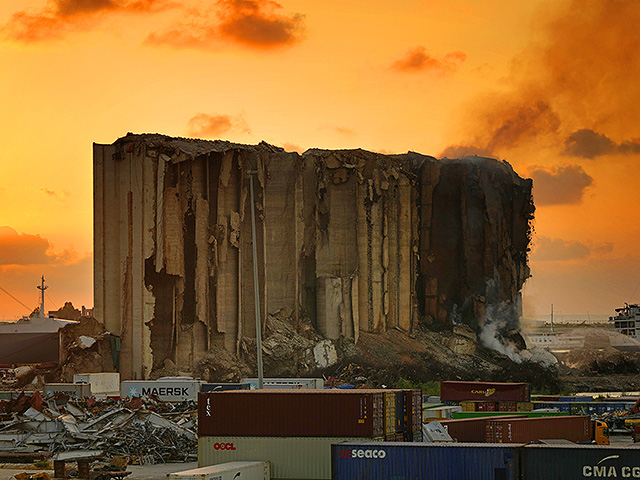
Hezbollah removed four prominent Lebanese over fears they would reveal the organization’s involvement in the August 2020 Beirut port bombing, the IDF said. Hezbollah’s 121st unit was tasked with getting rid of them.
New data regarding the massacres in Lebanon was published by the head of the Arabic department of the IDF press service, Colonel Avichai Edrai.
According to the IDF, in 2017, members of the 121st unit threw Joseph Skaf, the head of the customs department at the port, from a great height. He was removed after he demanded that ammonium nitrate, which three years later caused an explosion, be removed from the port.
In December 2020, Hezbollah hitmen attacked Munir Abu Rajili, head of the Customs Service’s anti-smuggling unit, with a knife. The assassination attempt was made after he passed on information about Hezbollah’s involvement in the explosion. Munir Abu Rajili died from his injuries.
The third victim was photographer Joe Bejani. On behalf of the Lebanese army, he documented the scene of the disaster. He was shot to death in his car and his phone was stolen.
In February 2021, Lokman Slim, a political activist and journalist, was shot dead. He was killed after writing about the involvement of Hezbollah and the Assad regime in the bombing.
In none of the cases were the investigations completed. The IDF press service recalls that this is not the first time that Hezbollah has dealt with its opponents.
Beirut port explosion
On August 4, at about 18:00, a powerful explosion occurred in the port of Beirut. According to the Lebanese government, about 2,750 tons of ammonium nitrate (ammonium nitrate) exploded, which had been stored in a warehouse at the port for six years after being confiscated on the Rhosus vessel (according to documents, it was sailing from Georgia to Mozambique under the flag of Moldova, owned by a Russian citizen, with a Russian-Ukrainian crew).
More than 200 people became victims of the explosion, over 6,000 were injured and injured. Clearance of the port ruins and surrounding areas continues.
According to the investigation, the explosion was the result of long-term storage of ammonium nitrate in improper conditions; the immediate cause of the explosion was the ignition of fireworks stored nearby, which caught fire from sparks when welding a metal hangar door. Dozens of suspects of indirect involvement in this incident were detained, both those who made decisions on dangerous cargo and those who did not make any decisions on this issue, although they had the authority to do so. Among those detained are port director Hassan Kritam, employees of the port administration and customs department, workers who carried out repairs in the hangar, those responsible for storage, etc. At this stage of the investigation, the Lebanese authorities reject the version of anyone’s malicious actions.
As a result of the explosion, a crater with a radius of about 70 meters and a depth of more than 40 meters was formed at the site of the 12th hangar. Dozens of other hangars were destroyed. The ship standing near the 12th hangar was destroyed. Another ship capsized. Two more cargo ships were damaged. Huge damage was caused to buildings, infrastructure and vehicles within a radius of about 2 km from the epicenter of the explosion. About 250 thousand people lost their homes because their homes were completely or partially destroyed. Among other things, the stock of wheat stored in the port was destroyed.
According to a preliminary estimate by Lebanese authorities, the damage from the powerful explosion in the port of Beirut, which occurred on August 4, amounts to up to $15 billion, which could have catastrophic consequences for the economy of the country, which is experiencing a severe crisis.