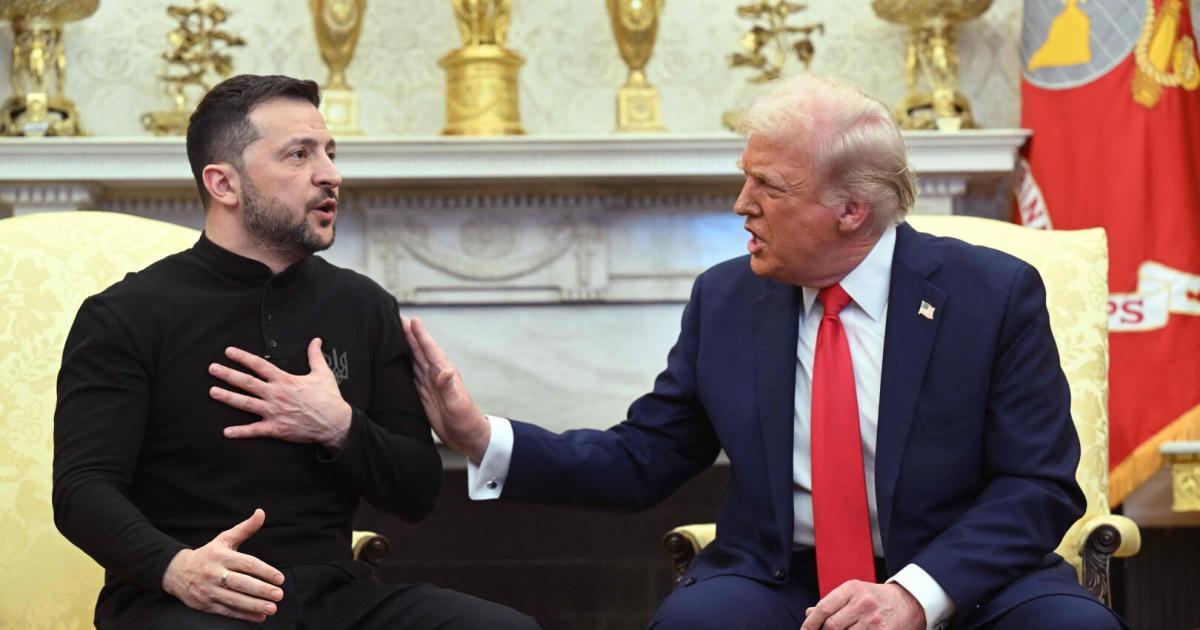
The Ukraine has submitted its proposals for “territorial concessions” in response to the US peace plan. The German Chancellor confirmed this Friedrich Merz on Thursday in a press conference with NATO Secretary General Mark Rutte in Berlin. The one from the administration under US President Donald Trump The plan presented had previously been sharply criticized as a “Russian wish list” because it essentially adopted Moscow’s demands.
Ukraine should not only forego joining NATO, but also limit the number of military troops and vacate other areas with well-developed defenses in the east of the country that it currently controls. In return, Moscow should undertake not to launch any further attacks on its neighboring country.
The original draft was revised in key points at the insistence of Kiev and its European allies. Both Kiev and the Europeans called for further changes in favor of Ukraine, especially security guarantees.
Merz: Only Kyiv can decide on territorial settlement
“The main issue here is the question of what territorial concessions Ukraine is prepared to make,” Merz continued. “But that is a question that the Ukrainian President (Volodymyr Zelensky, note) and the Ukrainian people must answer,” he emphasized. “Only Kiev can decide what territorial settlement it can accept,” he reiterated. “It would be a mistake to pressure the Ukrainian president into a peace that his people cannot support after four years of suffering and death.”
Even before the new proposals were submitted, Merz, together with British Prime Minister Keir Starmer and French President Emmanuel Macron, had a telephone conversation with Trump, which Merz described as “very constructive.”
Trump, on the other hand, said that the phone call was “about Ukraine in pretty clear terms.” “We probably had some small differences of opinion about people and we’ll see how that develops,” said the US President. Before the US government agrees to participate in a meeting on Ukraine in Europe, “we want to know a few things.”
Merz reported on Thursday that Starmer, Macron and he had suggested to Trump that they “finally” discuss the documents over the weekend. There may be a meeting in Berlin at the beginning of next week. Whether the US government takes part “depends very much on the joint drafting of the papers,” said Merz. But he is “reasonably confident that we will succeed.”
Russia wants security guarantees
Russian Foreign Minister Sergei Lavrov is insisting on security guarantees for his country in talks with the USA about ending the war in Ukraine. “We insist on a series of agreements for a lasting, sustainable peace with security guarantees for all countries involved. Our discussions with the US President and his team are focused precisely on finding a long-term solution to address the root causes of this crisis,” Lavrov said on Thursday. Moscow assumes that Trump is serious about his efforts to reach an agreement, he emphasized at the same time.
After a media report about a US peace plan for Ukraine, Russia is also open to foreign investment. “We are interested in an influx of foreign investment,” Kremlin spokesman Dmitry Peskov said on Thursday. However, Moscow will not take part in a “megaphone discussion” about any plans. The Wall Street Journal newspaper reported that the plan drawn up by the administration of US President Donald Trump envisages investments in the Russian rare earths and energy sector. In addition, the restoration of Russian energy supplies to Europe should be proposed.
In addition, US companies would use $200 billion (171.91 billion euros) in frozen Russian state assets for projects in Ukraine. After the Russian invasion of Ukraine in February 2022, many Western investors left Russia. Western states also imposed comprehensive sanctions on the Russian economy. Europe wants to completely end imports of Russian oil and gas.
An unnamed European official compared the proposed energy deals between Russia and the United States to an economic version of the 1945 Yalta conference, the Wall Street Journal reported. At that time, the victorious powers of the Second World War – the Soviet Union, Great Britain and the USA – divided their spheres of influence in Europe.