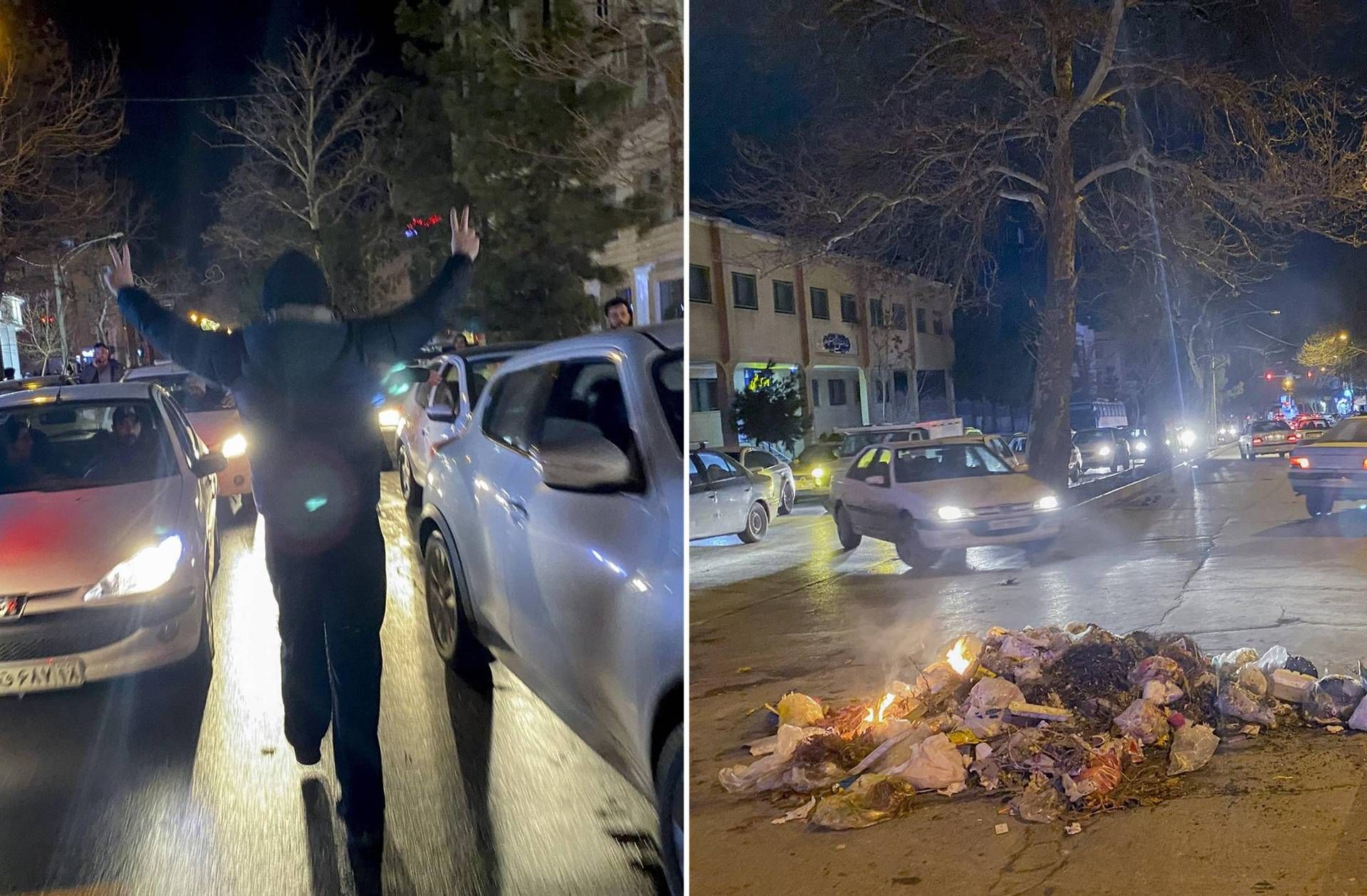
Targeted raids against Iran’s Revolutionary Guards and intelligence facilities may be the most plausible US response to Tehran’s repression, while Maduro-style action against Supreme Leader Ali Khamenei remains highly unlikely. This is what Mehrzad Boroujerdi, an Iranian-American university professor at the Missouri University of Science and Technology and author of ‘Postrevolutionary Iran: A Political Handbook’, claims, commenting in an interview with Adnkronos on the threats to the Islamic Republic from President Donald Trump, who has not ruled out the military option to help the protesters.
“If the United States decides to intervene and significantly degrade the capabilities of the Iranian regime, this could encourage more Iranians to remain in the streets and increase pressure on the regime,” explains Boroujerdi. However, “given that President Trump has shown little desire to employ ground troops, especially in such a bloody and volatile context, the most plausible response would be limited to air strikes against Revolutionary Guard and intelligence service installations.”
On the hypothesis of action against Khamenei, such as the one that led to the capture of Nicolas Maduro, Boroujerdi explains that direct intervention against the Supreme Leader is highly unlikely. “Although the kidnapping of Khamenei is theoretically possible, especially in light of the proven Israeli and American penetration of the Iranian security apparatus, it remains unlikely due to the serious and unpredictable consequences that such an operation could trigger,” he clarifies.
Boroujerdi then talks about diplomatic contacts between Tehran and Washington, claiming that there are “behind the scenes negotiations, as admitted by President Trump himself”. According to the expert, the latest “escalation of threats” from the American president could be a signal that the negotiations “are not proceeding according to the terms he deems acceptable”. As for a possible agreement, the expert remains sceptical: “The prospects remain limited because Washington insists on obtaining maximum concessions, while Iranian leaders do not want to give the impression of having given in under pressure. This represents the central dilemma.”
Finally, regarding the anti-government protests, Boroujerdi defines them as “the most radical and significant that the Islamic regime has faced since 1979”. However, he warns, that “it is currently unclear whether they can truly overthrow a regime that has always shown itself willing to use extreme violence to maintain power.”