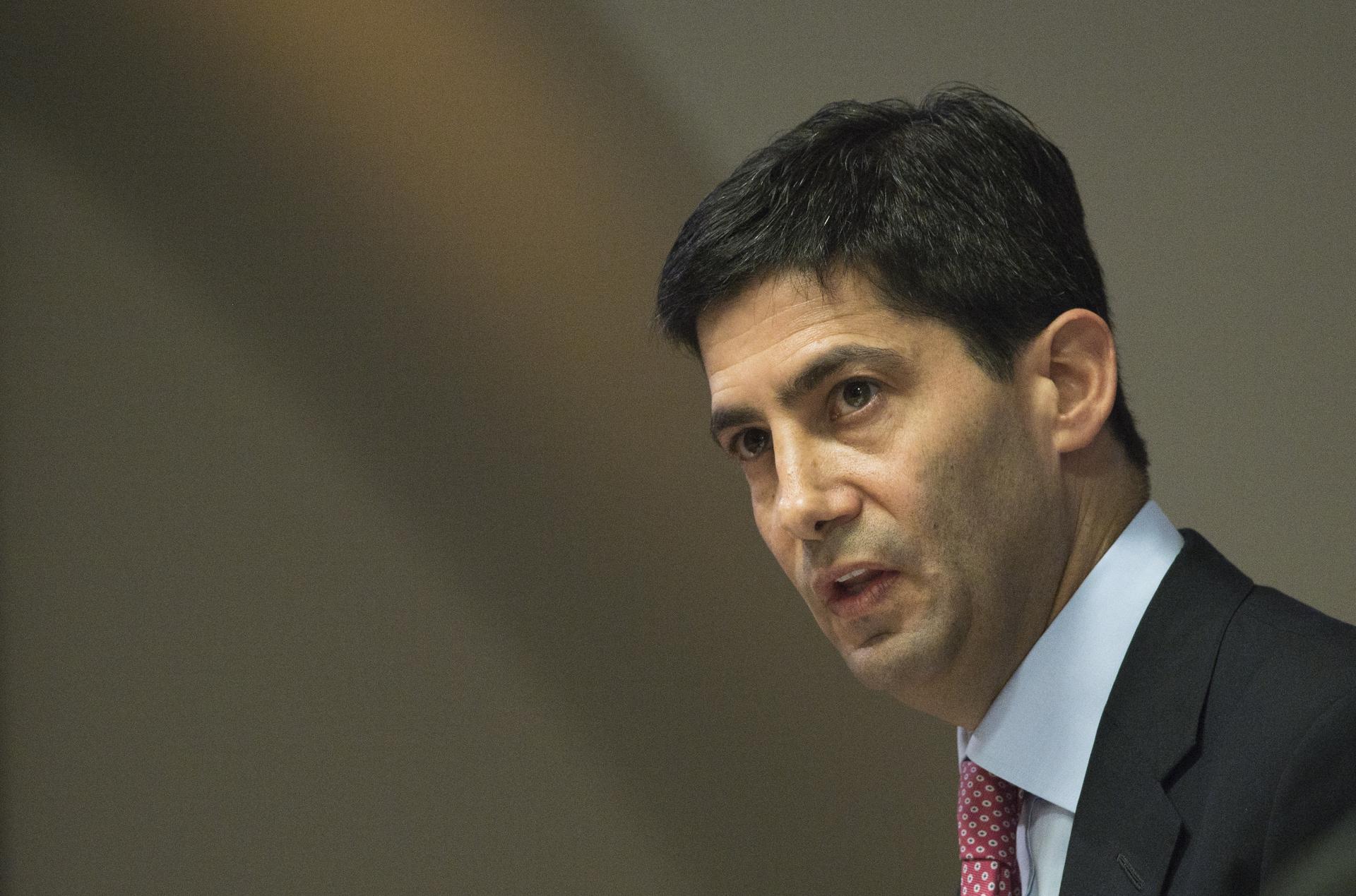
This Friday (30), the President of the United States, Donald Trump, nominated Kevin Warsh for the presidency of the Fed.
If the financier and banking sector executive, who was already a member of the Board of Governors of the American central bank between 2006 and 2011, has his name confirmed by the Senate, he will assume the position under pressure on two fronts: the Republican president’s desire for more interest rate cuts to be promoted; and the market’s demand for the Fed to act independently.
Since returning to the White House in January last year, Trump has been critical of the American central bank (especially its president, Jerome Powell, whose term ends in May) and has taken some contested actions in relation to the institution.
In August, he announced the dismissal of director Lisa Cook, alleging that she committed mortgage fraud before taking the position at the Fed, but the measure was suspended by the courts and reached the Supreme Court of the United States, where the case is currently being processed.
Another action by Trump was the appointment of Stephen Miran in September to replace Adriana Kugler, a member of the Fed who had announced her departure the previous month.
With his appointment confirmed by the Senate, Miran maintained his position as economic advisor to the White House, on unpaid leave, raising questions about the independence of his role at the Fed: he has repeatedly voted for deeper interest cuts.
The strongest measure by the Trump administration in relation to the American central bank, however, came this month: on January 11, Powell reported that the Department of Justice (DOJ) had opened an investigation into alleged irregularities in the renovation of Fed buildings.
“The threat of criminal charges is a consequence of the Federal Reserve setting interest rates based on our best assessment of what will be best for the public, rather than following the president’s preferences,” the institution’s president said in a statement.
“This is a question of whether the Fed will be able to continue to set interest rates based on evidence and economic conditions — or whether, instead, monetary policy will be driven by political pressure or intimidation,” Powell added.
On Wednesday (28), the Fed voted to maintain the basic interest rate between 3.5% and 3.75%, after three cuts last year.
The United States had inflation of 2.7% in 2025, well below the 12-month accumulated rate of 9.1% recorded in June 2022, under the government of Democrat Joe Biden, but still considered a high level in a country accustomed to price variations of less than 2%.
After maintaining the interest rate, Trump again criticized Powell in a post on the Truth Social network.
“Jerome ‘Too Late’ Powell has again refused to lower interest rates, even though he has absolutely no reason to keep them so high. He is hurting our country and our national security. We should have a substantially lower rate now that even this idiot admits that inflation is no longer a problem or a threat,” the American president wrote.
Amid this dispute between the White House and the Fed, conservative analysts are expressing concern: in an editorial published after the opening of the investigation against Powell, The Washington Post said that “it will be up to the Senate and the Supreme Court to decide whether the Fed will become an agency similar to a government office, under the control of the president, or whether it will maintain a certain degree of independence”.