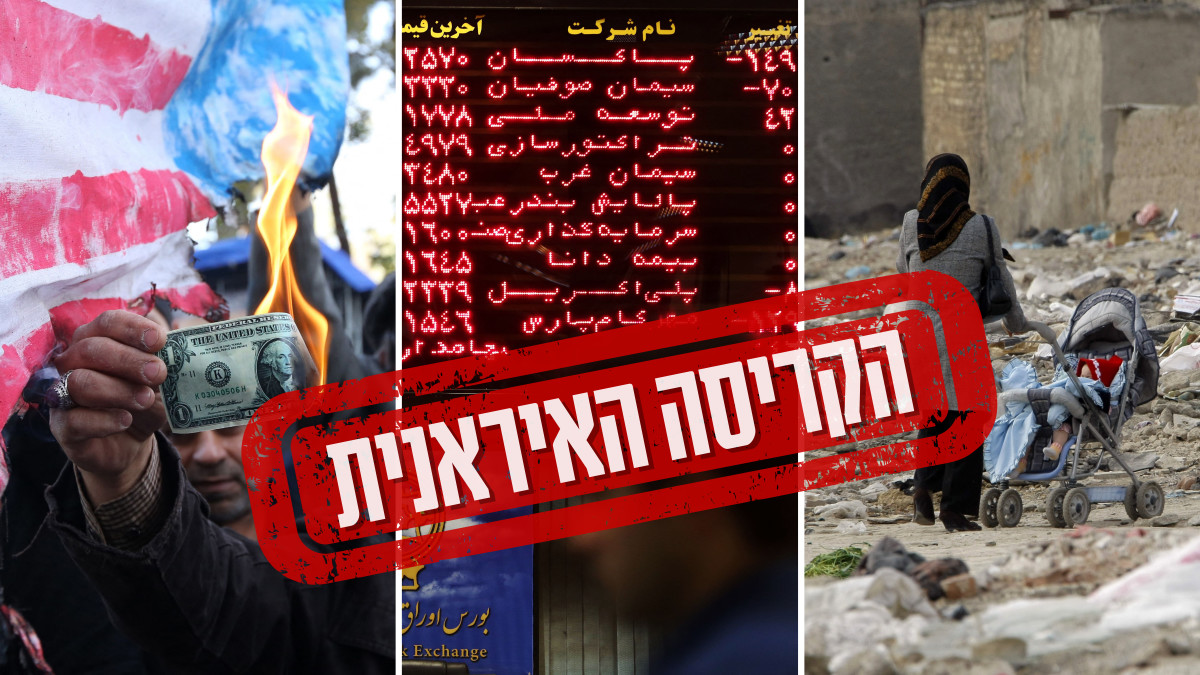
Lack of dollars
The American statement fits into the broad picture emerging from the local market: increasing demand for dollars from households and businesses, alongside the limited ability of the authorities to inject foreign currency without eroding reserves. In the reality of tight sanctions, restrictions on the banking system and continuous capital flight, the flow of dollars into the economy has become limited, unstable and unpredictable.
In view of the currency crisis, the government is returning to methods that have already proven their limitations. One of them is an attempt to manage expectations through reassuring messages and official statements. However, after years of broken promises and contradictory measures, public trust is eroded, and any reassuring message is sometimes seen as a warning sign. Also, dollar infusions into the market, which were intended to slow down the exchange rate, over time became a channel for the distribution of rents and corruption. At most, these measures buy valuable time at a high price, but without addressing the root of the problem – they deepen the cycle of inflation and recession and prepare the ground for further sharp devaluations.
The main damage is recorded among households with a fixed income – about 50% of the workforce in Iran – whose wages do not catch up with the pace of price increases. Every jump in the dollar translates directly to the erosion of the standard of living and the pushing of millions to the economic margins. In contrast, owners of capital and large businesses sometimes manage to convert assets into more portable means of savings. Official data indicates a capital flight of approximately 20 billion dollars in 2024 alone, and an additional 9 billion dollars in the months leading up to the war in June 2025. In view of the sequence of shocks and the economic stagnation, estimates speak of the possibility of an outflow of up to 40 billion additional dollars by the end of the year.
Water: an existential crisis in the capital
Electricity: industrial paralysis and fear of closing businesses
The state news agency ILNA reported a slowdown in production in various industries due to power outages, and in a report published in Iran it was written that “many industries and several refineries are facing a shortage of water and electricity, which may lead to a price increase or even a shortage of energy products such as gasoline.” According to the same report, the damage to the electricity supply directly affects the production and supply chains.
The warnings also come from professional sources. In an interview with ILNA, the secretary of the Electrical Engineering Companies Association in Golestan warned that the power outages could lead to a “decrease in production, a decrease in income and ultimately to layoffs and unemployment among workers.” According to him, the crisis “caused serious problems for the people, farmers and manufacturers”, and emphasized that in the modern world, electricity is not just a basic commodity – but “the lifeblood of the economy and the most essential element of everyday life”.
In this reality, the concern is not only focused on temporary damage to productivity, but on cumulative consequences: disruption of production processes, erosion of the ability to meet obligations, and increasing pressure on the labor market. Criticism within Iran is growing against the background of the authorities’ inability to stabilize the electricity supply, while the economy is simultaneously dealing with high inflation, a decline in purchasing power and a lack of basic infrastructure.
The real and inflation: accelerated erosion of purchasing power
The damage is also evident in the growth figures. According to data published by the Central Bank in Tehran, in the first half of the Persian year the local economy shrank by 0.6%. When you exclude the oil sector, which grew by 1.1%, the contraction is 0.8%. The construction industry stood out in particular, with a decrease of 12.9% – a figure that reinforces the picture of a broad slowdown in the economy.
Within this reality, the minimum wage in Iran remains extremely low – only about 120 dollars per month, an amount significantly lower than the basic living estimate, which is estimated at about 400 dollars. According to estimates, at least a third of the population currently lives below the poverty line, when price increases and the weakening of the currency make it difficult for households to meet basic expenses.
Bread: a basic product that has become a measure of hardship
In other reports it was stated that bakeries are having difficulty meeting the official prices, due to an increase in production costs, cuts in subsidized flour and a lack of supplies. In some areas it has been reported that “Sangk” bread – another basic product – is being sold at prices of 100 to 200 thousand riyals, twice and even three times the official price set at 76 thousand riyals.
The banks: bankruptcy is rare under sanctions
According to ISNA news agency, the bank collapsed due to accumulated losses of approximately 5.2 billion dollars and debts amounting to approximately 2.9 billion dollars. Over the weekend, police were deployed around the bank’s branches in the capital, after long queues of depositors formed – as reported by an AFP reporter. The central bank announced that the government bank “Mali” had taken over Ayonda’s assets, and the authorities tried to reassure the public and assured that depositors’ money was safe.
In the background of the reports, it was emphasized that the bankruptcy is occurring at a particularly sensitive time, against the background of renewed international sanctions and the worsening of Iran’s economic isolation, after the collapse of attempts to revive the 2015 nuclear agreement.
Work force and divorce: direct damage to the sectors of the economy
Along with the economic aspect, the expulsion of the Afghans was also accompanied by security reasons. Senior Iranian officials claimed that some of the immigrants served as spies for Israel – claims that were repeated in reports in the state media. On the other hand, voices inside Iran warned against presenting an entire population as a threat, and emphasized its many years of contribution to the local economy.
Priorities: The defense budget is soaring
Against the background of the social and economic crisis, the draft budget promoted by the Iranian government for the next Persian year includes a 145% increase in the defense budget, to a level of approximately 9.2 billion dollars. Of the amount, about 4.6 billion dollars are designated for the logistics of the Ministry of Defense and about 1.8 billion dollars for the Revolutionary Guards.
The Shia axis: strategic depth that will be eroded
As a result, the Houthi government is now mainly engaged in internal struggles and trying to re-establish its control over the territory. According to estimates in Israel, this situation makes it difficult for the Houthis to build an effective offensive array abroad at this stage, and reduces their ability to integrate into coordinated activity against other arenas – Lebanon, Gaza or Iran itself – in the event of a broad escalation.
Israel even estimates that the recent regional changes, including political moves concerning the Horn of Africa region, have contributed to further erosion of the Houthis’ ability to operate in the maritime and regional arena. In the absence of a fully functioning proxy, Tehran is forced to face a reality in which the network of affiliates it has built up over the years has difficulty providing the same strategic depth that was a key asset for it in previous conflicts.