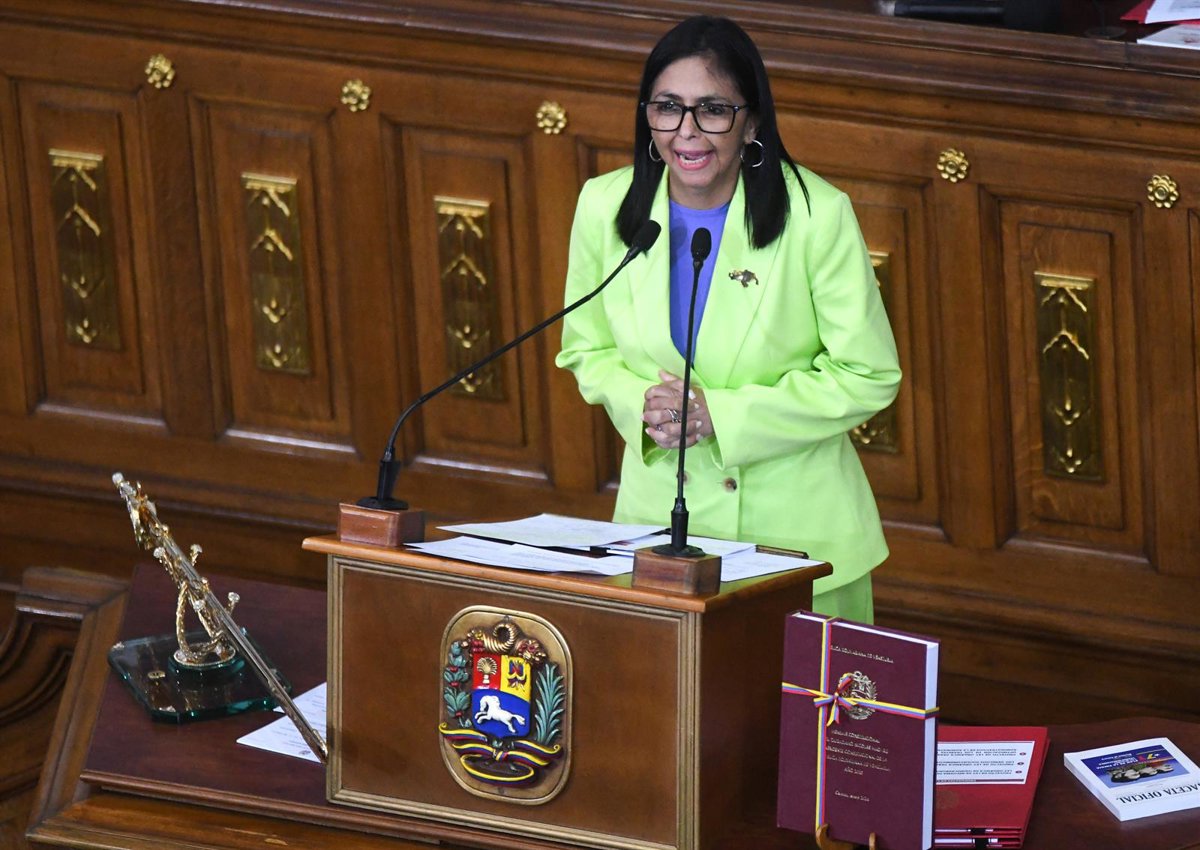
The National Assembly of Venezuela has unanimously approved this Thursday and in first reading a long-awaited amnesty law for political prisoners that allows “decisive” steps to be taken towards peace in the Latin American country after the departure of Nicolás Maduro from power.
“The bill fortunately is not a list of names, because these lists of names are always exclusive; there are more all the elements that can be subject to this law from 1999 to 2026,” indicated the president of the Venezuelan National Assembly, Jorge Rodríguez, after the vote.
According to the Constitution, “to become law, every project will receive two discussions on different days”, the first addressing “the explanatory reasons”, as well as “its objectives, scope and viability”, while the second discusses “article by article”.
Rodríguez has announced the creation of a commission to carry out consultations on the project, called the Amnesty Law for Democratic Coexistence, which will be chaired by Congressman Jorge Arreaza. The text excludes the crimes of serious violations of Human Rights, crimes against humanity, war crimes, intentional homicide, corruption or drug trafficking.
“The proposed general amnesty seeks justice and coexistence among Venezuelans, allowing coexistence from diversity and plurality, always with respect for the law and justice,” reads the statement of reasons collected by various Venezuelan media.
The NGO Penal Forum, specialized in monitoring the situation of political prisoners in the country, has described as “positive” that the debate on the amnesty law has begun, although it has urged the Venezuelan authorities to make the full text public “immediately.”
“In good Christian terms: Without the support and contributions of civil society, the amnesty will have very short legs,” Gonzalo Himiob, founder of the NGO, has expressed on social networks, who has alluded to the fact that only the explanatory memorandum of the legislation has been made public, which will now have to be approved on second reading.
The president in charge of Venezuela, Delcy Rodríguez, announced this measure and also proposed the closure of the El Helicoide facilities, a detention center operated by the Bolivarian National Intelligence Service (SEBIN) for its reconversion into a cultural and sports space.
However, Human Rights organizations have recalled that in the country there are still numerous laws that restrict the activities of NGOs and that the amnesty law does not cover crimes committed during the mandate of Maduro and his predecessor, Hugo Chávez.