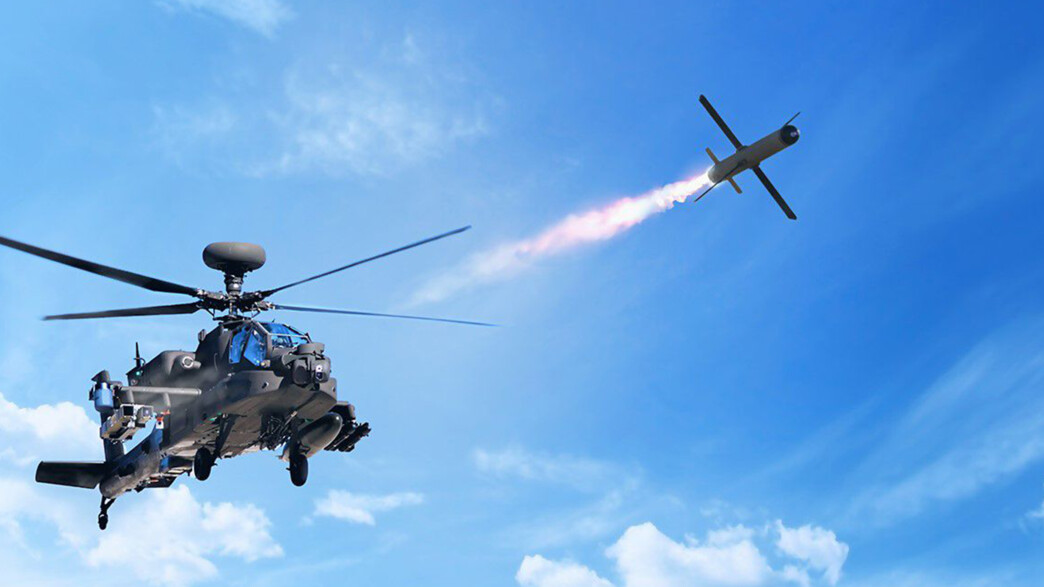
Just a few months ago, Spain canceled a huge deal with Rafael due to the war in Gaza, and now it is turning to the Eurospike company – in which Rafael has 20% of the ownership • The excuse used to justify the apparent deal: the components are manufactured in Europe
Pedro Sánchez’s government in Spain is one of the most anti-Israeli in the European Union, and this was reflected in June, when the Ministry of Defense in Madrid decided to suspend a huge deal to purchase Spike LR2 anti-aircraft missiles from Rafael for approximately 285 million euros for the Spanish army and the local navy, for the war in Gaza.
Rafael owns 20% of the European company, while the German companies Rheinmetall and Diehl own 40% each. This company produces MELLS, the European variant of the LR2 spike, with which the Spanish will also be able to use the LR spike missiles that they have been operating for 17 years. The excuse that Sanchez’s government uses to justify the apparent deal is that the components of MELLS are manufactured in Europe.
The sequence of events began in October 2023, when the Spanish Ministry of Defense reached an agreement with Pap Tecnos, a subsidiary of Rafael in Spain, for the purchase of Spike LR 2. The deal included 168 launch units, 1,680 missiles and full logistical support. When it was decided to “suspend the agreement” there was an expectation that the American giants Raytheon and Lockheed Martin would benefit from the anti-Israel trend with the sale of Jablin, but in Madrid they are expected to go for MELLS, which is the same lady in a different name.
The Spike series includes a wide range of models, adapted to different ranges and diverse platforms. The lightest model, Tact (Spike SR), weighs about 10 kg, is carried on a shoulder and is intended for ranges of up to 2 km. At the other end is an NLOS spike known as Tamuz, which weighs about 71 kg, is capable of hitting a target from a distance of up to 32 km, and is launched from land, air or sea platforms. However, the highest demands in the world are for the LR spike models (for a range of 4 km) and the LR2 spike, which is capable of reaching a range of 5.5 km from the ground and 10 km from the air.
The ship that refused to dock in Spain
The cancellation of the defense agreement is not the first step in which Spain acts against the Israeli security system during the war. On May 16, 2024, Spain decided to refuse to allow a ship carrying explosives from India to Israel to dock in its ports. The Spanish Minister of Transport Oscar Fuente said at the time that the ship “Marianne Danica” applied to dock in Cartagena on May 21, before it was refused. The general cargo ship “Marian Danica”, which sailed with the flag of Denmark, left Chennai port on April 8, when according to the Spanish newspaper “El Pais”, it was carrying 27 tons of explosives. If not for the influence of the Houthi rebels on the Red Sea, the ship would not have passed through Spain’s economic waters at all, but the sailing traffic was mostly diverted to the Cape of Good Hope and from there to Gibraltar.
A day before the refusal to dock “Marian Danica”, the container ship “Borkum”, flying the flag of Antigua and Barbuda, stopped a short distance before entering Cartagena. Pro-Palestinian activists demonstrated at the port, and left-wing members of the European Parliament sent a letter to the Prime Minister of Spain demanding that it be prevented from docking, due to the suspicion that it was carrying illegal immigrants to Israel. Even before a decision was made in Madrid, the ship decided to cancel the intermediate berth in Cartagena, and continued to the port of Kuper in Slovenia.
According to Al Jazeera, this ship, which also departed from the port of Chennai, contained ammunition that was sent to the port of Ashdod. The pro-Palestinian organizations claim that Burcom contained 20 tons of rocket engines, 12.5 tons of rockets, explosives, 1,500 km of explosives and 740 kg of artillery materials. A report by the Qatar News Agency claims Because under the confidentiality clause, the employees are prohibited from naming TAS, which since 2018 has become a subsidiary of Elbit. The operator of the ship, the German MLB, denied to Al Jazeera and said that “the ship did not load any amlach or other cargo for Israel.”
https://pinup-casino.zone/
https://pinup-giris.pinup-casino.zone/
https://authenex.com/
https://surflabuenavida.com/
https://espailatregua.com/
https://pinup.espailatregua.com/
https://pin-up.espailatregua.com/
https://pinup-az.espailatregua.com/
https://akustickeparavany.cz/
https://akustickeparavany.cz/realizace/
https://akustickeparavany.cz/sluzby/
https://akustickeparavany.cz/sluzby/odhlucneni/
https://akustickeparavany.cz/sluzby/zvukova-izolace/
https://akustickeparavany.cz/sluzby/prostorova-akustika/
https://akustickeparavany.cz/sluzby/mereni-hluku/
https://akustickeparavany.cz/sluzby/konzultace/
https://akustickeparavany.cz/realizace/stavba-zkusebny-odhlucneni-lisovane-desky/
https://akustickeparavany.cz/realizace/odhlucneni-baru-groovebar-stropni-akustika/
https://akustickeparavany.cz/realizace/designova-akusticka-stena-obyvaci-pokoj-interier/
https://akustickeparavany.cz/realizace/vlastni-zkusebna-v-rodinnem-dome/
https://akustickeparavany.cz/realizace/odhlucneni-laboratore-akusticka-pena-jehlany/
https://akustickeparavany.cz/realizace/akustika-hifi-showroom-luxusni-elektronika/
https://akustickeparavany.cz/realizace/akustika-nahravaci-studio-sound-square-design/
https://akustickeparavany.cz/realizace/akustika-kulturni-sal-studenka-panely-na-miru/
https://akustickeparavany.cz/realizace/prumyslove-odhlucneni-tepelne-elektrarny-lisovane-desky/