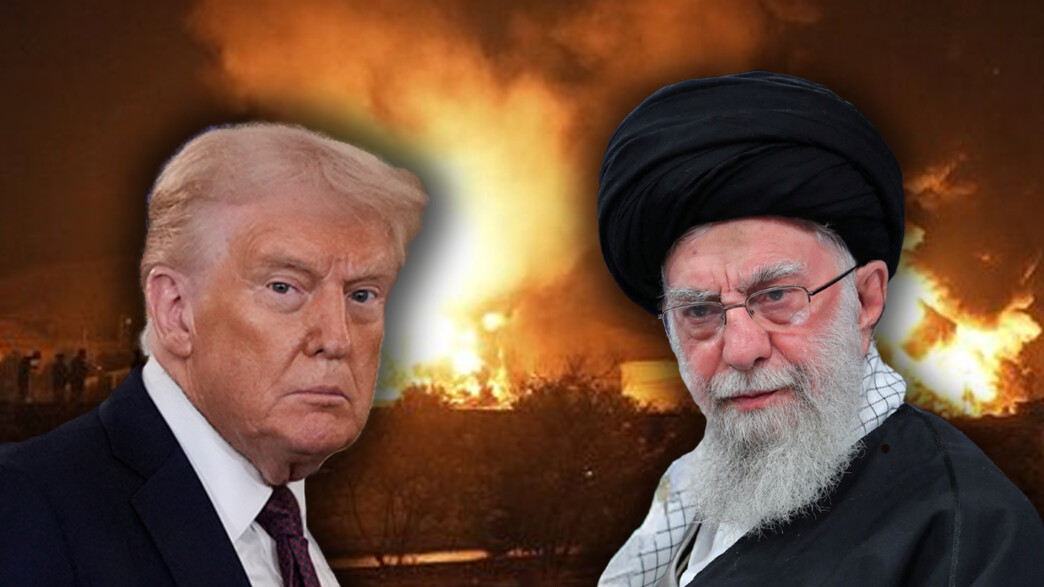
Witkoff and Kushner will meet today in Geneva with Iranian representatives, in a last-ditch attempt to reach an agreement that would avoid war.
The US and Iran will hold a second round of talks today (Tuesday) in Geneva, Switzerland, in an attempt to reach an agreement that will avoid war. Iran’s approach to talks with the US is positive and serious, but Tehran does not have a preconceived position as to their results. Iran came to Geneva with real proposals.”
Why is this important?
- War or agreement? While President Trump has said he prefers a diplomatic solution and wants to reach an agreement with Iran, he has simultaneously ordered extensive military reinforcements in the Gulf, including sending a second aircraft carrier along with its strike group. Yesterday it was reported that another 18 planes F-35 Americans make their way to the Middle East.
- The parties are in talks: The US team for the talks will include President Trump’s senior adviser, Jared Kushner, and White House envoy Steve Witkoff. The Iranian delegation is expected to be led by Foreign Minister Abbas Araqchi. The Minister of Foreign Affairs of Oman, Badr al-Busaidi, the mediator between the parties, is also expected to participate.
Iran wants a deal, they don’t want to face the consequences of not getting a deal
US President Trump
- Trump will be involved: In a conversation tonight with reporters on the Air Force One plane, President Trump said that “the talks with Iran are very important. Iran wants a deal. I hope they will proceed in a reasonable manner.” The president said that he would be involved in the talks “indirectly”, and threatened: “I don’t think Iran wants to face the consequences of not reaching a deal.”
- What is the chance of an agreement? Despite the attempts to reach an agreement, in light of the statements of the parties – and the different positions, the chances of this are not high. The missile issue, the uranium enrichment and the proxy issue – stand at the heart of the dispute between the parties.
American forces in the Middle East – the updated map:
the differences between the parties
Uranium enrichment
- The American requirement: President Trump told reporters on Friday that any nuclear deal must include zero uranium enrichment inside Iran.
- Iranian insistence: The spokesman for the national security committee in the Iranian parliament, Ibrahim Razai, claimed that Tehran would not agree to give up its nuclear capability. “During the round of negotiations in Geneva, we will not discuss halting or giving up uranium enrichment, nor is there any intention to remove Iran’s nuclear stockpiles from the country. These issues have already been accepted by the Americans.”
The missile issue
- The American requirement: on-CBS It was reported this week that Trump told Netanyahu at their meeting at Mar-a-Lago in December that he would support an Israeli strike against Iran’s ballistic missile array if the talks fail. The president also said publicly in front of the cameras that he supports Israel’s position on the ballistic missile issue.
- Iranian insistence: Tehran has rejected several times the demand to discuss the ballistic missile issue. The spokesman for the National Security Committee in the Iranian Parliament claimed that the basic lines for them on this issue had already been determined: “The talks will not be related to the issue of missiles or regional issues.” The Iranian Foreign Minister also emphasized: “The talks deal exclusively with the nuclear issue.”
behind the scenes
- A senior American said that earlier this week Witkoff spoke with the foreign minister of Oman and gave him a number of messages regarding the nuclear talks so that he could pass them on to the Iranians.
- The Omani Foreign Minister prepared a document based on his conversation with Witkoff and passed it on to the Secretary of Iran’s Supreme National Security Council, Ali Larijani, who visited Muscat last week.
- Larijani confirmed in an interview with Iranian state television that he received the document that includes the American messages.
reminder
- Ten days ago, the first round of talks between the US and Iran took place in the capital of Oman – Muscat.
- According to the reports, he dealt with general issues and not technical details. Centcom commander Brad Cooper also came to the talks to the chagrin of the Iranians, who said: “His presence could harm the talks.”
- After the talks, Iranian Foreign Minister Abbas Araqchi sounded optimistic: “During the talks in Muscat, our interests and the rights of the Iranian people were mentioned, and the atmosphere was positive. This is a new beginning for negotiations and there is a great lack of trust at this time and it is a challenge. If this path between the two sides continues, we will be able to find a clearer framework for negotiations in the following meetings.”
https://mapleprimes.com/users/dibblesofa6
https://www.demilked.com/author/serverjury9/
https://www.divephotoguide.com/user/sushiknee0
http://qa.doujiju.com/index.php?qa=user&qa_1=serversofa4
https://oiaedu.com/forums/users/flaregray9/
https://someplacenice.com/author/crosstown8/
https://egamersbox.com/cool/index.php?page=user&action=pub_profile&id=280252
https://www.tikosatis.com/index.php?page=user&action=pub_profile&id=518048
http://okprint.kz/user/steelcancer2/
https://wikimapia.org/external_link?url=https://www.truffleguys.com/product-category/truffle-oil/
https://archeter.co.uk/user/profile/391906
https://matkafasi.com/user/inputgray9
https://onlinevetjobs.com/author/dibblecamera9/
http://lideritv.ge/user/dibblestorm3/
https://servodriven.com/forums/users/nutknee8/
https://dreevoo.com/profile.php?pid=1060857
https://swaay.com/u/hooverbusch04svnjjf/about/
https://nhadat24.org/author/flaretown7
https://www.fundable.com/arthurwang-wilsonkerr
https://www.fanficoverflow.com/profile/view/80524
https://www.chordie.com/forum/profile.php?id=2467504
https://groovestats.com/index.php?page=profile&id=194705
https://www.rvparking.com/user/505349
http://www.neighborhoodlink.com/people/AsiadgCampos
https://poiskpredkov.by/members/turtleshears2/activity/577037/