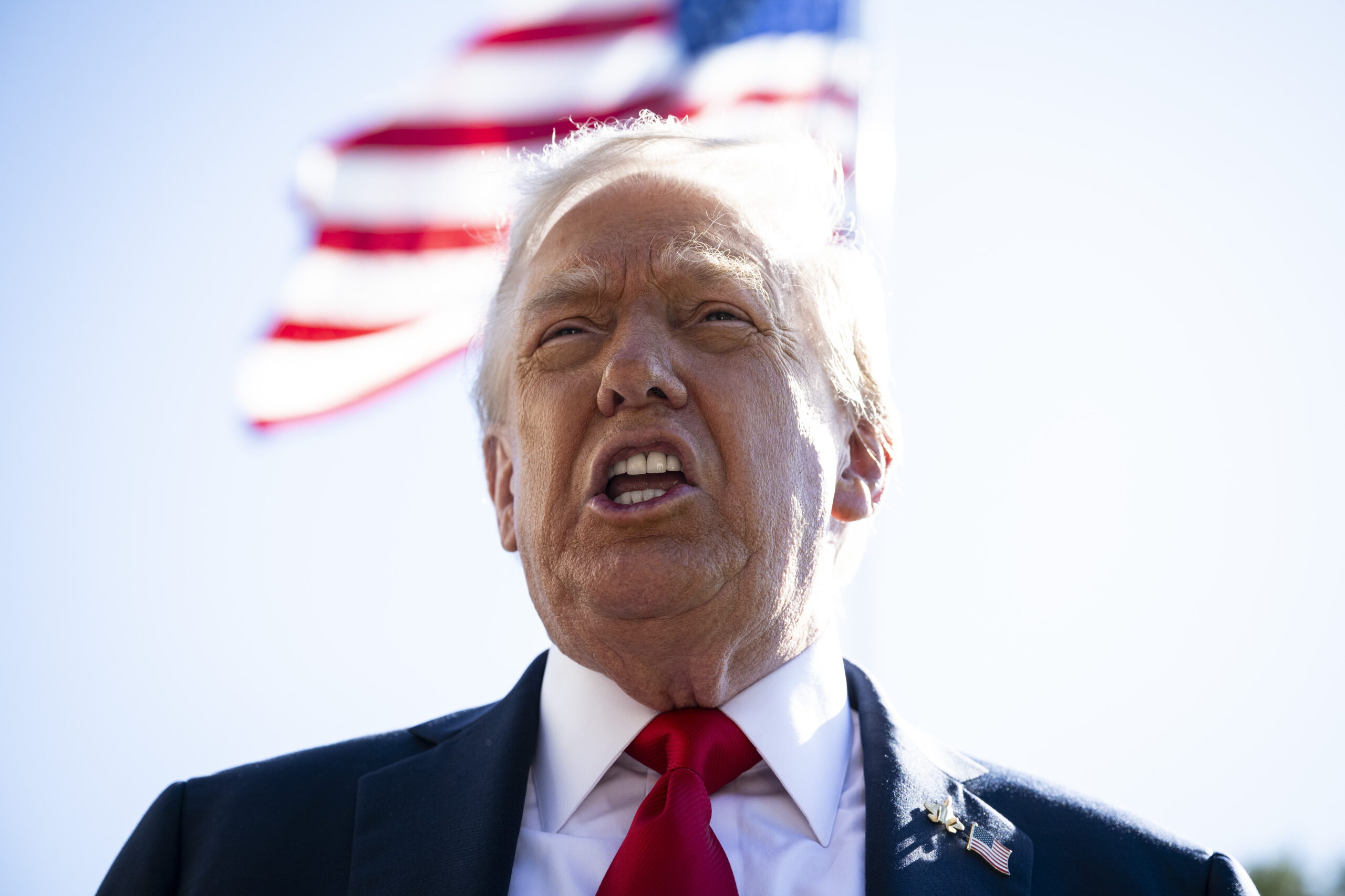
This Tuesday (24), the USA began applying a 10% global tariff on several foreign products, despite President Donald Trump’s recent announcement to impose a 15% rate, which increases uncertainty about American customs policy.
The president announced he would quickly implement a flat 10% tariff on all his trading partners through a different law last Friday, after the U.S. Supreme Court struck down most of his administration’s tariff agenda.
Subsequently, Trump published a message on Truth Social, indicating that, with immediate effect, he would raise this worldwide tariff from 10% to 15%.
However, U.S. Customs and Border Protection released a statement on Monday informing importers that the fee would initially be 10% and that it would apply to “all countries for a 150-day period unless specifically exempt.”
“Pursuant to the proclamation issued by the President on February 20, 2026, which imposes a temporary import surcharge (…), effective with respect to goods entered for consumption or removed from a warehouse for consumption beginning at 12:01 a.m. Eastern Standard Time on February 24, 2026, all goods entering the United States, regardless of their country of origin, are subject to an additional 10% import surcharge unless are specifically exempt”, explains the note from the customs agency.
In this way, it is confirmed that the global tariff will start at 10%, although the administration is working to raise it to 15% in a separate order that Trump must sign and for which there is no defined date, according to the broadcaster. NBC.
The Supreme Court decision, which removed Trump’s powers to increase or reduce tariffs without prior approval from Congress, created confusion in international markets.
The European Union (EU) has suspended, for now, the trade agreement signed with the USA until the tariff policy, one of the pillars of the Trump administration, is clearer.
Other countries, such as India, China and the United Kingdom, are studying what measures to take, given that the agreements signed with the US based on the International Emergency Economic Powers Act have lost their effect, as the US Supreme Court ruled that Trump used it incorrectly.
https://www.rvparking.com/user/505410
https://www.fanficoverflow.com/profile/view/80582
https://www.gamingtribe.com/profile/gt_6615182096764108
https://gifyu.com/HeathergdSutton
https://classifieds.ocala-news.com/author/throatmom1
https://test.najaed.com/user/henmom5
https://volleypedia-org.50and3.com/index.php?qa=user&qa_1=crowchest8
https://adsintro.com/index.php?page=user&action=pub_profile&id=801739
https://gratisafhalen.be/author/otterfang1/
https://travelersqa.com/user/partypain3
https://www.demilked.com/author/cottonhen9/
https://www.divephotoguide.com/user/bedhope1
https://dreevoo.com/profile.php?pid=1097484
https://pikidi.com/seller/profile/singleagenda9
https://nhadat24.org/author/throatclave5
https://www.modhub.us/user/DrakegdBoyle/
https://groovestats.com/index.php?page=profile&id=194758
https://www.fanficoverflow.com/profile/view/80581
https://www.rvparking.com/user/505408
https://www.gamingtribe.com/profile/gt_6200818098890939
https://www.fundable.com/kateschmitt-paulablake-1
https://kitchenanswershub.com/user/healthjuice29
https://classifieds.ocala-news.com/author/knightfall41
https://test.najaed.com/user/whalebaker48
https://www.garagesale.es/author/polandthread37/