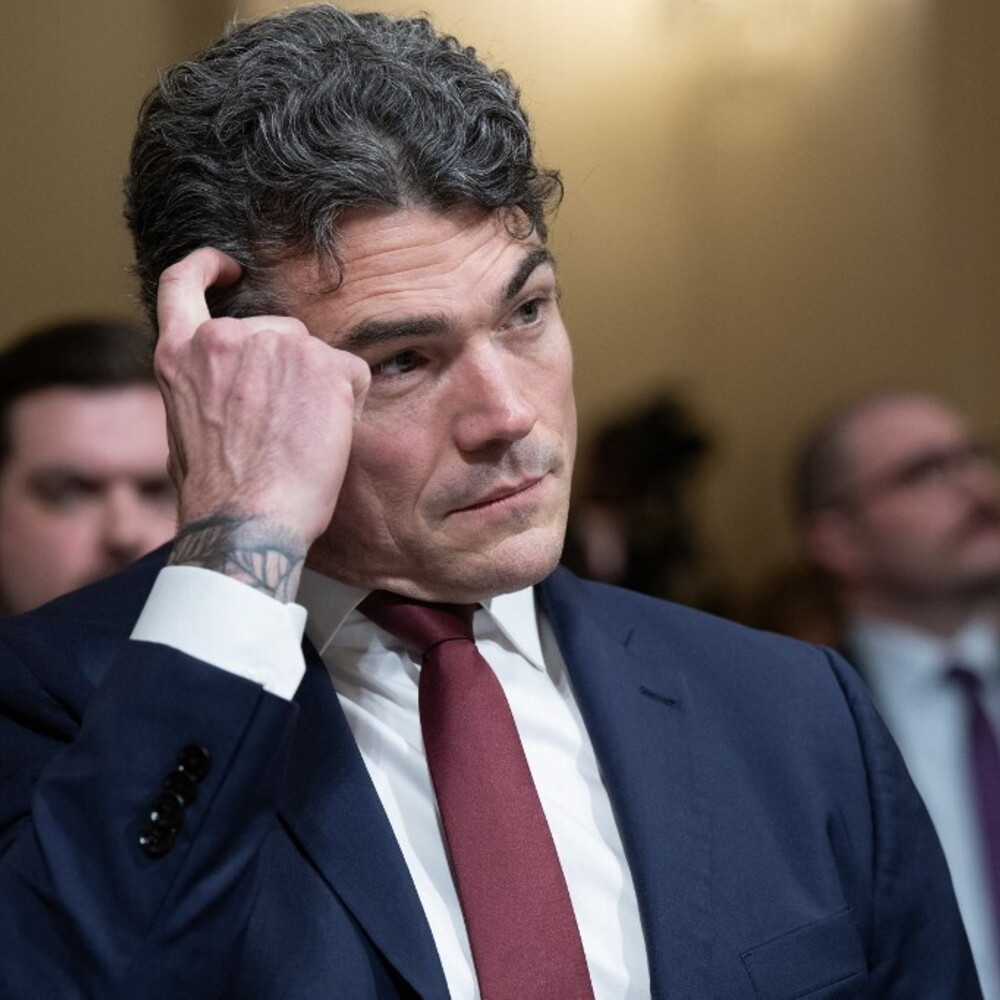
Joe Kent, the man who resigned as head ofNational counterterrorismin controversy with the attack on Iran, belongs to that category of Americans who seem to have emerged from a long season ofinvisible wars: trained not in universities or corridors of power, but in deserts and nameless operations. Born in Oregon in 1980 in a small town called Sweet Home, Kent actually lived far from home, immersed in the trenches of the world and without ever really finding the serenity that the name of his community, equivalent to “sweet home”, promised: he went through two decades ofconflicts come membro delle army special forceswas one ofGreen Beretsthe ‘Green Berets’, with eleven missions behind them, inIraq e Middle Eastbefore passing into the even thicker shadow of theCIA. His career is the direct product ofPost-9/11 Americaa country that has exported its ownsafetyin distant lands and built a class ofintelligence warriors-intellectualsget used to reading the world like a map ofthreats.
But, as often happens in the most symbolically charged American biographies, Kent’s public trajectory cannot be separated from oneprivate tragedy. His wife, Shannon, also in the military and part of the car of thenational securitywas killed inSyria in 2019 in un suicide attack. That tragedy ended up marking Kent’s history forever, and pushing him to embrace thefight against terrorismas his sole life mission. But Kent, unlike many men who came out of that world, did not find a linear landing inAmerican politics. He was a libertarian, then a Democrat, finally a Trumpian Republican,populist supremacista path that is not so much inconsistent as it is revealing of an era in which ideologies matter less than fractures. Itselectoral campaignsin Washington state they failed twice, in 2022 and 2024, but they made it visible to a political galaxy attracted by figuresanti-establishmenthard and irregular.
L’ascesa al National Counterterrorism Center
His rise to director of theNational Counterterrorism Centersotto Donald Trumpwhich nominated him on February 3, 2025, was both logical and surprising. Logic, because Kent had the credentials –guerra, intelligence, personal tragedy– which in America constitute a form ofmoral legitimacy. Surprising, because he brought with him acontroversial political baggage: contacts with environmentsfar rightlegami con i Proud Boys, conspiracy theorista language closer topopulist angerthan to the prudent lexicon ofnational security.
Contradictions and resignations
And yet, as in many recent American stories, thecontradictionit is not an accident but the very substance of the character. Kent was, until the end, a man ofinstitutionsand one of their critics. He occupied the halls of power, but he reasoned as if he were still in the field. He embodied arightwho distrusts theall’estero wardespite having drawn energy from it for decades. Itsresignationwith which he accused Trump of “being pressured by Israel” while Iran “represented no threat” to America, has become apublic confession. The sensation, commentators now say, is that Kent, with that sensational gesture, is not just an individual, but asymptom. It also represents a current within theAmerican populismwho can’t stand themwell imperialistof the president, if these put the lives of the people at risksoldiers.
The human cost of war
In IranThirteen have died so farmilitaryand American reservists, and more than two hundred were injured, but the way in which the numbers emerge as the day passes, the way in which the Pentagon savors them, leaves the doubt that the toll could be even more serious. Kent saw i diecompanionshe lost thewifeknows the weight ofextreme choices. With this act he did not want to go to the other side of the barricade, siding with thepoliticiansand turn your back onsoldiers. The only ones, together with thecivilianswho pay the price of oneguerranever wanted by them. And no one can say it more than Kent at this moment.