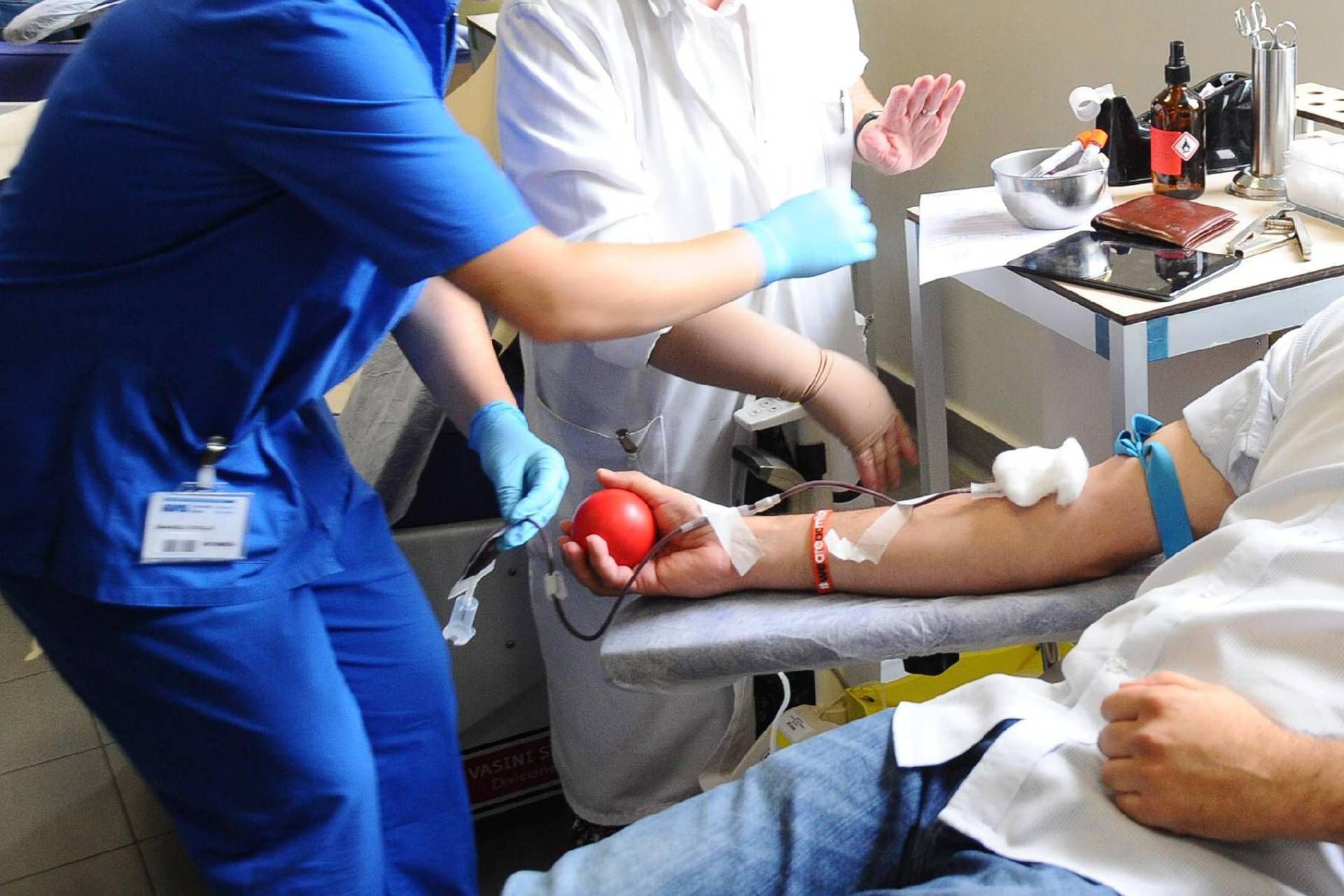
More and more people needing transfusions are asking blood from unvaccinated donors. This is the warning launched by a US hospital in a report published in the magazine ‘Transfusion’. These requests, made for themselves and their childrenare difficult to satisfy, given that i transfusion centers they don’t ask donors if they have been vaccinated and they do not label blood based on vaccination statusand managing them can also lead to a delay in the care that is provided, as well as damage to the health of patients. The analysis turns the spotlight on the problem by reporting the experience of the Vanderbilt University Medical Center, a healthcare facility in Nashville (Tennessee), which examined 15 requests for blood from unvaccinated donors received between January 1, 2024 and December 31, 2025. Average age of the patients for whom the request was made: 17 years. More than half were children.
The authors of the report, also relaunched online by Cidrap, the Center for Infectious Disease Research and Policy at the University of Minnesota, underline the need for health systems to develop standardized policies, which also include psychological support, to manage this type of request. Blood supplies in the United States, experts point out, are safe. Donations are carefully checked for HIV and other potentially infectious microorganisms. And, they add, there is no evidence that the blood of unvaccinated people is safer than that of others. Requests for ‘unvaccinated blood’ have increased, according to the analysis, after the introduction of anti-Covid vaccines, which saved around 20 million lives in their first year of use, but which have come under the radar of misinformation and conspiracy theories.
Hospitals – we read in the Cidrap focus – have no way of knowing whether the donated blood comes from vaccinated or unvaccinated donors, and There are no tests capable of distinguishing the blood of vaccinated people from that of unvaccinated people. This leads some patients to ask for blood donations from certain people, such as relatives or friends, who they know are not vaccinated. A request that is defined as risky by the authors of the report, because these ‘direct donations’ from first-time donors are more likely to contain potentially harmful pathogens than blood collected from people who donate regularly. In the study, 13 patients received blood donated especially for them by family members. Regarding health outcomes, doctors report that 2 patients deteriorated significantly after refusing a standard blood transfusion. One developed anemia, a condition that occurs when you have too little iron in your blood. The other developed hemodynamic shock, a life-threatening condition in which blood flow and oxygen supply to tissues are inadequate, which can cause multiple organ failure. These cases challenge the claim of some anti-vax activists that insisting on using blood from unvaccinated donors is “a harmless or low-risk solution,” the authors write.
The request for targeted blood donation from unvaccinated subjects has occurred in both pediatric and adult settings, in elective and urgent clinical contexts. These requests have been associated in some situations with a worsening of clinical conditions, delays in treatment and inefficiencies in the use of resourcesfollowing the rejection of available standard products, we read in the report on ‘Transfusion’. The cohort object of the study is small also because it was selected based on the cases in which the requested blood units actually reached the blood bank, and not on all the targeted donation requests coming from the entire healthcare system. Consequently, we cannot estimate the overall frequency of such cases, describe requests resolved through counseling or ethics opinions, or determine the true frequency of these interventions during the study period. Downstream impacts were only detected when documented in medical records and likely underestimate the full operational burden, including staff time, coordination efforts and additional costs per unit, the authors report.
Cidrap reports that Lawmakers in several US states, including Connecticut, Kentucky, Montana, Oklahoma, Tennessee and Wyoming, have attempted to mandate that patients have access to blood transfusions from unvaccinated donors. In January, an Oklahoma lawmaker went so far as to propose that his state operate its own blood bank to provide blood donations from unvaccinated people. So far, none of the bills in question have been approved.
https://mpkvkvkmohol.org/esports/lol/
https://mpkvkvkmohol.org/contact-us/
https://mpkvkvkmohol.org/affiliate-programme/
https://mpkvkvkmohol.org/support/
https://mpkvkvkmohol.org/terms-and-conditions/
https://mpkvkvkmohol.org/how-to-bet/
https://mpkvkvkmohol.org/about/
https://mpkvkvkmohol.org/responsible-gaming/
https://mpkvkvkmohol.org/cookies-policy/
https://mpkvkvkmohol.org/privacy-policy/
https://mpkvkvkmohol.org/kyc-aml-policy/
https://mpkvkvkmohol.org/licence/
https://mpkvkvkmohol.org/login/
https://mpkvkvkmohol.org/f1/
https://mpkvkvkmohol.org/ios/
https://mpkvkvkmohol.org/payment-methods/
https://1win1.kr/
https://1win1.kr/app/
https://1win1.kr/android/
https://1win1.kr/ios/
https://1win1.kr/mobile/
https://1win1.kr/pc-client/
https://1win1.kr/registration/
https://1win1.kr/login/
https://1win1.kr/verification/