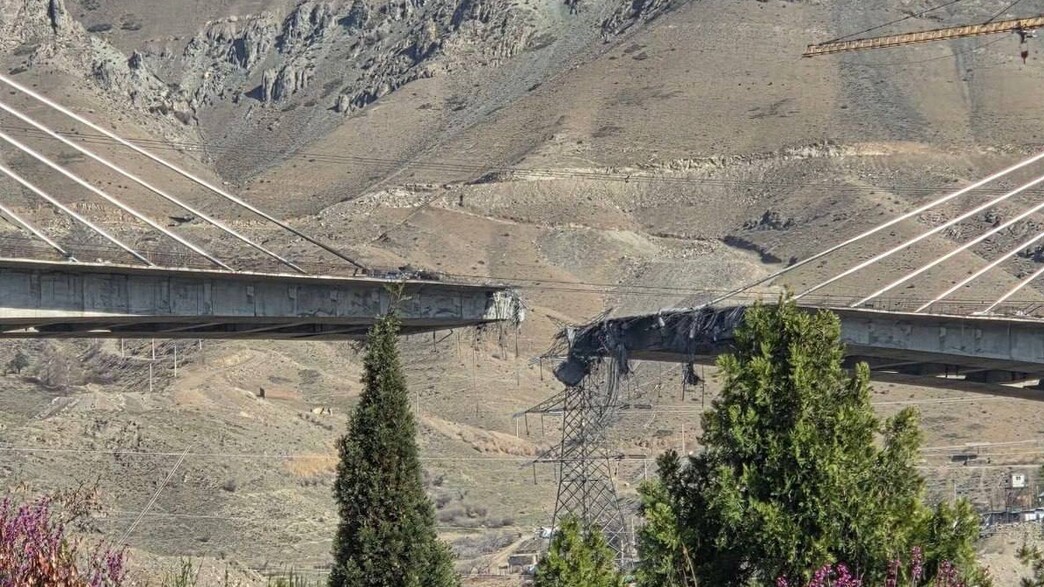
In Iran, one of the most important bridges connecting Tehran to Karaj was attacked, as well as steel factories • The Iranians, who see themselves as bound to the mechanics of equations – threaten to damage major roads in Israel • On the political level: Iran continues to deny negotiations with Washington
Although this is happening at a low intensity, the war in Iran is also about an “infrastructure war”. Yesterday (Thursday) the B1 bridge, one of the largest, most important and also the highest in the Middle East, was attacked. At the same time, steel factories were attacked last week.
During the night, US President Trump wrote on his social network: “Our military, the most powerful in the world, has not even begun to destroy what is left of Iran. The bridges are next in line, then the power stations! The new leadership knows what needs to be done quickly!”
The bridge that was attacked connects Tehran with Karaj, a city located in the northwest of the country. Iran, loyal to the mechanics of equations, threatens to bomb roads and tunnels in Israel. The Iranians also specified what their targets are: road number 1, the Tel Aviv-Haifa road, road 4 and road 6. However, there is no need to be alarmed by that Iranian threat, one of many.
At the same time as the threat to the infrastructure, Iran is trying to promote cooperation in the Strait of Hormuz with Oman, one of the mediating countries. Despite the attempt at cooperation, the Iranians make it clear that they are not relinquishing economic control of the waterway and insist that the collection of transit fees in the strait will be in Iran’s pocket only.
Denials to negotiate with Washington
On the political level, Iran insists on denying the existence of negotiations between it and the United States. According to the pages of the Iranian messages, the American attempts to negotiate are indicative of “Washington’s failure”. In Iran, they are convinced that the United States is trying to “gain time” in the negotiations, in order to launch a major ground campaign in Iran in the coming days.
However, in recent days, the possibility was raised that the United States would unilaterally withdraw from the region, but it was noted that there is no guarantee that Iran will open the Strait of Hormuz in response.
https://comparetools.post-blogs.com/61298692/linkedin-secrets-top-pros-use-in-2026
https://69c241ba9068c.site123.me/
https://69c241ba9068c.site123.me/blog/how-indians-are-saving-10-000-a-year-on-subscriptions
https://69c241ba9068c.site123.me/blog/7-premium-tools-every-indian-pro-needs-without-the-price-tag
https://www.milliescentedrocks.com/board/board_topic/2189097/8024706.htm
https://subsmart-in.blogspot.com/2026/03/build-full-stack-apps-with-ai-no-code.html
https://www.producthunt.com/@subsmart
https://www.techbang.com/users/gangtokian26
https://digiphoto.techbang.com/users/gangtokian26
https://connect.mendedhearts.org/network/members/profile?UserKey=e066359f-7b44-4dc5-a211-019bc38b9782
http://galeria.farvista.net/member.php?action=showprofile&user_id=67160
https://gratisafhalen.be/author/djsharma/
https://jobs.westerncity.com/profiles/7688450-larry-decker
https://tiltify.com/@gangtokian/profile
https://wandb.ai/profile/gangtokian
https://www.sunemall.com/board/board_topic/8431232/7429598.htm
https://heylink.me/gangtokian/
https://speakerdeck.com/randyrortan
https://github.com/randyroorttan
https://www.ted.com/profiles/35632684
https://www.tripadvisor.com/Profile/828randyo
https://soundcloud.com/randy-ortan-484666891
https://www.behance.net/randyortan3
https://medium.com/@randyrortan
https://doodleordie.com/profile/randyrortan