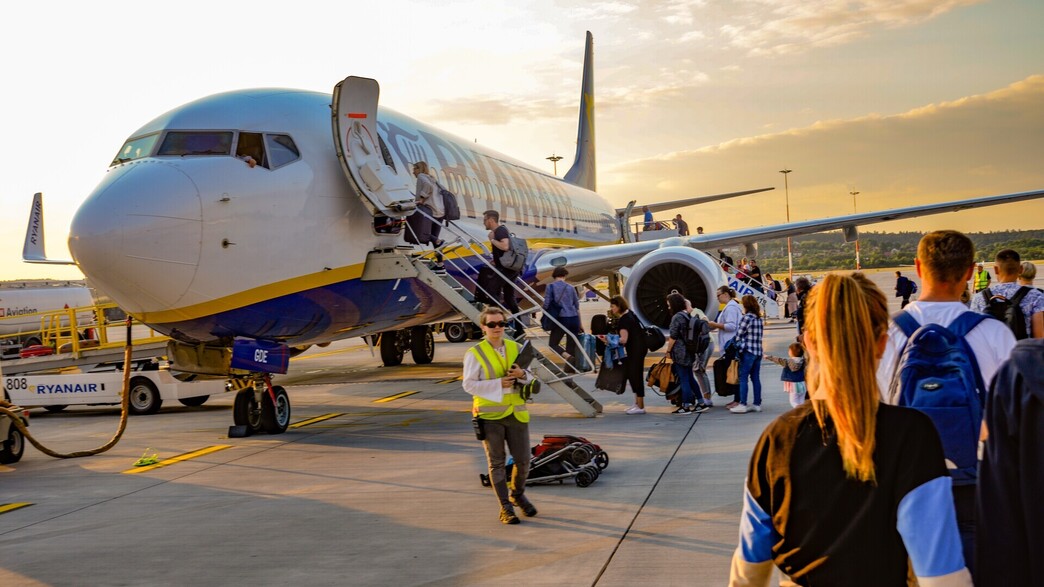
The low-cost airline Ryanair is facing a wave of criticism after it announced that it will stop issuing paper boarding passes and switch to a digital-only system as of November 12, 2025. The decision, which aims to “save 100 percent paper,” has sparked accusations of discrimination and ageism, with pensioner organizations claiming that it will harm millions of passengers who do not have a smartphone or are not skilled in using technology.
According to the new procedures, Ryanair passengers will be required to check-in online and receive their boarding pass through the company’s app only. The option to print a ticket at home or receive it at the airport desk will be completely canceled. The company claims that the move will enable a “faster, smarter and greener” flight experience and will save about 300 tons of paper per year.
Sharp criticism: “Discriminatory and shameful move”
Organizations representing older passengers, including Age UK and Silver Voices, condemned the move and claimed that it was a “step that exacerbates digital exclusion”. Dennis Reed, director of Silver Voices, said: “This is a shameful step. In fact, they say they don’t want elderly passengers. This is a discriminatory policy that will create chaos, what will a passenger who arrives without the app do? It will isolate elderly people from society.”
According to data from the British Communications Authority (Ofcom), about 17 percent of people aged 65 and over in Great Britain do not own a smartphone, and Statista data suggests that the number may reach 23 percent. Consumer organization Which warns that the new policy could make it very difficult for older passengers, especially in areas where Rainier is the only airline.
Ryanair’s chief marketing officer, Dara Brady, defined the move as “upgrading the travel experience.” According to him, November was chosen as the launch date because it is a relatively calm period in the aviation industry. The company’s CEO, Michael O’Leary, claimed that an absolute majority of Ryanair passengers already use smartphones: “Between 85 and 90 percent of passengers already arrive with a smartphone. Almost one hundred percent use this technology, and we want everyone to switch to it.”
O’Leary added that even if a passenger loses their phone or runs out of battery, they can be issued a new ticket free of charge, as long as they check in online before arriving. “If you lost your phone, no problem. If the battery runs out, we have your data in the system. No one will get stuck, just make sure you check in beforehand,” he says. However, some destinations, including Morocco, will continue to require printed tickets due to local regulations, and Ryanair has announced that it will print them for passengers instead.
Parliamentary questions and regulatory response
The move also sparked a debate in the British Parliament, and Liberal Democrat MP Ian Solom asked the Ministry of Transport how the impact of the policy on pensioners and travelers without a smartphone would be tested. The Labor Minister of Transport, Keir Mather, replied that airlines are obliged to act according to the Consumer Rights Act of 2015, and that the Civil Aviation Authority (CAA) will supervise Rainier’s compliance with the requirements of the law. According to the Authority, a requirement for online check-in may be legitimate, as long as it is clearly worded and the fees associated with it are reasonable.
Rainier said that passengers who checked in on the company’s website but do not have a smartphone will be able to get a boarding pass at the counter free of charge. However, no clear instructions have been published on exactly how this will be done or how far in advance passengers must arrive at the airport. In ?Which criticized the lack of transparency on the part of the company: “Ryanair did not provide clear information on how passengers without a smartphone will receive the ticket at the airport.”
The end of the era of the printed card?
Rainier’s move signals the beginning of a new era, and perhaps the end of the printed boarding pass. The company claims that this is a natural transition, similar to trends in other industries such as music and sports, which have already moved to digital cards only. However, Age UK is calling for the company to change direction, and Caroline Abrahams, the organization’s director, said: “The company must always provide an alternative that does not discriminate against those who are not connected to the digital world.”
Despite the storm, Rainier seems determined to go ahead with the plan. The company claims that the digital transition will improve the flight experience of more than 180 million passengers a year, and save costs as part of a broader policy to tighten procedures and increase enforcement against excess baggage.