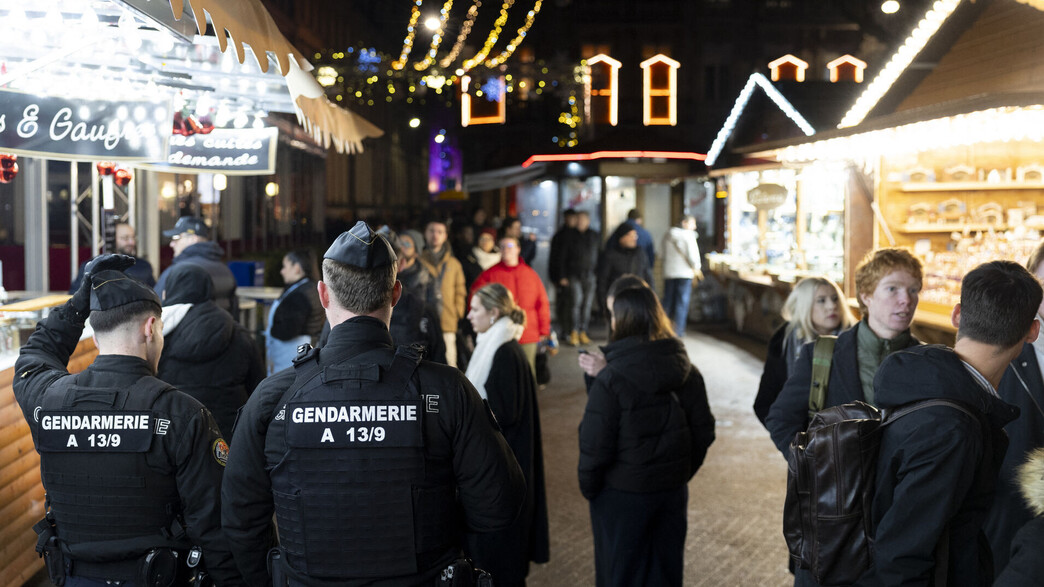
Christmas markets across Europe have opened their illuminated stalls, but this year the festive spirit comes with a heightened sense of vigilance. Violent events from the past, threats registered in recent weeks and large investments in security change the experience. The Christmas markets have become centers of security control, with a large presence of police forces, roadblocks and traffic restrictions, to ensure the safety of visitors.
In Strasbourg, the authorities began an investigation after an automatic gun and ammunition were found near the city’s historic Christmas market, in the Petite France area, a few steps away from the place where millions of visitors gather every year. Attorney General Clarice Tharon confirmed that the Strasbourg Interdistrict Investigations Police is handling the case. The initial tests revealed that the weapon was stolen in 2022 from the home of an athlete in the Haut-Ren district. Investigators are trying to determine how long the gun was there and whether its existence is related to a possible criminal or terrorist plot.
The case comes seven years after the terrorist attack in December 2018, when jihadist Sharif Chakat shot and killed five people in a market in Strasbourg and wounded 11 others. Since the incident, the security measures in the market have experienced a significant strengthening, and the entrance is strictly monitored with checks of bags and luggage, and about a thousand security personnel, including national and municipal police, special units (CRS), soldiers and private guards, who scan the area daily. In addition, drone cameras are used for aerial surveillance, while vehicular access is significantly restricted and some streets have been converted to one-way streets to manage crowd flow safely.
In Germany, memories of last year’s deadly car attack in Magdeburg continue to shape security strategies. In December 2024, a car drove into the old market square near the town hall, killing five people and injuring more than 200. As a result, German cities invested heavily in preventive measures: heavy mobile barriers were installed in Munich, while Leipzig purchased 180 anti-terror barriers at a cost of 1.4 million euros. In Dresden, entry control was implemented in all markets, using rented containers for places where the barriers were not enough, while in Hamnitz, a strong police presence is maintained despite waiving formal entry restrictions.
Other towns, such as Vernigruda in the Harz Mountains region, also took extra care this year. A few days before the market opened on November 21, authorities responded to various threats, including claims of explosives under the Christmas tree in the town square. The police found no real risk, but the city strengthened security with new barriers with an investment of 300,000 euros. Authorities emphasized that despite the threats, demand for festive events remained high, and most visitors refused to let security concerns dampen the spirit of the holiday.
Security experts point out that although there is no evidence of immediate threats, the underlying risk of attacks remains. In Germany, defense systems have become significantly more expensive, with cities spending hundreds of thousands of euros each year on roadblocks, police forces and surveillance cameras. In Strasbourg, similar investments in high-level security are designed to protect the 3-4 million visitors expected this year, while maintaining the festive atmosphere.