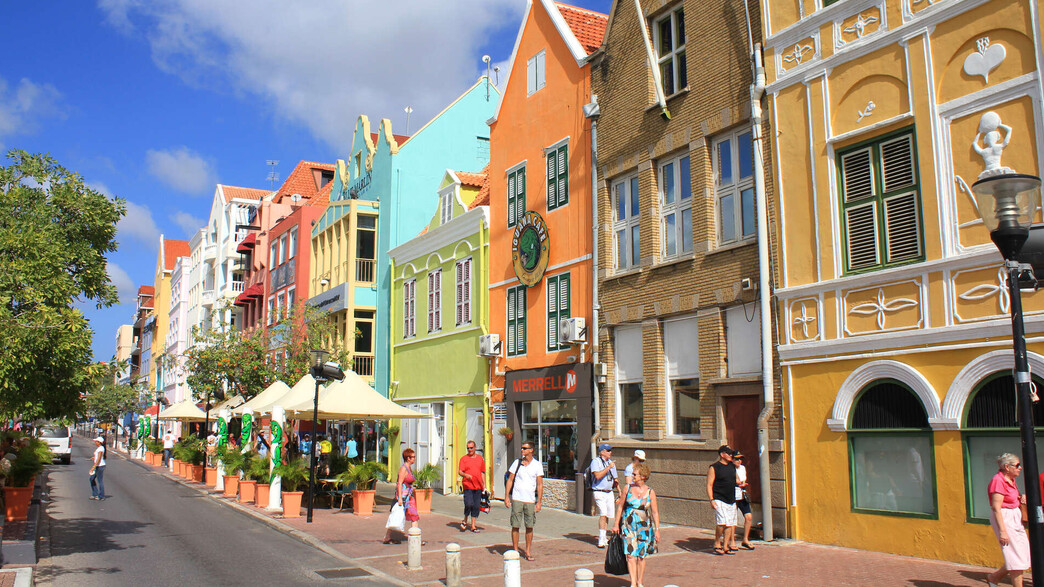
The Caribbean Islands, which for years were seen as a calm, sunny tourist destination and far from geopolitical conflicts, now find themselves in a state of increasing vigilance. The worsening of tensions between the United States and Venezuela, along with an unprecedented American military presence in the region since the days of the Cold War, is beginning to seep into the fields of tourism, aviation, sailing and diplomatic relations between the countries of the region.
A military presence on a scale not seen in decades
The United States has stationed dozens of warships and over 14,000 soldiers in the Caribbean, as part of what it defines as an activity to combat drug trafficking and security threats. Analysts point out that this is the largest US military deployment in the region since the Cuban Missile Crisis in 1962, and some compare the atmosphere to that which preceded the American invasion of Panama in 1989.
However, today’s Venezuela is not the Panama of the late 1980s. It is a much larger country, rich in oil and natural resources, which enjoys the support of international allies, mainly Russia and Iran. While a large-scale land invasion is considered by experts to be an unlikely scenario, it is believed that Washington is following a strategy of continuous pressure: economic sanctions, naval signals, diplomatic isolation and pinpoint strikes at sea, all in the hope of undermining the power circles close to Venezuelan President Nicolás Maduro.
The US government accuses Maduro and senior members of his regime of running a “narco-terrorist” network, claims that the government in Caracas flatly rejects. Nevertheless, the combination of the heated discourse with the deployment of military forces raises concerns that one incident, even if localized, could ignite a large-scale conflict, with regional and international consequences.
Cruise ships and airlines change routes
The security tensions are already starting to have an actual effect on passenger traffic. Last week, the Norwegian Epic cruise ship skipped a scheduled port in Curacao and proceeded directly from Aruba to Barbados. Passengers reported on social media that the captain of the ship explained that the decision was made due to naval exercises in the area, and under the guidance of the cruise company’s management.
The government of Curaçao claims that there is no immediate threat to the island, but the concern increased after two cases of near-collision between civilian passenger planes and American military planes that were flying in the area when their identification transmitters were turned off. Following this, a majority in the local parliament called on the Netherlands (even though Curaçao is an autonomous country, it is part of the Kingdom of the Netherlands, and therefore its foreign and security relations are largely managed vis-à-vis it) to provide the island with more advanced military assistance, mainly through aerial detection and identification means, and to act simultaneously through regional diplomatic channels.
Airlines are also taking precautions. The Dutch company KLM has increased surveillance and safety measures on its flights to Curacao, while several international airlines have suspended or reduced their operations to Venezuela, citing safety concerns and navigational difficulties.
The closure of Venezuelan airspace and regional implications
Russian tourism companies have begun diverting tourists from Margarita Island in Venezuela to Cuba, after warning of a possible danger to the safety of civilian flights. In recent years, Venezuela has become a relatively popular destination among Russian tourists, after the Western sanctions limited their travel options. Now flights have been canceled at least until the end of February, and some of the tourists who were already in the country were evacuated on special flights.
Others found themselves landing in Cuba, a country itself in the throes of a deep economic crisis, including power outages and food shortages. These cases illustrate how quickly geopolitical tensions can change the regional tourism map.
Diplomatic tensions also with neighboring countries
The crisis is not limited only to the security and tourism sector. Venezuela recently accused Trinidad and Tobago of helping the United States seize a Venezuelan oil tanker, a claim the Caribbean nation’s government rejects. In response, Caracas announced the suspension of contacts for the supply of natural gas to Trinidad and Tobago, including talks on the development of the “Dragon” gas field, a project that previously received a limited exemption from American sanctions. The conflict highlights the close ties between security, energy and diplomacy in the Caribbean region.
The distance between Venezuela and Trinidad and Tobago at the closest point is only about 11 kilometers, a fact that increases the sensitivity and the fear of wider regional involvement.
In the Caribbean, only Haiti and Venezuela are defined by the United States as level 4: “Do not travel”. Most other destinations in the region continue to operate as normal, but travelers are asked to stay informed and be alert, especially in the islands near Venezuela, including Aruba, Curacao, Trinidad and Tobago, Puerto Rico and the Dominican Republic.
The local tourism authorities stress that there is no direct threat to visitors, but admit that public perception has significant weight. Even without an actual military conflict, an increased military presence near major air and sea routes could affect cruise itineraries, flight schedules and traveler confidence.
Sources in the industry warn that the main risk is not necessarily in the conflict itself, but in the way in which the international coverage shapes the sense of risk. “In tourism, perception is sometimes more important than reality,” says a regional official. For now the Caribbean is open to visitors, but under increased vigilance.
https://investorshangout.com/post/view?id=6807260
https://network.musicdiffusion.com/read-blog/63925
https://www.party.biz/blogs/355457/475857/comment-gerer-votre-budget-de-loisirs-en-ligne-sans-stress
https://www.leenkup.com/read-blog/78234
https://writeupcafe.com/comment-g-rer-son-budget-de-divertissement-num-rique-efficacement
https://ivebo.co.uk/read-blog/222038
https://blacktube.in/read-blog/22354
https://blogs.bangboxonline.com/posts/les-methodes-de-paiement-en-ligne-et-le-choix-des-plateformes-fiables
https://enkling.com/read-blog/80993
https://vendiscuss.net/topic/39195-companies-actively-seeking-for-vending-services/
https://www.coffeeforums.co.uk/threads/hot-water-taps-at-work.44380/
https://www.cyclechat.net/threads/those-boiling-water-taps-any-experience-thoughts.281572/page-4
https://www.diynot.com/diy/threads/instant-hot-boiling-taps-for-the-kitchen.459511/
https://cookandcrumbs.com/forum/topic/billi-tap-transforms-office-life/
https://www.home-barista.com/tips/advice-on-extraction-t100957-20.html
https://www.zeldadungeon.net/forum/threads/what-made-you-happy-today.64580/page-317
https://www.head-fi.org/threads/post-the-last-thing-you-bought-oh-fun.210643/page-770
https://forum.theotown.com/viewtopic.php?t=16737&start=340
https://nsaneforums.com/news/general-news/a-new-drug-switched-off-my-appetite-what%E2%80%99s-left-r12416/
https://www.r3vlimited.com/board/member/128171-ndn/visitormessage/10152669-visitor-message-from-ndn
http://www.arwen-undomiel.com/forum/viewtopic.php?t=347437
https://blog.bigbasket.com/forum/topic/highly-recommend-connect-vending-top-notch-service-and-quality/
https://forums.prsguitars.com/threads/coffee-stuff.58275/page-2
https://writingforum.org/threads/how-do-you-spend-your-relaxation-time.419/
https://forums.songstuff.com/topic/13624-getting-to-know-you/page/28/