The decision of the Bahamas to officially recognize the Republic of Kosovo as an independent and sovereign state was widely welcomed in Pristina, and is considered by political parties to be an important diplomatic breakthrough. The recognition marks a renewal of the momentum of international recognition in Kosovo after years of stagnation, and places the Bahamas as the 121st country to recognize Kosovo’s independence, and the fourth to do so in 2025 alone.
According to senior officials in Kosovo and former diplomats, this is a positive signal to the world regarding the strengthening of the country’s international position, especially against the background of a long period in which almost no achievements were recorded in the field of international recognition.
Renewing the momentum after years of stagnation
For almost five years, there was an almost complete stagnation in the recognition process in Kosovo, when the main diplomatic efforts were directed to preserving the existing recognitions and curbing Serbia’s campaigns to cancel recognitions. The last recognition before the year 2025 was carried out by Israel in 2021, following the agreement signed in Washington on September 4, 2020, mediated by the United States.
This year there has been a clear change in trend: Kenya recognized Kosovo in March, Sudan in April, Syria in October, and now the Bahamas. This sequence of recognitions, coming from different regions of the world, highlights the resurgence of international support for Kosovo. Former ambassador Avni Safahio defined the recognition of the Bahamas as “very good news for the state of Kosovo”, and emphasized that the political and symbolic value of the recognition is not measured only by the size of the country that grants it. “Today we have 121 countries that recognize the Republic of Kosovo,” said Spahio. “This is an optimal number, which would have been enough even for members of the United Nations, had it not been for the Russian veto.”
The Bahamas: a small country, a significant political message
Although the Bahamas is not a world power, its recognition has clear diplomatic weight. It is an island country in the Caribbean and the western Atlantic Ocean, with a population of about 400,000, and a member of the United Nations, CARICOM the Caribbean community) and in the Organization of American States (OAS). The country gained independence from Great Britain in 1973 and operates as a constitutional monarchy and parliamentary democracy.
The recognition was officially anchored in Nassau, the capital of the Bahamas, where the President of Kosovo, Vyosa Osmani, and the Prime Minister of the Bahamas, Philip “Brave” Davis, signed a joint statement to establish diplomatic relations between the two countries. In the joint statement, Kosovo and the Bahamas committed themselves to the principles of the UN Charter, including respect for sovereignty, equality between countries and peaceful settlement of conflicts.
In addition, the parties expressed their intention to deepen cooperation in various fields, including trade and investments, tourism, education and culture, technology and innovation, and cooperation between public institutions and relations between the citizens of the countries. Prime Minister Davis noted that President Osmani’s visit symbolizes “the beginning of a relationship that we strive to strengthen”, and emphasized shared values and historical experience in dealing with challenges. President Osmani defined the recognition as “another historic decision for our country”, and thanked the government of the Bahamas and its citizens. According to her, this is a significant milestone for a nation shaped by decades of struggle and sacrifice.
The Kosovo leadership accepted the recognition with a broad consensus. The Acting Prime Minister, Albin Kurti, described the year 2025 as “the year of new acquaintances, after a long time”, and noted that Kosovo is acquiring new friends and new opportunities for cooperation. Acting Minister of Foreign Affairs, Donika Gravala, emphasized that any additional recognition strengthens the international subjectivity and sovereignty of Kosovo.
At the same time, the decision is expected to cause further displeasure in Serbia, which continues to oppose the independence of Kosovo and works in the international arena against its recognition. Belgrade, supported by Russia and China, considers Kosovo an integral part of its territory, a position that continues to block Kosovo’s accession to the United Nations, despite broad support from Western countries.
Along with the satisfaction of the recognitions that come from different regions of the world, former diplomats emphasize that the next strategic destination of Kosovo must be Europe. Five member states of the European Union: Spain, Greece, Slovakia, Romania and Cyprus, still do not recognize Kosovo, mainly due to fear of consequences for separatist movements in their area. According to Spahio, breaking the “European axis of non-recognition” is critical for the future of Kosovo. “Our diplomacy must now focus on these five countries,” he said, “so that at least two of them recognize Kosovo.” Progress in this direction may strengthen Kosovo’s European integration horizon and send a significant message to international institutions as well, where the agreement between the EU countries has a lot of weight.
Israel-Kosovo relations: a strategic milestone
In the wider diplomatic context, the relations between Kosovo and Israel stand out as having special significance. Israel’s recognition of Kosovo in 2021 was the first after a long period of stagnation, and came as part of the Washington agreement mediated by the United States. The agreement was unprecedented: Israel recognized Kosovo, and at the same time Kosovo became the first country with a Muslim majority to open an embassy in Jerusalem.
Israel, which was initially cautious due to considerations related to precedents in the Palestinian arena, changed its position within the framework of the agreement. Since then, the relations between the countries have tightened significantly: there are cooperations in the fields of security, technology and education, and an agreement to exempt visas signed in 2024 further strengthened the ties between the citizens.
As far as Kosovo is concerned, relations with Israel had both symbolic and practical importance: they emphasized Kosovo’s integration into the Western camp and among key partners of the United States, and illustrated that even countries with complex geopolitical considerations can be persuaded through consistent diplomacy.
The broad geopolitical picture
Kosovo remains one of the youngest and most controversial countries in Europe. Despite recognition by most Western democracies, including the United States, Great Britain, Germany, France and Japan, its path to full integration into the international system is still blocked due to the unresolved conflict with Serbia and Russia’s veto in the UN Security Council.
The complex political status of Kosovo stems from a conflict between two fundamental principles of international law: the right to self-determination of its inhabitants (the vast majority of whom are Albanians) versus the territorial integrity of Serbia, which sees the province as the cradle of its culture and the focus of the country’s history. The current situation took shape following the breakup of Yugoslavia and the Kosovo War (1998-1999), during which NATO intervened to stop ethnic cleansing carried out by Serbian forces. After the war, the cordon was placed under a UN temporary administrator, and in 2008 Kosovo unilaterally declared independence.
However, developments such as the recognition of the Bahamas highlight a gradual but consistent process of establishing Kosovo’s statehood. Each additional recognition strengthens its position in the international arena, expands its network of diplomatic ties and deepens its claim to equality between countries.
A destination that is far from the tourist map in Europe
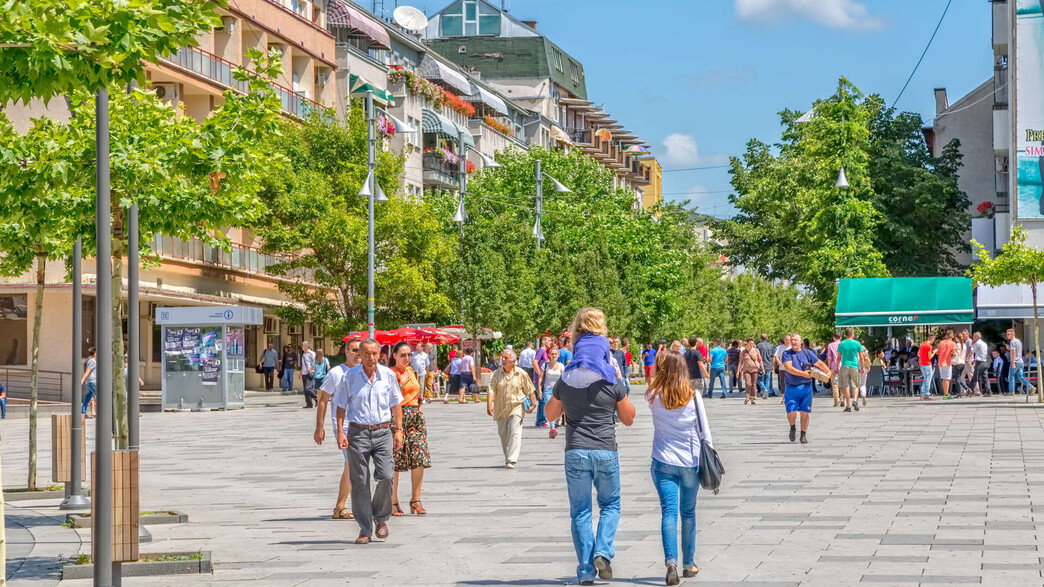
Currently, the State of Israel does not warn its citizens against visiting Kosovo, and the MLA classifies it under warning level 1 No travel warning, but normal precautions are recommended. Kosovo offers a fascinating combination of modernity and tradition, with its main cities being the beating heart of the country. Priština, the capital city, is known for its youthful energy, unique Brutalist architecture (like the famous National Library) and its cafe culture where locals consider drinking macchiato a daily social ritual not to be missed. On the other hand, the city of Prizren is considered the historical pearl of the country with the Ottoman stone bridge, the citadel overlooking the city and the stone alleys.
For nature and travel lovers, Kosovo is a destination that has not yet been conquered by mass tourism. The Dinaric Alps (known as the “Rocky”) and the Rugova Valley offer breathtaking views of deep canyons, waterfalls and clear alpine lakes. The country forms part of the famous “Balkan Peaks” trek, and attracts travelers from all over the world who are looking for challenging hiking trails, rock climbing or simply peace in endless green spaces. In the Peja area you can also find the most impressive “Via Prata” (secured climbing routes) in the area, which combine adrenaline with spectacular panoramic views.
One of the prominent features of tourism in Kosovo is the encounter with the multicultural heritage and the hospitality of the locals. UNESCO World Heritage sites are scattered throughout the country, including ancient Serbian Orthodox monasteries such as “Visoki Dečani”, famous for its magnificent fresco paintings preserved from the 14th century. Alongside them, you can visit magnificent Ottoman mosques and bazaars in cities such as Gjakova, where ancient handicrafts are preserved to this day.
https://aspenburton.notion.site/Understanding-the-Growing-Need-for-Addiction-and-Mental-Health-Support-2c9ebe567fa880d59548ee5d9b848318?pvs=73
https://anotepad.com/notes/x9g9midg
https://writeablog.net/annabarnes/addressing-addiction-drug-and-alcohol-rehabs-in-boynton-beach
https://zenwriting.net/chazmayo/accessing-quality-rehab-services-with-cigna-insurance
https://blogfreely.net/miahcabrera/addressing-the-growing-need-for-drug-rehab-centers-in-cherry-hill-nj
https://to-portal.com/post/381663_our-dependency-treatment-services-in-florida-new-jersey-and-massachusetts-emphas.html
https://sparktv.net/post/906614_our-addiction-treatment-services-in-florida-new-jersey-and-massachusetts-concent.html
https://x.com/vitalpathhealth/status/2000991837671321828?s=20
https://flipboard.com/@glowuphealth/evidence-based-rehabilitation-programs-that-assistance-lasting-healing-in-florid-rihdgu4cy
https://penzu.com/p/fed8f7b4892be253
https://www.tumblr.com/freshstarthealth/803114514842255360/evidence-based-rehabilitation-programs-in-which?source=share
https://gettr.com/post/p3v9hs3386e
https://truevitalhealth.dropmark.com/2053815/37142870
https://postheaven.net/peakwellnessmode/evidence-based-recovery-programs-that-assistance-long-term-healing-in-florida
https://whoosmind.com/post/330213_evidence-based-recuperation-programs-in-which-help-long-term-recuperation-in-flo.html
https://hallbook.com.br/posts/834991
https://www.maanation.com/post/923400_evidence-based-recovery-programs-in-which-support-long-lasting-recovery-in-flori.html
https://www.anibookmark.com/site/evidencebased-recovery-programs-that-help-longterm-recuperation-in-florida-new-jersey-and-massac-ab2227665.html
https://graph.org/Evidence-Based-Recovery-Programs-In-Which-Support-Long-term-Recuperation-in-Florida-New-Jersey-and-Massachusetts-12-17
https://gab.com/dailywellnessfuel/posts/115733160741068038
https://www.pinterest.com/pin/938578378603852108
https://ekcochat.com/post/875284_evidence-based-recuperation-programs-that-assistance-long-lasting-healing-in-flo.html
https://www.fundable.com/miriam-nash-malakai-proctor
https://www.rvparking.com/user/504710
https://www.myconcertarchive.com/en/user_home?id=125120